REVIEW · MUMBAI
Mumbai: Full-Day Sightseeing Tour of Mumbai
Book on GetYourGuide →Operated by Amaze Tours · Bookable on GetYourGuide
Mumbai is a visual overload. That’s the point.
This full-day tour helps you get your bearings fast by pairing famous sights with real working-city moments. I like how it mixes classic landmarks like Chhatrapati Shivaji Terminus with everyday stops like Crawford Market and Dhobi Ghat. I also like the guide style: people such as Ganesh, Abdul, Suresh, Imran, and Loki are repeatedly praised for clear storytelling and good pacing. One thing to consider: it’s a long day (5–10 hours), and while there’s some walking, Mumbai traffic can still shape the rhythm.
The route works best when you treat it like an orientation day. You’ll see a lot. You won’t slow down like a solo wander day. If you want deep museum time or long, unhurried neighborhood exploring, you may feel slightly rushed.
In This Review
- Key points worth knowing
- A smooth orientation day: pickup, AC comfort, and a route that makes sense
- Gateway of India and the Taj Mahal Palace: the sea-facing starting line
- Kala Ghoda to museums and galleries: architecture with side quests
- Oval Maidan, Rajabai Clock Tower, and Bombay High Court: big buildings, better views
- Horniman Circle and Asiatic Society: a quiet pause in the city center
- Chhatrapati Shivaji Maharaj Terminus (CST): step inside the UNESCO masterpiece
- Crawford Market and Marine Drive: market senses, then seaside air
- Mani Bhavan: Gandhi’s story told through a real place
- Banganga Tank and the Hanging Gardens: a calm hill break
- Jain Temple pass-by and Dhobi Ghat: culture on the move, work you can’t ignore
- Time management and walking comfort: what to plan for
- Price and value: why $24 can work (and what you still pay for)
- Who this tour suits best—and who might not love the format
- Should you book this full-day Mumbai tour?
- FAQ
- FAQ
- How long is the Mumbai full-day sightseeing tour?
- What is included in the price?
- What isn’t included?
- Is the tour private or for a small group?
- Where do I meet the tour?
- What about if I’m doing the cruise option?
- Is the tour guide English-speaking?
Key points worth knowing
- Local timing and traffic smarts: the driver is a big part of why the day feels efficient in Mumbai traffic.
- UNESCO-level architecture: you’ll step inside the UNESCO-class Chhatrapati Shivaji Terminus.
- Colonial-to-commuter contrast: Gateway and CST sit beside markets and daily work scenes.
- Gandhi’s Mumbai in context: Mani Bhavan gives you a personal link to the man, not just a name.
- A calmer hill break: Banganga Tank and the Hanging Gardens offer a quiet pause above the noise.
A smooth orientation day: pickup, AC comfort, and a route that makes sense
Mumbai doesn’t politely introduce itself. It shouts, flashes, honks, and moves. This tour helps you read the city by putting major landmarks in a logical flow—so you’re not bouncing around on your own.
Pickup and drop-off matter here. You start with hotel pickup in an air-conditioned vehicle, plus bottled water. Entrance fees for the places on the program are included, so you’re not constantly checking ticket counters while you’re trying to keep up with the day.
You also get an English live guide (private or small groups are available). Many people highlight a guide’s humor and ability to answer questions—so if you’re the type who asks why things are the way they are, this format usually works well.
The one caution: it’s a full day. Even with good scheduling, expect a bit of walking at stops and some waiting for photo moments. I’d plan a flexible mindset, comfortable shoes, and patience for traffic.
You can also read our reviews of more tours and experiences in Mumbai.

Gateway of India and the Taj Mahal Palace: the sea-facing starting line

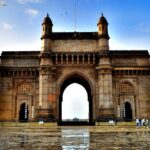
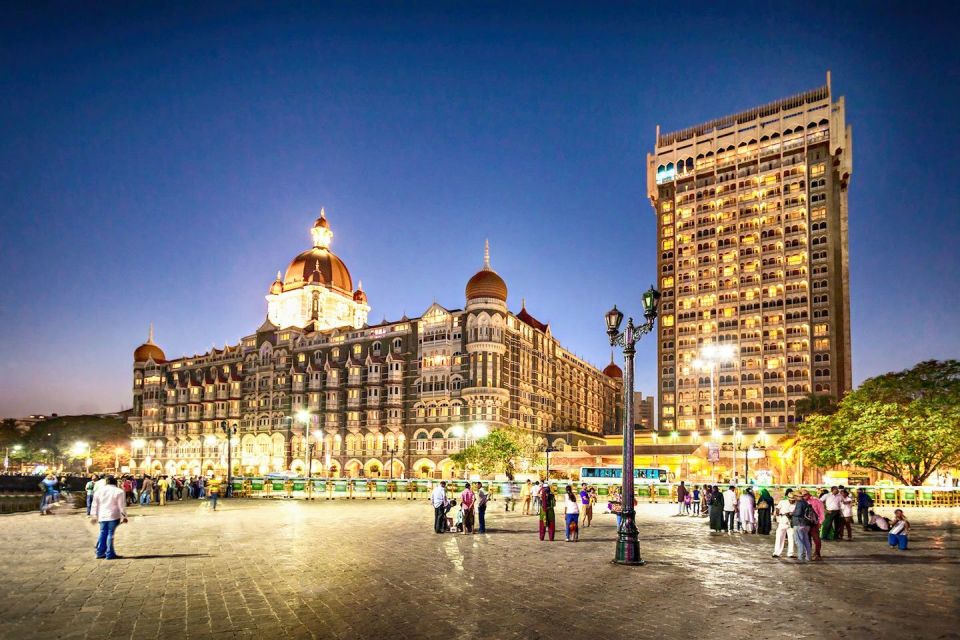
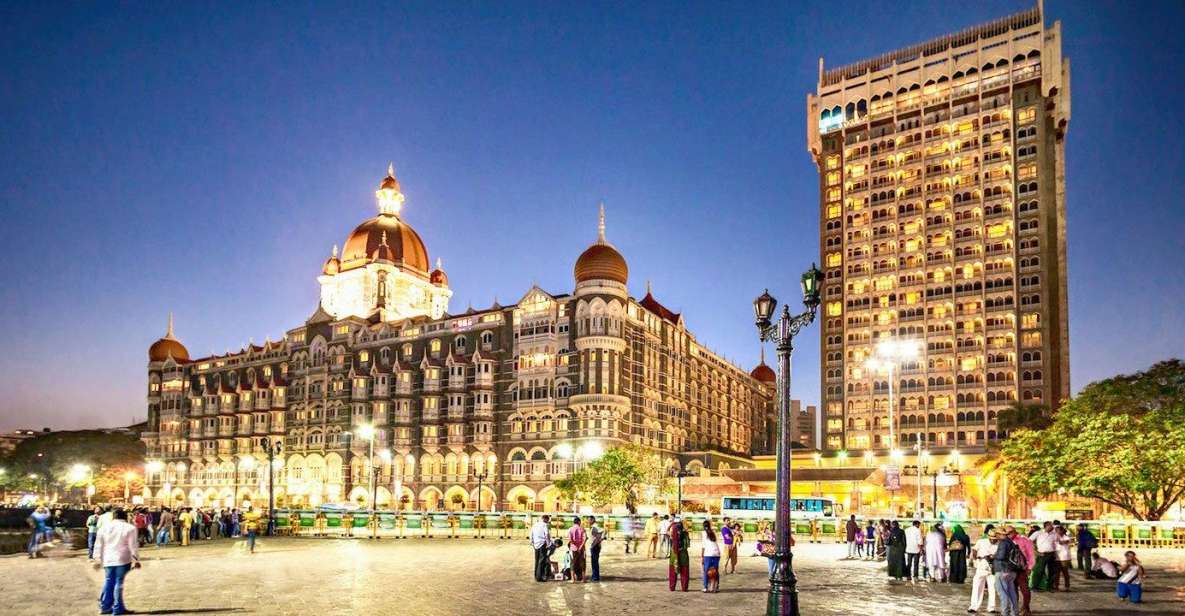
Most Mumbai days begin at the waterfront energy of Gateway of India, and this one does it on purpose. You’ll get a photo stop and time to walk around the area, with the Taj Mahal Palace nearby as a recognizable landmark.
Why it’s worth your attention: Gateway isn’t just a pretty facade. It’s tied to Mumbai’s colonial-era port story, and it frames the city as an outward-looking trade hub. Even if you’re not into history-by-the-page, standing here gives you a visual anchor for what comes next.
Practical tip: keep your camera ready. The lighting changes fast, and this stop is short.
Kala Ghoda to museums and galleries: architecture with side quests
After the waterfront, the day shifts toward the art and architecture zone around Kala Ghoda. You’ll see colonial-era buildings and contemporary galleries in the same breathing space.
One highlight is a pass-by moment at Chhatrapati Shivaji Maharaj Vastu Sangrahalaya (often called CSMVS). You don’t lose the day in one museum room. Instead, you get the sense of the city as a place that preserves its past while still producing modern culture.
You also get time around the art area near places like Jehangir Art Gallery and the Sassoon Library by spotting its Gothic charm. Even if you don’t go inside everything, the guide’s connections tend to make the architecture feel less random.
If you’re the type who likes to understand what you’re looking at, this is where the day starts paying off.
Oval Maidan, Rajabai Clock Tower, and Bombay High Court: big buildings, better views
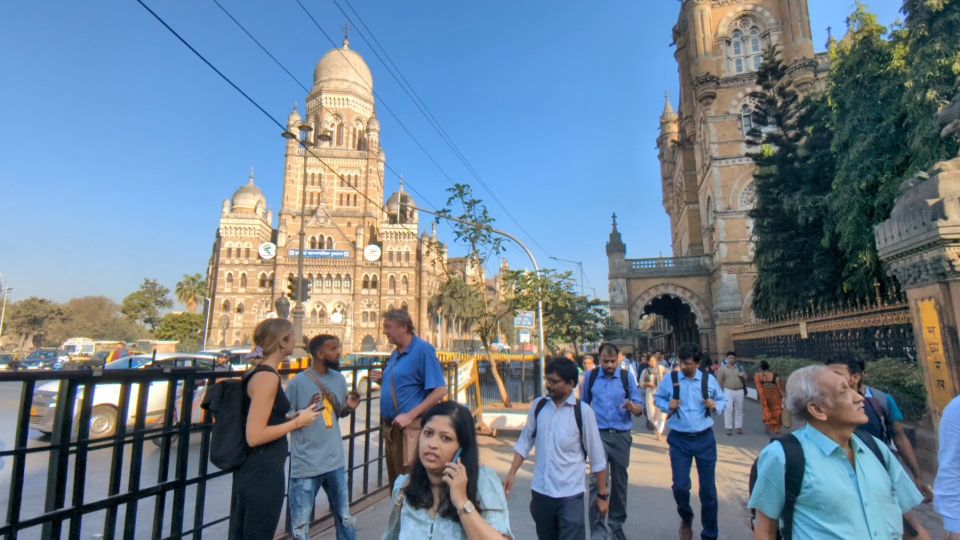
Mumbai is full of landmarks that look like they were designed for postcards, and this stretch is one of them. You’ll pass by the Rajabai Clock Tower and see Oval Maidan and the Bombay High Court nearby.
The value here is simple: these buildings define the city center’s “power geometry.” They also give you a break from street-level chaos. Even from the road, the scale is impressive, and the open maidan space helps you reset your eyes.
Shortcoming to note: if you’re craving deep interior visits, this segment is more about exterior sightlines and quick walks.
Horniman Circle and Asiatic Society: a quiet pause in the city center
Then comes a calmer pocket: Horniman Circle. It’s a green ring with colonial facades around it, so it feels like a breathing space after crowds and traffic.
You’ll also glimpse the Asiatic Society of Mumbai from the outside with a photo stop. That stop works as a reminder that Mumbai’s “big city” identity includes libraries and scholarship—not only commerce.
This is also a good place to slow your pace, check the shade, and use your guide for practical tips before you hit the busier markets and stations.



Chhatrapati Shivaji Maharaj Terminus (CST): step inside the UNESCO masterpiece
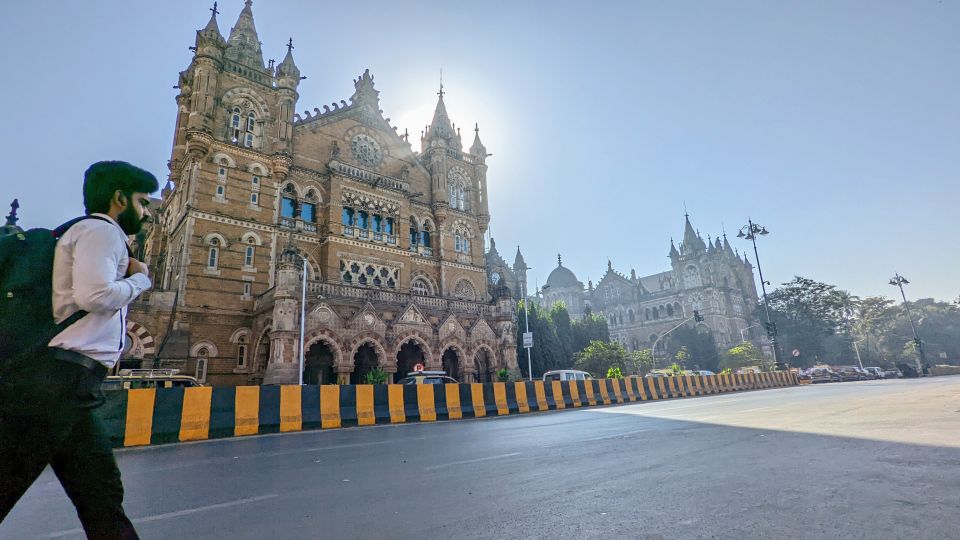
This is the big-ticket stop for architecture lovers. You’ll get a photo stop and time to visit and walk at Chhatrapati Shivaji Maharaj Terminus (CST), a UNESCO-listed Victorian Gothic marvel.
What makes it special is the mismatch of moods: the building is grand and old-school dramatic, but it’s also alive with daily commuters. You’re not looking at a dead monument. You’re seeing how a landmark still functions as part of everyday Mumbai.
If you’re traveling with kids or anyone who worries they’ll get bored in “history mode,” CST often solves that. Trains, movement, and people energy keep it from feeling like a lecture hall.
Crawford Market and Marine Drive: market senses, then seaside air
Next up is Crawford Market—a stop that hits your senses fast. You’ll have time to walk, look, and shop. Think fresh produce, spices, color, and the kind of everyday busyness that makes Mumbai feel real.
This is where a good guide pays off. A strong guide can point out what’s worth seeing (and where not to spend time). And because food and drinks aren’t included, you can decide your own budget for snacks or shopping without feeling trapped.
After the market, the tour shifts to Marine Drive, with time for a photo stop and walk along the coastal promenade. This gives you a skyline view over the Arabian Sea. It’s one of the best “reset” moments in the day: less shopping energy, more breathing room.
Practical note: protect your phone and camera from crowds. People move close, especially around viewpoints.
Mani Bhavan: Gandhi’s story told through a real place
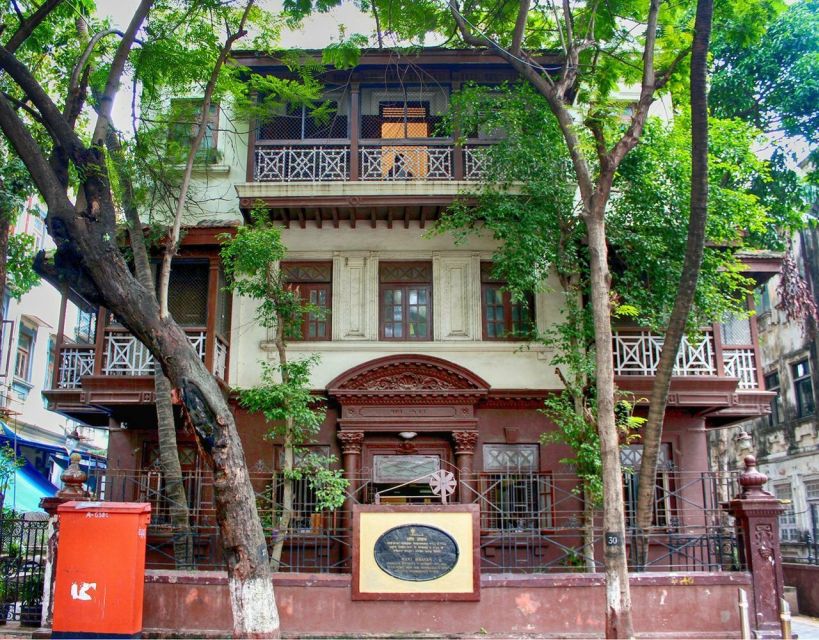
Mani Bhavan is a museum stop that connects you to Mahatma Gandhi through a specific location. The tour includes time to visit with a photo stop and walk.
Why it matters: Gandhi in a classroom is one thing. Seeing the house/museum context makes it easier to understand how ideas became daily political action.
This stop can also make the day feel less like a checklist. It adds a human anchor to all the architecture and street scenes.
Banganga Tank and the Hanging Gardens: a calm hill break
Mumbai days often need an escape valve. Here, it comes with Malabar Hill and stops around Banganga Tank and the Hanging Gardens.
You’ll get a photo stop and walking time. This segment is all about contrast: noise below, calmer air above. Banganga Tank is sacred, and the Hanging Gardens tend to feel like a quiet pause.
You’ll also pass by the Antilia residence from the road—just a glimpse, but it underlines another theme of Mumbai: enormous wealth and daily working life sharing the same city frame.
If you’re tired, this is where you feel your energy return.
Jain Temple pass-by and Dhobi Ghat: culture on the move, work you can’t ignore
You’ll pass by a Jain Temple, Mumbai briefly. It’s short, but it’s a reminder that Mumbai’s religious life is everywhere, not only in museums or major monuments.
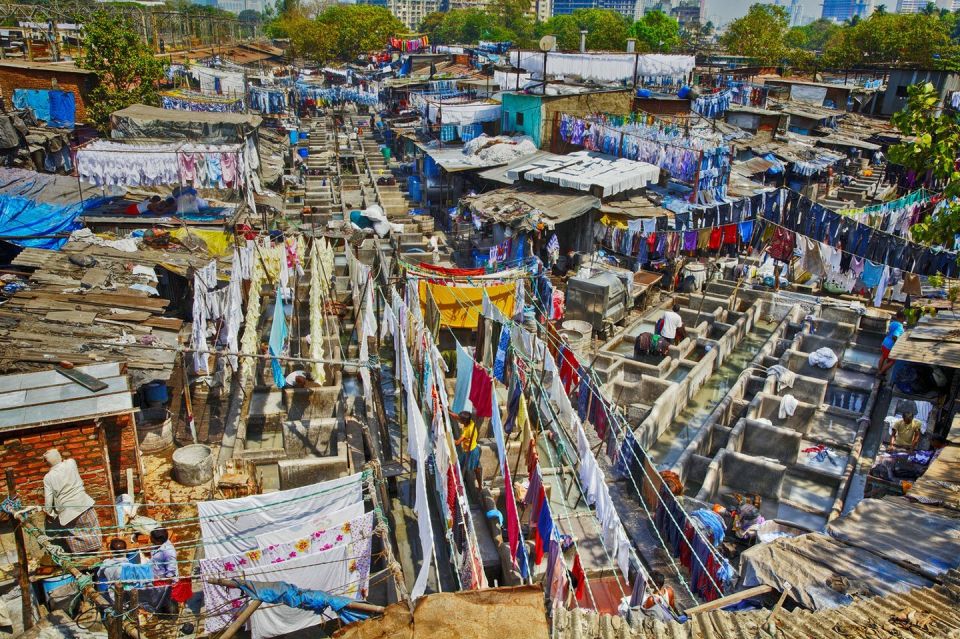
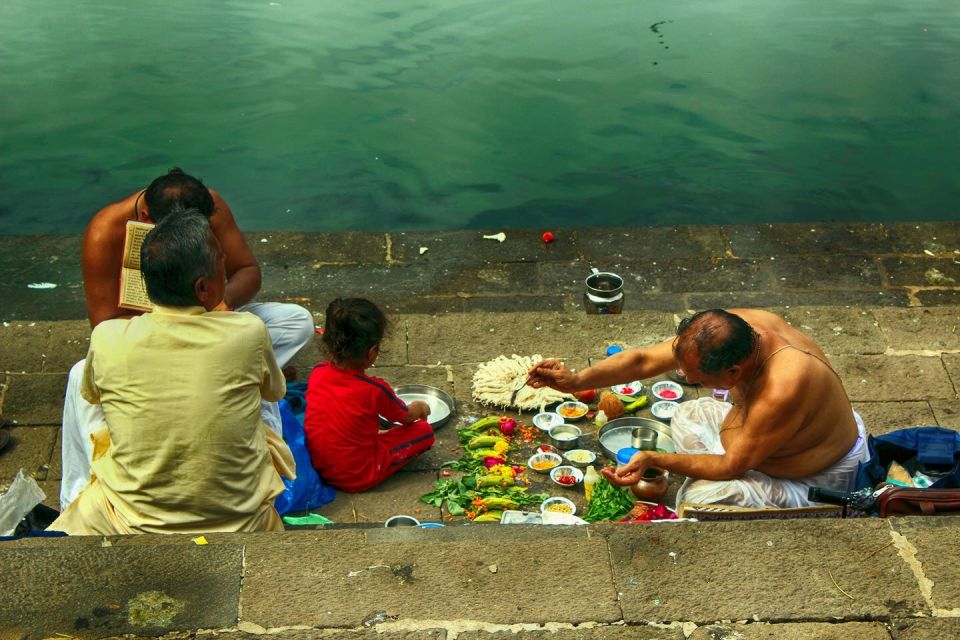
Then comes Dhobi Ghat, the world’s largest open-air laundry. You’ll have a photo stop here. Depending on how your day runs and how long you’re encouraged to pause, you’ll get a close view of daily operations.
Why this stop hits differently: it’s not staged “tourist culture.” It’s real labor, done in public, with systems you can watch in action.
A note to set expectations: this tour doesn’t position Dhobi Ghat as a long deep walk. The goal is to give you the sight and context without turning the whole day into one industrial observation.
Time management and walking comfort: what to plan for
This is a 5–10 hour outing, and your actual pace depends on traffic and how long you choose to linger at photo spots. Many stops are quick, and you’ll also get walk time at several locations.
To make it comfortable:
- Wear shoes you don’t mind getting used on crowded sidewalks.
- Bring a light layer. Coastal areas and shade shifts can feel cool.
- Use your guide for timing. If you’re tired, this tour format is set up for rest breaks, and some guides have been praised for adjusting when needed.
If you get motion-sick easily, take it seriously. Mumbai roads can be stop-and-go.
Price and value: why $24 can work (and what you still pay for)
At about $24 per person, this tour can be a strong value if it’s your first time in Mumbai and you want a single-day orientation. What helps the price is that you’re not only buying a guide. You’re getting:
- Hotel pickup and drop-off
- Air-conditioned vehicle
- Bottled water
- Entrance fees for the stops on the program
- Parking fees, fuel, taxes, and road tolls
What’s not included is food and drinks. That matters. Markets and seaside walks can make you want snacks. You’ll likely spend some money on your own—so I suggest you carry cash or a card for water, chai, or a quick local bite.
If you like a guide who can point you toward reasonable options, you can keep costs steady. Some guides have been known to recommend local treats like vada pav or to suggest a proper break for tea, but you still pay on your own.
Who this tour suits best—and who might not love the format
This tour is ideal if:
- You want a first-day introduction to Mumbai’s big landmarks and daily city life.
- You prefer an efficient route with a driver who’s good at navigating traffic.
- You like stories that connect architecture, politics, and street scenes into a single picture.
It may be less ideal if:
- You want long, unhurried museum time.
- You’re hoping for lots of off-menu wandering in neighborhoods without a schedule.
- You dislike guided walking on busy sidewalks.
The strength of this day is balance, not “one thing only.”
Should you book this full-day Mumbai tour?
If you’re trying to decide whether this is worth your day in Mumbai, here’s my take: book it if you want to see the highlights and understand the city’s logic without spending hours planning routes and dealing with transport headaches.
I’d especially recommend it for:
- First-timers who feel overwhelmed quickly.
- Anyone who values architecture and wants to walk through CST.
- Travelers who want a mix of major sights plus real-world moments like Crawford Market and Dhobi Ghat.
Skip it only if you already know you want slow time in one neighborhood, or you’re trying to reduce walking and time on your feet as much as possible.
FAQ
FAQ
How long is the Mumbai full-day sightseeing tour?
It runs for 5 to 10 hours, depending on availability and timing.
What is included in the price?
The tour includes hotel pickup and drop-off, an English-speaking guide (or driver-guide), air-conditioned vehicle, bottled water, entrance fees for the places mentioned, parking fees, fuel, and taxes/road tolls.
What isn’t included?
Food and drinks aren’t included.
Is the tour private or for a small group?
Private or small group options are available.
Where do I meet the tour?
The meeting point can vary depending on the option booked.
What about if I’m doing the cruise option?
For the cruise passengers option, guests need to come to Greengate, which is about 300 meters from the cruise terminal. A free shuttle is provided by the port.
Is the tour guide English-speaking?
Yes. The live tour guide provides English.