REVIEW · MUMBAI
Ajanta & Ellora : Day Tour from Mumbai with Flight Tickets
Book on GetYourGuide →Operated by Jee Tours · Bookable on GetYourGuide
Caves carved in stone still feel unreal. I like the one-day value because your flights to Aurangabad and back are handled, and I especially love the contrast between Ellora’s Kailasa Temple and Ajanta’s Buddha frescoes. The main drawback is the very early start and the fact this is a long, packed day.
Ajanta and Ellora are UNESCO World Heritage Sites, and doing them in one day is basically a crash course in how Indian art moved across religions and centuries. You’ll see rock-cut temples and caves from roughly 600–1000 AD at Ellora, then jump to Ajanta’s caves with paintings and sculptures dating from about 200 BCE to 650 AD. If you hate early alarms or slow walking, this plan might feel like a sprint.
That said, I like that a guide (English, Hindi, Japanese, French, Spanish, Thai, Italian, German) can explain what you’re looking at, not just drop you at the entrance. And you’ll get practical cave tips too, like slippers (shoes come off in spots) and bringing a flashlight for darker areas inside the caves.
In This Review
- Key highlights that make this day tour work
- Flights + timing: the real backbone of the day
- Ellora Caves: Kailasa Temple and 34 rock-cut sites
- Ajanta Caves: frescoes, sculptures, and Buddha scenes
- Aurangabad pause: dinner, snacks, and a market stop
- Guides and languages: what you should expect from the explanation
- Getting around cave sites: slippers, light, and patience
- What’s included, what’s not, and the ticket value math
- Group size and comfort: private car versus a crowd
- Who should book this Ajanta and Ellora day tour
- Should you book this Ajanta & Ellora day tour from Mumbai?
- FAQ
- What time does the tour start from Mumbai?
- How long does the tour take?
- What time do I return to Mumbai?
- Where do you pick me up?
- Do I get a guide?
- What languages are available for the guide?
- Are entrance fees for Ajanta and Ellora included?
- Is food included?
- What should I bring for the caves?
- Is there free cancellation?
Key highlights that make this day tour work
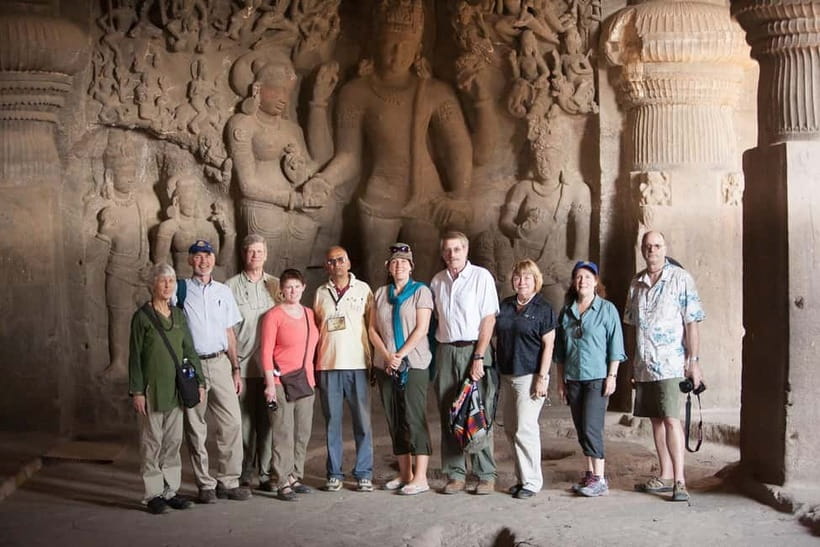
- Two UNESCO hits in one day: Ellora’s 34 rock-cut sites and Ajanta’s 30 caves on the same schedule
- The Kailasa Temple moment at Ellora: a massive monolithic carving from a single rock
- Ajanta’s wall art and sculpture focus: Buddha scenes and detailed fresco work across centuries
- Flights included from Mumbai: Indigo 6E-5298 in the morning and Indigo 6E-5383 back in the evening
- Local breaks in Aurangabad: time for dinner/lunch and a market stop when schedules allow
Flights + timing: the real backbone of the day
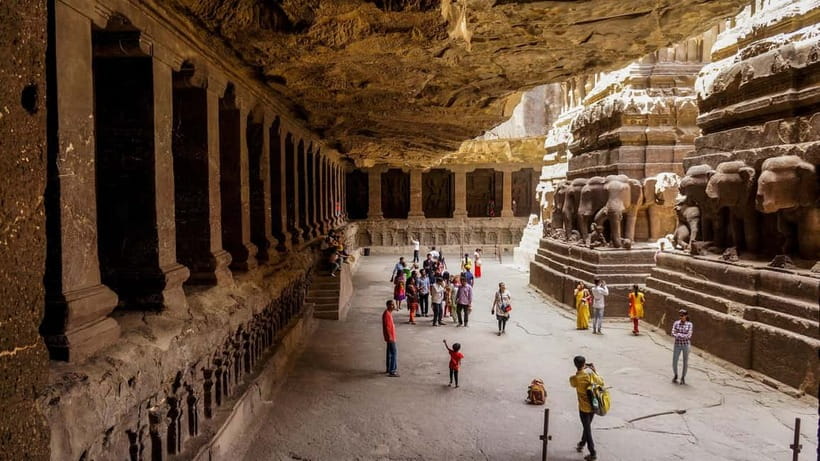
This tour is built around flight times, so the pacing feels intense—but in a good way. You depart Mumbai early (Indigo 6E-5298 at 05:15, arriving Aurangabad at 06:15), clear the morning logistics, then start cave time before crowds and heat take over.
On the return, you’re set up to catch the late flight (Indigo 6E-5383 at 21:25, landing Mumbai at 22:20). That matters because Ajanta and Ellora are far enough apart that you can’t casually “wing it” without risking delays. Here, the transport is planned, and the day is structured so you’re back at Aurangabad Airport in time.
The timing also explains the vibe: you’ll spend about two hours at Ellora and about two hours at Ajanta, plus transfer time and a short Aurangabad stop. Two hours in caves sounds short until you realize these sites are huge, and you’re stopping to look carefully rather than just taking photos and moving on.
You can also read our reviews of more tours and experiences in Mumbai

Ellora Caves: Kailasa Temple and 34 rock-cut sites
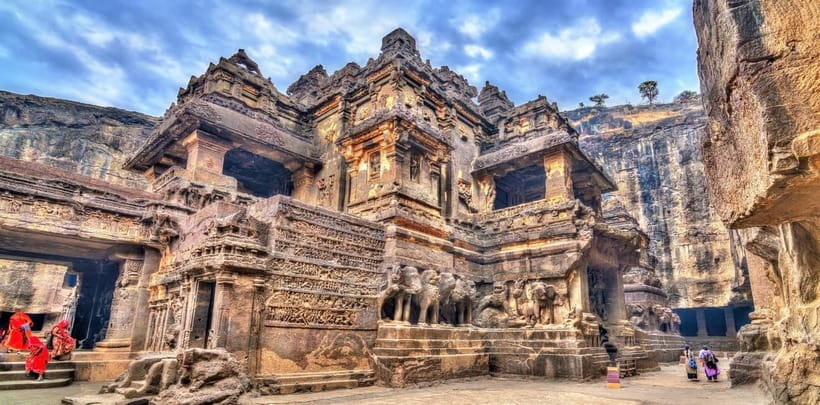
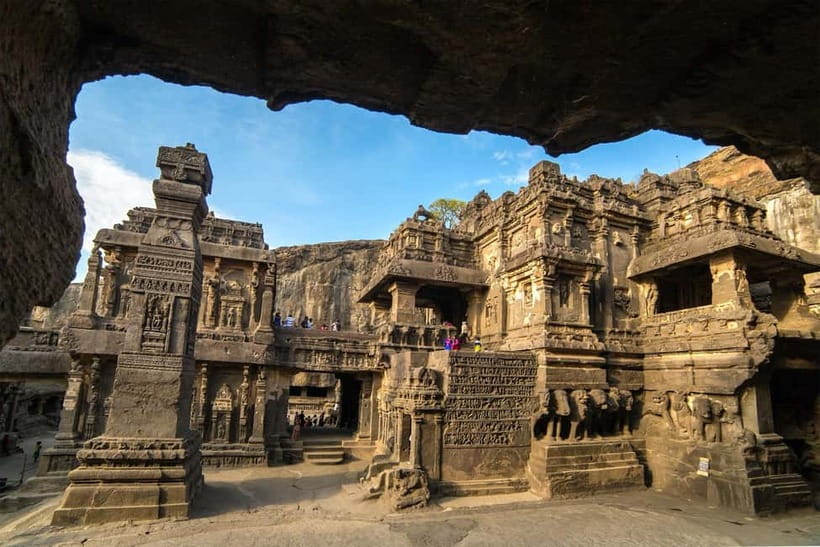
Ellora is the first stop, reached by a roughly 35 km drive from Aurangabad. This is where the day’s wow factor starts early, because Ellora is not one temple—it’s a whole hillside complex.
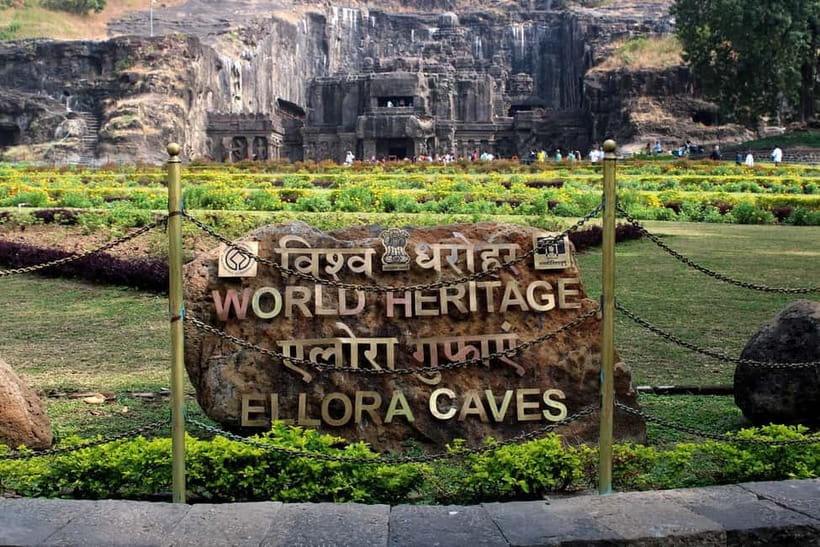
What you’re walking into is a collection of 34 rock-cut temples and monasteries tied to Buddhist, Hindu, and Jain traditions, dated to around 600–1000 AD. That range gives the site a layered feel. You’re not just seeing one style; you’re seeing religious ideas expressed through stone carving across time.
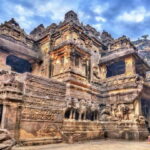
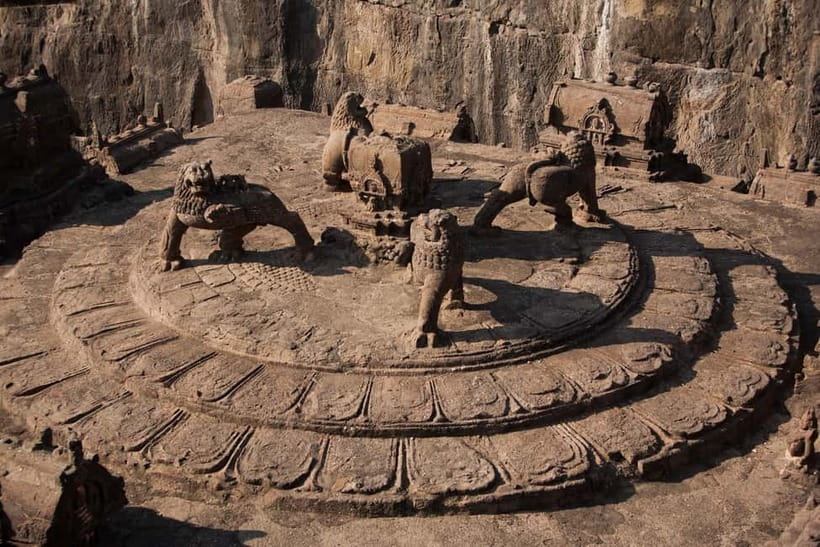
The standout here is the Kailasa Temple, the monolithic marvel carved from a single rock. Even if you don’t know the story beforehand, your eyes figure it out fast: the scale is hard to measure until you’re standing close. This is one of those monuments where you keep glancing back because your brain keeps trying to understand how it was done.
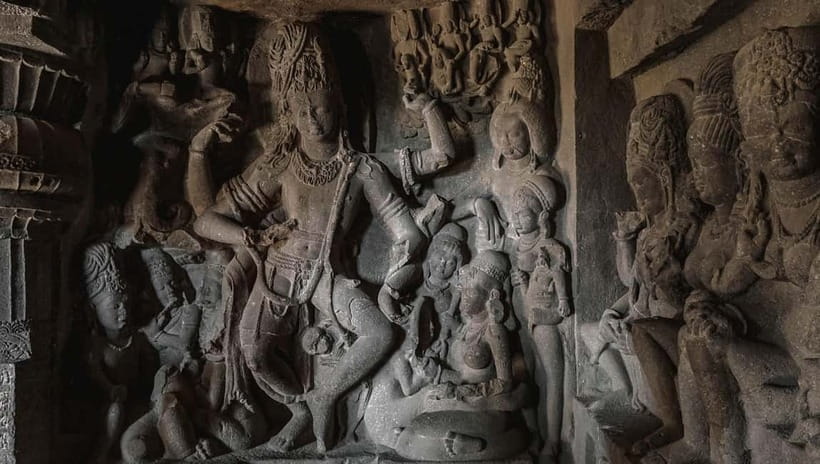
A good guide really helps at Ellora. With a guide, you’ll learn what key deities and legends relate to specific carvings, so the walls don’t feel like decoration—you get a sense of meaning. With only self-guided time, you can still enjoy it, but explanations tend to turn the “what am I looking at?” into “oh, that’s why this detail matters.”
Practical note: cave layouts mean you’ll be walking uneven stone paths. Wear something grippy. And yes, follow the slipper advice—at multiple points you’ll need to remove footwear.
Ajanta Caves: frescoes, sculptures, and Buddha scenes
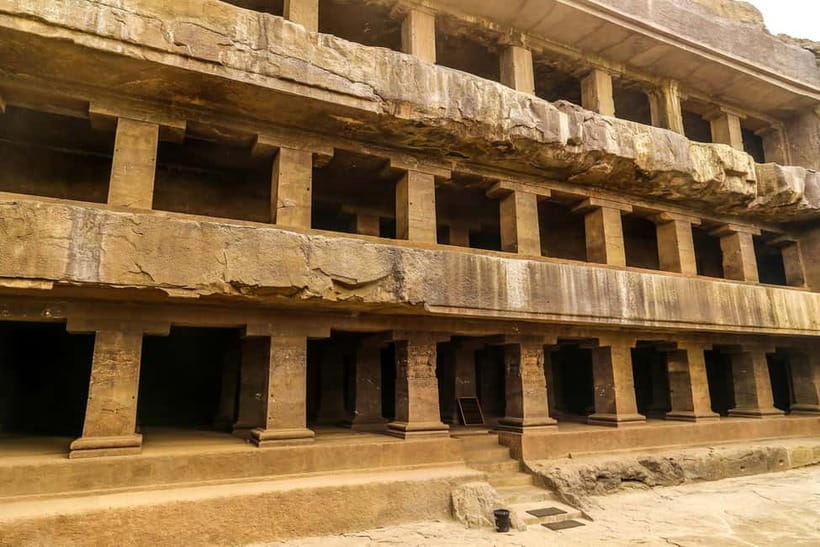
After Ellora, you head about 100 km to Ajanta. This part of the day is more about artwork than sheer stone engineering.
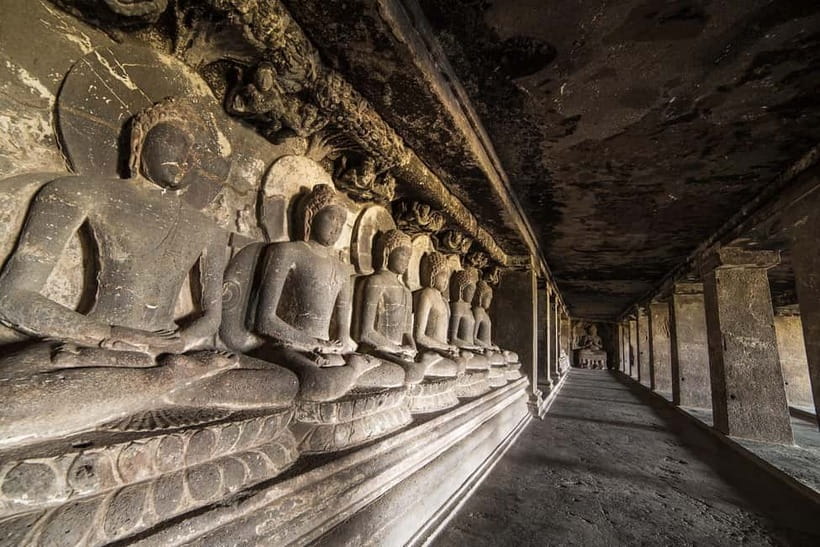
Ajanta contains 30 rock-cut caves filled with ancient frescoes and sculptures. The dates are roughly 200 BCE to 650 AD, which means you’re looking at artwork spanning a very long period. The result is a “how styles evolved” feeling as much as a “how did they paint this?” feeling.
Ajanta is especially known for its detailed frescoes depicting scenes from the life of the Buddha and related stories, along with sculpture work that gives faces and gestures a strong sense of personality. The caves can be dim, which is exactly why bringing a flashlight is mentioned. You’ll want enough light to spot details without fumbling too much.
Two hours at Ajanta can feel like a lot—then it’s over. You’ll likely do the most important caves, but the real trick is to slow down inside each one. Even in a fast schedule, spend time looking at wall paintings for facial expressions, clothing patterns, and scene composition. That’s where Ajanta stops being “a UNESCO site” and starts feeling like human work made with patience.
Also, keep your expectations realistic: this is not a leisurely museum visit. It’s a full-day cave tour where your comfort depends on what you pack and how you manage your energy.
Aurangabad pause: dinner, snacks, and a market stop
This tour includes time in Aurangabad between the cave visits and your flight. You get a chance for lunch/dinner and local snacks, plus a stop in an arts and crafts area if time allows.
Markets here can be a useful palate cleanser. Between cave time, you get normal street noise, shop displays, and small local treats. You may also have time for a market like a cloth market, or something focused on crystals, depending on the day’s schedule.
Important reality check: food and drinks are not listed as included. So build your plan around that. If the day gives you time to eat, great—but you should still bring backup snacks like biscuits, bottled water, and dry fruits. That advice is practical because the day is long and the cave walls mean you’re not constantly popping out to buy things.
One small detail that could surprise you: depending on timing, you might get a quick detour stop on the way to Ajanta. For example, there can be a stop at the tomb of a Mughal emperor en route, though it’s not something to rely on.
Guides and languages: what you should expect from the explanation
If you choose the option with a guide, you’ll get a live guide who can speak English, Hindi, Japanese, French, Spanish, Thai, Italian, or German. That matters because these caves are not just visual. They’re cultural documents—religion, patronage, and symbolism all show up in carving choices.
In particular, guides help you link artwork to the subject matter: deities, legends, and what certain scenes likely represent. Without context, you’ll still enjoy the visuals, but explanations turn the visit from scenic to meaningful.
The tour also uses professional drivers and air-conditioned transport, which is a big deal over long distances. Comfort doesn’t feel glamorous, but it’s the difference between enjoying your second cave and arriving at Ajanta slightly wrecked.
You might have private or small-group options too, and in practice that tends to reduce waiting time at key points and keep the day moving.




Getting around cave sites: slippers, light, and patience
This is one of those tours where your gear affects your enjoyment. Here’s what the tour information specifically recommends, and I agree with it:
- Wear slippers since shoes often need to come off at points inside the cave areas
- Bring an umbrella and sunglasses in case of rain or sun glare
- Pack a flashlight because cave areas can be darker than you expect
- Bring snacks like biscuits, bottled water, and dry fruits so you don’t crash mid-day
Also, there can be access limits. Sometimes the car can’t reach very narrow streets or certain spots. If that happens, you’ll be picked up or dropped off at the closest reachable point. It’s not dramatic, but it’s good to be mentally prepared for a bit of walking.
These are small annoyances compared to the payoff, but they’re the difference between a smooth day and an exhausted one.
What’s included, what’s not, and the ticket value math
Let’s talk money like adults. The price is listed as $49 per person, and that sounds almost too low for flights plus transfers. The key is what’s bundled:
Included:
- Mumbai → Aurangabad flight ticket (Indigo 6E-5298)
- Aurangabad → Mumbai flight ticket (Indigo 6E-5383)
- Airport pickup and drop-off in Aurangabad
- Air-conditioned vehicle and private transportation
- Toll, parking, fuel, and driver allowance
- Professional guide if you select the guide option
- Entrance charges for Ajanta and Ellora if entrance is selected in the option
Not included:
- Food and drinks
- Hotel accommodation
- Personal expenses
So the value comes from cutting two big costs: hotel nights and inter-city travel logistics. You’re spending a day doing what would otherwise take planning across flights, trains, or long road transfers.
One caution from real-world experience: entrance vouchers aren’t always honored smoothly. On at least one occasion, someone had to pay cash when their voucher wasn’t accepted. That doesn’t mean it will happen to you—but it’s smart to bring a little extra cash as a backup for entrance charges, especially if you’re unsure what’s included in your specific option.
Group size and comfort: private car versus a crowd
This tour offers private or small groups, which typically helps your day. With a small group, you spend less time waiting for stragglers and more time actually looking at carvings.
You’ll also benefit from the way the day is structured around the flight window. Drivers can’t just take detours when you’re tight on time. If you value control, a small-group or private setup can make the experience feel smoother.
The trade-off is that a private plan can also make you more responsible for pacing yourself. If you try to see every cave detail at a sprint, you’ll feel it later. Use your time for close-looking rather than rushing.
Who should book this Ajanta and Ellora day tour
This tour is a strong fit if you want:
- a practical way to see both Ajanta and Ellora without an overnight stay in Aurangabad
- flights included from Mumbai so you don’t have to juggle schedules
- guided context for frescoes, sculptures, and temple symbolism
- an itinerary that ends with you safely back at Mumbai by late evening
It’s not ideal if:
- you hate early starts (the flight arrival at 06:15 drives the whole day)
- you want long, slow cave wandering with lots of breaks
- you’re sensitive to walking on uneven stone floors and removing shoes
If you’re traveling solo, or you like a straightforward plan that handles transfers, this one-day option can be a very efficient use of time.
Should you book this Ajanta & Ellora day tour from Mumbai?
If your priority is maximum UNESCO time with minimum logistics pain, I’d say yes—with a couple of smart caveats. Bring slippers, sunglasses, an umbrella, and a flashlight. Plan to buy your own food since it’s not included. And double-check what entrance charges are covered in your chosen option, keeping a small cash buffer just in case.
The reason to book is simple: you get the famous Ellora Kailasa Temple and the art-focused Ajanta fresco caves in one day, and the flight-based structure keeps the plan reliable. For $49, the best part isn’t the price tag—it’s that the hard parts are handled, so you can spend your energy doing the part that matters: looking at the stonework and seeing what those centuries left behind.
FAQ
What time does the tour start from Mumbai?
You fly from Mumbai to Aurangabad on Indigo 6E-5298, departing at 05:15 and arriving at 06:15.
How long does the tour take?
It’s a one-day tour with a full schedule from the morning arrival in Aurangabad through your return flight to Mumbai in the evening.
What time do I return to Mumbai?
You return on Indigo 6E-5383, departing Aurangabad at 21:25 and arriving Mumbai at 22:20 (about 9:25 p.m.).
Where do you pick me up?
Pickup is from Aurangabad Airport. Pickup can also be arranged from other places in Aurangabad if you choose that option.
Do I get a guide?
A professional guide is included if you select the option that includes a guide.
What languages are available for the guide?
The live tour guide language options listed are English, Hindi, Japanese, French, Spanish, Thai, Italian, and German.
Are entrance fees for Ajanta and Ellora included?
Entrance charges for Ajanta and Ellora are included if the option you select includes entrance fees.
Is food included?
Food and drinks are not included. The schedule includes time for lunch/dinner and snacks, but you’ll need to cover your own meals.
What should I bring for the caves?
Wear slippers, and bring an umbrella, sunglasses, a flashlight, plus snacks like biscuits, bottled water, and dry fruits.
Is there free cancellation?
Yes. Free cancellation is available up to 24 hours in advance for a full refund.