REVIEW · MUMBAI
“Mumbai Dharavi Slum Tour”
Book on GetYourGuide →Operated by Navigate Mumbai Tours · Bookable on GetYourGuide
You can’t fake the feeling in Dharavi. This Mumbai Dharavi Slum Tour mixes street-level industry, homes, and the maze of alleys into a guided walk that lasts just 2–3.5 hours. You start near the Mahim train area, cross a railway bridge, and follow your guide through the same paths many people use every day.
Two things I especially like: you get a guided look at real work (recycling and making goods) and you also get help talking to locals, not just staring. In the process, you’ll see how plastics, wood, and cardboard get recycled, how items like clothing and backpacks are produced, and later how leather manufacturing and Kumbharwada pottery fit into daily life.
One drawback to keep in mind: you’ll walk and navigate narrow lanes, so you need comfortable shoes and a calm, respectful attitude, plus the tour notes suggest avoiding overly short outfits for ladies.
In This Review
- Quick hits: what makes this Dharavi walk work
- Where the tour starts near Mahim station
- Crossing the railway bridge to get oriented
- Industrial Dharavi: recycling and making goods you can spot
- Residential Dharavi and the largest sewer in Mumbai
- Fresh produce markets, schools, and learning practices
- Leather manufacturing and Kumbharwada pottery in the same loop
- Narrow alleys and living conditions: what to pay attention to
- Walking reality, respectful behavior, and what to wear
- Price and value: what $4.39 buys you
- Who should book this Mumbai Dharavi tour?
- Should you book the Mumbai Dharavi Slum Tour?
- FAQ
- How long is the Mumbai Dharavi Slum Tour?
- Where do I meet for the tour?
- Is the tour guided?
- What’s included in the price?
- Are meals included?
- What parts of Dharavi will the tour cover?
- Will I see the largest sewer in Mumbai?
- Does the tour include a private group option?
- Is it suitable to visit in any weather?
- Is there free cancellation?
Quick hits: what makes this Dharavi walk work
- Meeting near Mahim train station makes it easy to start and finish without extra fuss.
- A guided route that changes zones: industrial first, then residential, so you see how the place functions end-to-end.
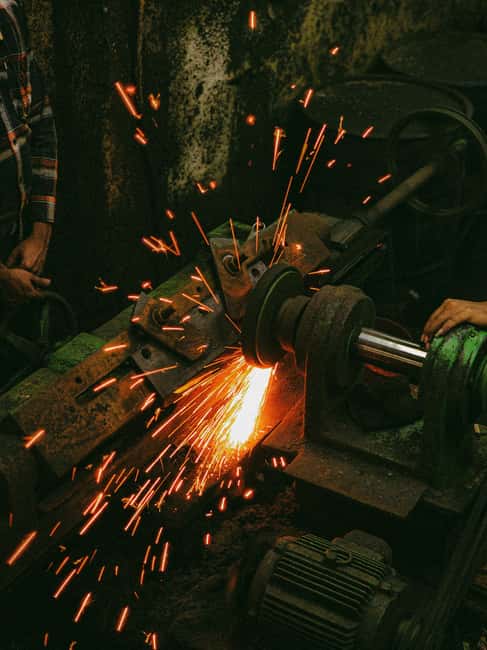
- Recycling + small manufacturing stops show you where materials go before they become products.
- Schools, markets, and everyday services give more context than a “factory only” tour.
- Leather work and Kumbharwada pottery bring craft into the story, not just daily logistics.
- The confusing alleys are part of the point: you don’t need to figure it out alone.
Where the tour starts near Mahim station
The tour meets at a coffee shop near the Mahim train station (West). That sounds simple, but it’s actually a smart way to do this area. Mahim is a working neighborhood, so you’re not arriving somewhere staged or separated from Mumbai life. You’ll also end back near the same coffee shop, which makes the whole loop feel self-contained even though you’re walking through an active community.
If you’re trying to fit this into a busy day, the location helps. You don’t need long transfers or multiple rides—just show up, meet your English-speaking guide (English and Hindi are available), and begin.
Bring an open mind about what you’ll see next. This is a living area, and your guide’s job is to give structure so your eyes know what they’re looking at.
You can also read our reviews of more tours and experiences in Mumbai.


Crossing the railway bridge to get oriented
Right after the start, you cross a railway bridge on your way into Dharavi. It’s a quick threshold moment, and it matters. You’re not being dropped directly into alleys; you’re getting a guided intro first.
Your guide discusses slums around the world and then narrows in on Dharavi—what it is, why it exists as it does, and what kinds of living conditions shape daily routines. That background helps you avoid the common trap of turning every scene into a single emotion. You’ll likely see a mix of practicality, hard work, and community life.
Then you step in and the tour begins in the industrial area.
Industrial Dharavi: recycling and making goods you can spot
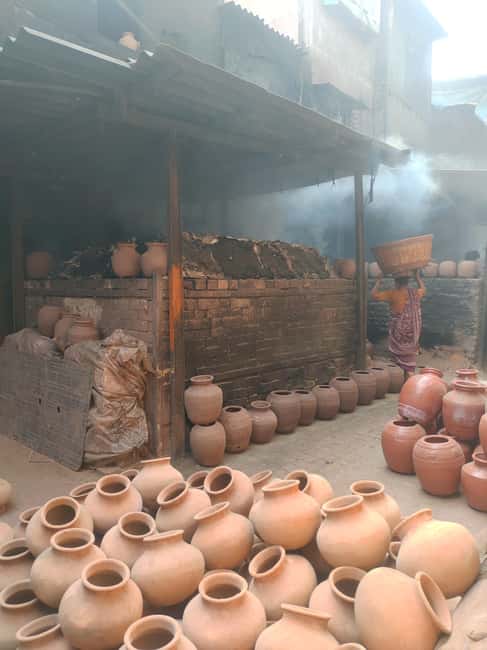
The first big section focuses on work. This is where Dharavi can feel most eye-opening, because you see the flow of materials and how small-scale industry turns into finished (or nearly finished) products.
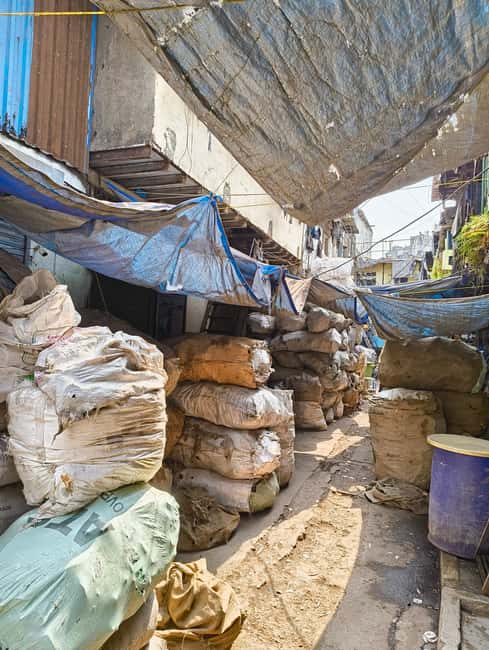
You’ll observe recycling activities involving plastics, wood, and cardboard. Even if you’ve seen recycling before, this feels different because it’s part of the same walk you’re taking—materials aren’t a distant concept. They’re right there, being handled and sorted with purpose.
From recycling, the tour moves into manufacturing sites for items like clothing, backpacks, and luggage. This is useful context for what you might otherwise miss. Instead of imagining “factories” in a distant, formal sense, you see how production can operate inside tight spaces—how work happens where people also live.
Your guide also talks about migrants in Dharavi and living conditions. That’s important because Dharavi isn’t just about industry; it’s about people building livelihoods while adapting to limited space.
A small practical takeaway: if you like understanding how everyday systems work, this industrial sequence is the heart of the tour.
Residential Dharavi and the largest sewer in Mumbai
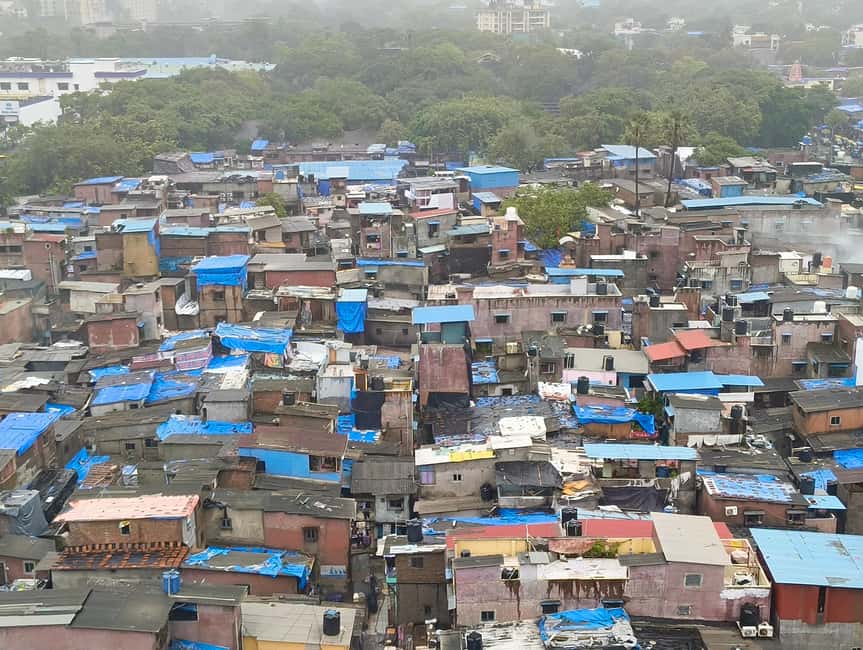
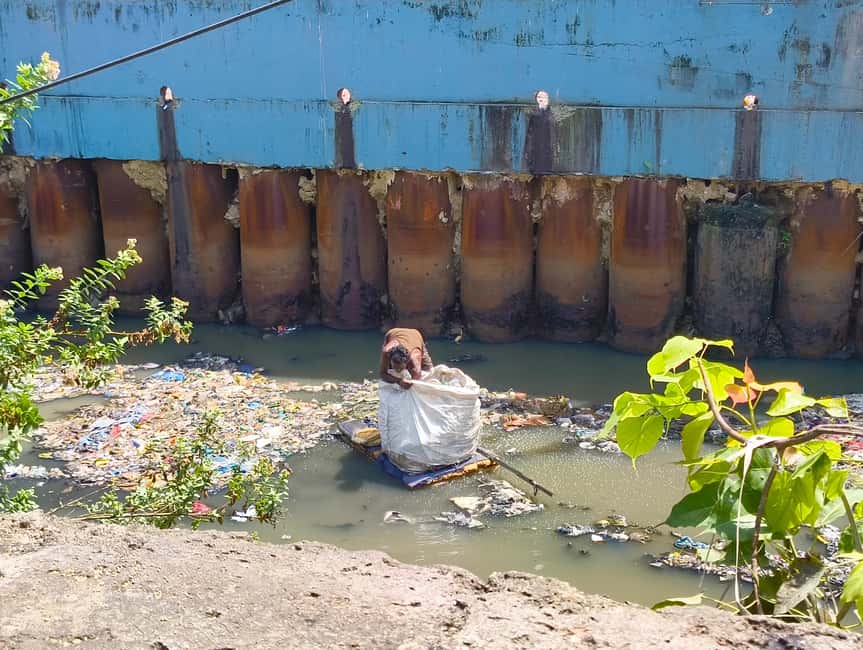
Next you cross a street to enter the residential part, and you’ll see the largest sewer in Mumbai. That’s not there just for shock value. It’s a concrete way to understand infrastructure and how sanitation affects daily life in densely packed neighborhoods.
Once you shift from industrial to residential, the pacing changes. You’re still walking, but your attention moves from production to living. Your guide points out what the area looks like from street level and helps connect the dots between work zones and home life.
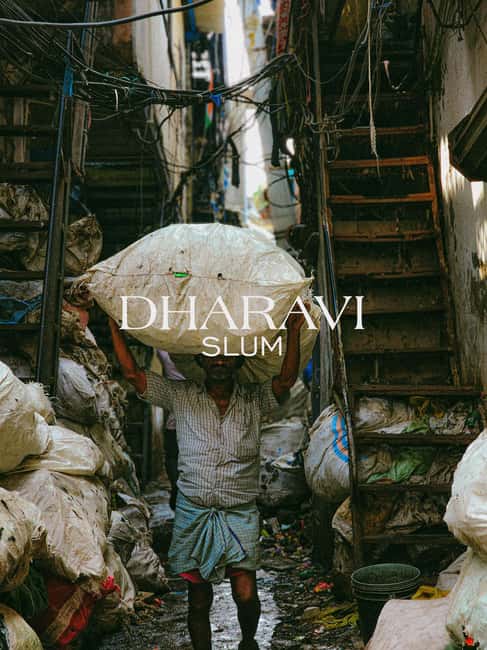
This is also where you’ll start noticing that the “confusing alleys” aren’t just confusing. They’re functional. People use narrow routes to move goods, visit neighbors, and reach schools and markets. If you’re expecting wide streets and tidy signage, you’ll need to let go of that.
Then you get into the second residential visit.
Fresh produce markets, schools, and learning practices
In the residential area, you’ll explore a local market with fresh produce. This is one of my favorite parts to recommend because it slows the tour down emotionally. It’s harder to think only in terms of industry when you’re also looking at what people buy and how daily food routines take shape.
From there, your guide takes you to various schools and talks about educational practices. The value here is not just “there are schools.” It’s how education fits into the rhythm of community life, especially when space and resources are tight. You’ll come away with a better sense of what “future building” looks like on the ground.
If you’re the type who likes tours that don’t reduce people to a single label, this section helps a lot. You’re seeing community priorities through everyday institutions.




Leather manufacturing and Kumbharwada pottery in the same loop
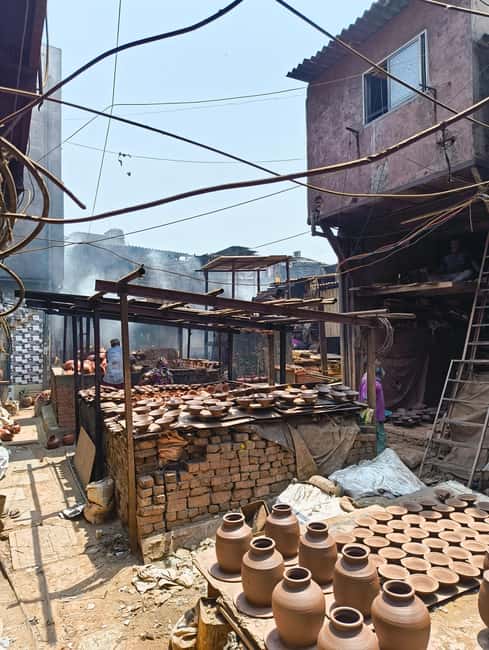
Two craft-and-production stops stand out because they’re specific: leather manufacturing and Kumbharwada pottery.
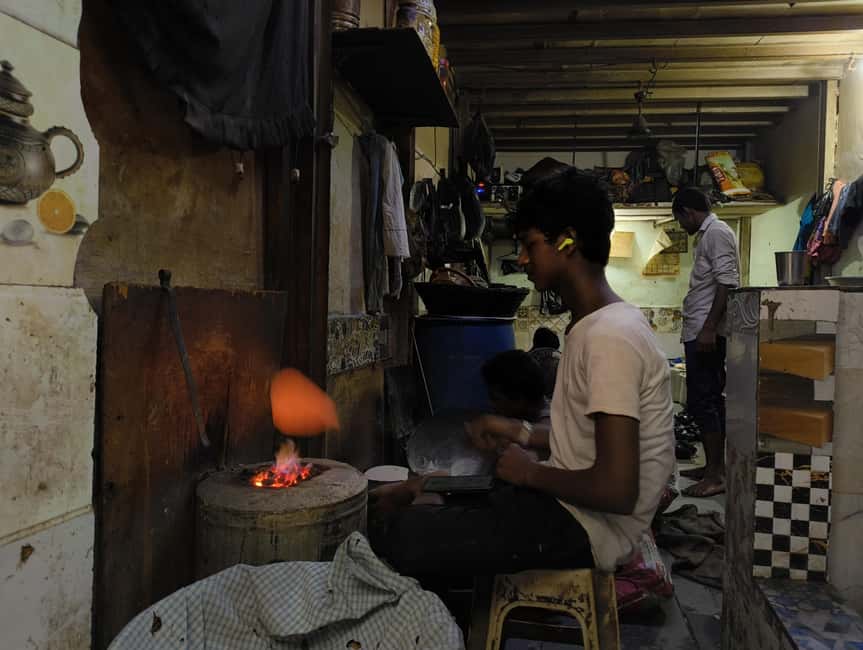
You’ll discover the leather manufacturing process. Even when you don’t know the technical steps, you’ll understand the basics quickly because your guide explains what you’re seeing and why each stage exists. It’s one thing to hear that Dharavi makes goods; it’s another to watch a production chain unfold right under your feet.
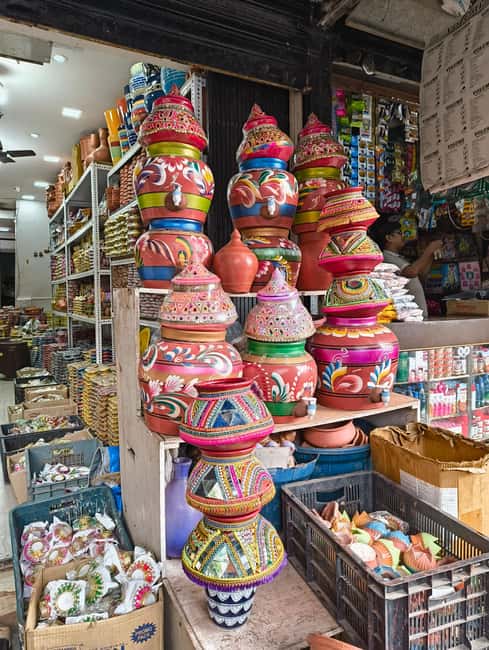
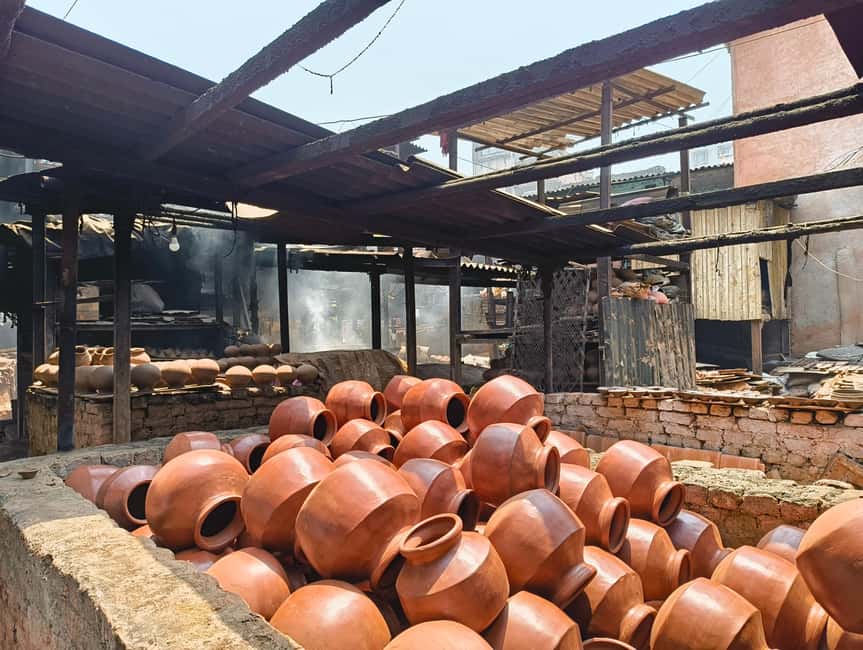
Then comes Kumbharwada, known for pottery. You’ll see traditional pot-making skills there. Pottery gives you a different texture than recycling or leather. It’s slower, more tool-based, and easier to connect to older craft traditions. When you pair it with the industrial part, the overall picture becomes clearer: Dharavi isn’t only about reuse—it also includes skilled making.
If you’re worried that this tour will feel repetitive, these two craft stops are a good antidote. They add variety without pulling you away from the same neighborhood reality.
Narrow alleys and living conditions: what to pay attention to
The last part includes time in narrow alleys with a focus on living conditions. This is where your guide’s role really matters. Without context, it would be easy to stare at scenes you don’t understand. With guidance, you’ll start noticing patterns—how people manage limited room, how routes connect, and how daily routines keep moving despite complexity.
I also like that the tour doesn’t try to force one interpretation. You’ll likely see practical work and also a sense of normal life continuing. One theme that comes up with guides such as Javed, Ruqaiyya, Ravi, and Kavita (names that have been associated with this tour) is enthusiasm and respect in how they tell stories—often with humor or a confident, local-style explanation.
That matters because Dharavi can feel emotionally heavy if you approach it with the wrong expectations. A good guide helps you see dignity and effort without turning the tour into tragedy tourism.
Walking reality, respectful behavior, and what to wear
Plan for walking. Even though the time is just 2 to 3.5 hours, you’ll be moving through tight areas and crossing small sections of the neighborhood.
The tour notes include a couple of practical reminders:
- Wear suitable clothes for the weather.
- Ladies should not wear overly short outfits.
That’s not just about rules. It’s about blending in. When you look and act like you understand you’re visiting a working residential community, your whole experience gets easier.
Also bring a steady mindset. You’ll see industry, schools, markets, and homes in close proximity. Don’t expect a quiet, museum-style atmosphere. Expect human-scale daily life.
Price and value: what $4.39 buys you
The listed price is $4.39 per person for a guided, English-speaking experience lasting 2–3.5 hours, with packaged bottled water included.
That’s unusually low for a structured guided walk with multiple stops. The value is in the route design: you don’t just enter and wander. You’re guided through industrial work, then residential life, then craft areas like Kumbharwada, with explanations along the way.
Meals are not included, so you’ll want to plan food separately. If you’re doing this as a half-day experience, it pairs well with other Mumbai neighborhoods where you can process what you saw and then eat something simple afterward.
You’ll also have flexibility options like reserve now and pay later, and free cancellation up to 24 hours in advance. Those details matter if your Mumbai schedule is still in flux.
Who should book this Mumbai Dharavi tour?
This tour makes the most sense if you:
- Want a guided walk that focuses on how the neighborhood works, not just visuals.
- Like practical, street-level explanations about industry, markets, and education.
- Prefer a route with clear zones: industrial first, residential second, then craft areas.
- Are comfortable with walking in busy, narrow lanes.
It may be less ideal if you’re looking for a low-walking, low-intensity experience or if you strongly prefer curated viewpoints. Dharavi isn’t built for tourists to be passive. The whole point is to follow a guide through real, close-up life.
If you’re traveling with a private group, it can be a good option when you want tailored pace and questions (language support is English and Hindi).
Should you book the Mumbai Dharavi Slum Tour?
I’d book it if you want an honest, organized way to understand Dharavi through daily functions: recycling, manufacturing, schools, markets, leather work, and pottery. The structure matters. Without it, you could spend your time confused. With a guide, you can see the connections between work and home.
I’d skip it if your main goal is “safe sightseeing” with minimal human proximity. This tour is about walking through a real community and learning to interpret what you see.
If you decide to go, do it with the right attitude: dress appropriately, keep your steps steady, and let your guide do the explaining—especially during the shift from industrial Dharavi to residential alleys and crafts.
FAQ
How long is the Mumbai Dharavi Slum Tour?
The duration is 2 to 3.5 hours.
Where do I meet for the tour?
You meet at a coffee shop near the Mahim train station (West).
Is the tour guided?
Yes. You’ll have an English-speaking live guide, and English and Hindi are available.
What’s included in the price?
An English-speaking guide and packaged bottled water are included.
Are meals included?
No. Meals are not included.
What parts of Dharavi will the tour cover?
You’ll visit the industrial area (recycling and manufacturing), then the residential area (market, schools, leather manufacturing, and Kumbharwada pottery), plus time in narrow alleys focused on living conditions.
Will I see the largest sewer in Mumbai?
Yes, the tour includes seeing the largest sewer in Mumbai while entering the residential part.
Does the tour include a private group option?
Yes, private group availability is offered.
Is it suitable to visit in any weather?
You should wear a suitable outfit according to weather conditions.
Is there free cancellation?
Yes, you can cancel up to 24 hours in advance for a full refund.