REVIEW · NEW DELHI
Delhi: Ethical Sanjay Colony Slum Tour
Book on GetYourGuide →Operated by Reality Tours and Travel Private Limited · Bookable on GetYourGuide
Sanjay Colony shows Delhi’s other side. This small-group walk is built around respect-first visits and a strict no-photography rule, so you focus on people and context instead of ticking boxes. I like how it’s designed to feel safe, educational, and non-intrusive from the first few minutes.
I especially love the way the tour explains work here, not just hardship. You’ll see garment recycling and manufacture up close, plus other micro-businesses, which makes the local economy feel real and understandable.
The trade-off is that it’s not a scenic, monument-hunting outing. You’ll walk through areas that can look rough, and you won’t be able to take photos even if you want proof for later.
In This Review
- Key things to know before you go
- Ethical Slum Tourism in Delhi: What’s Actually Different Here
- Where Sanjay Colony Fits Into Delhi (and Why That Location Matters)
- Price and Timing: $18 for 2–3 Hours That Isn’t Just a Walk
- Meeting Points, Route Flow, and What the First Minutes Are Like
- Inside Sanjay Colony: Homes, Children, Shops, and Community Energy
- The Best Part for Most People: Garment Recycling and Small Workshops
- Religious Landmarks: A Temple and Jama Masjid Sanjay Colony
- The View Point: Why They Stop You Mid-Walk
- Reality Tours & Travel Base and How Reality Gives Supports Locals
- Guides Make or Break This Tour: Names and What to Expect
- What to Bring (and What Not to Bring) for a Respectful Visit
- Safety, Comfort, and Group Size: How It Works in Practice
- Value and Impact: Why This $18 Tour Can Feel Worth It
- Who Should Book This Sanjay Colony Walk—and Who Should Skip It
- Should You Book This Ethical Sanjay Colony Tour?
- FAQ
- Is this tour strictly no-photo?
- How long is the Sanjay Colony slum tour?
- What’s included in the price?
- Where do I meet the guide?
- What should I wear and bring?
- Is it wheelchair accessible?
Key things to know before you go
- No-photography policy keeps the focus on conversation and protects residents’ privacy
- Garment recycling is the star, with small workshops tied to nearby industrial supply chains
- Local guides (often from the community) set the tone for safety and respectful questions
- Religious stops include a Hindu temple and Jama Masjid, showing daily life’s full mix
- Reality Gives support connects your ticket to on-the-ground education and youth programs
- Dress for walking: closed-toe shoes and modest clothes matter, especially during monsoon months
Ethical Slum Tourism in Delhi: What’s Actually Different Here
In Delhi, most tours teach you how the city looks from the outside. This one tries to teach you how it works from inside a neighborhood—by using your questions, your guide’s context, and a careful pace.
What I find smart about the approach is that it’s built for conversation. You’re not rushed, and you’re guided to replace stereotypes with specifics: what people do for work, how daily routines fit together, and how the community organizes itself when conditions are hard. The operator frames the experience as educational, with a clear goal of debunking negative assumptions about slums.
I also like that the tour doesn’t pretend everything is fine. Instead, it shows the balance: challenging housing and infrastructure alongside warmth, familiarity, and a kind of everyday optimism people carry even when resources are limited.
You can also read our reviews of more tours and experiences in New Delhi.


Where Sanjay Colony Fits Into Delhi (and Why That Location Matters)
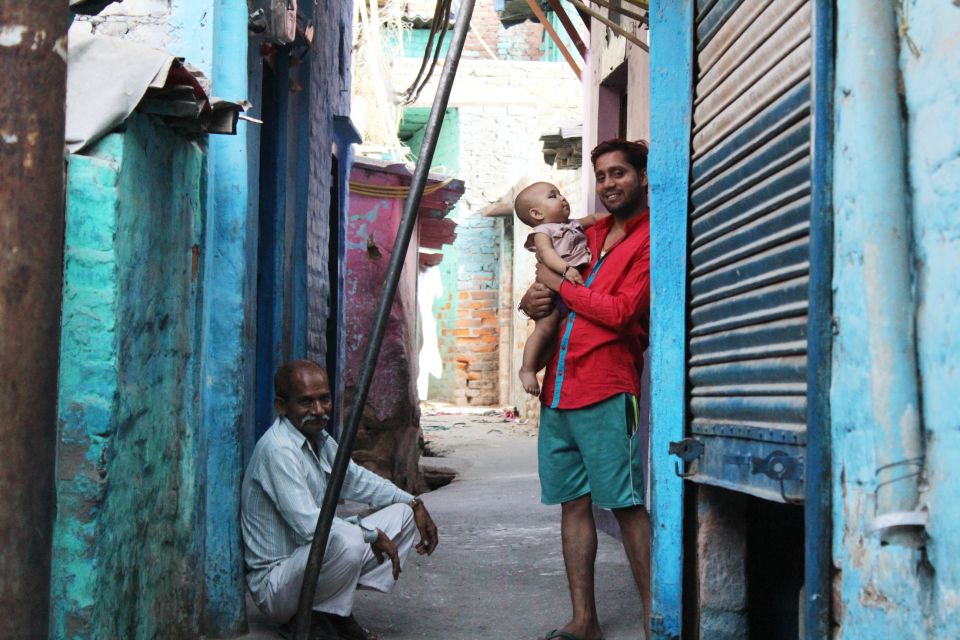
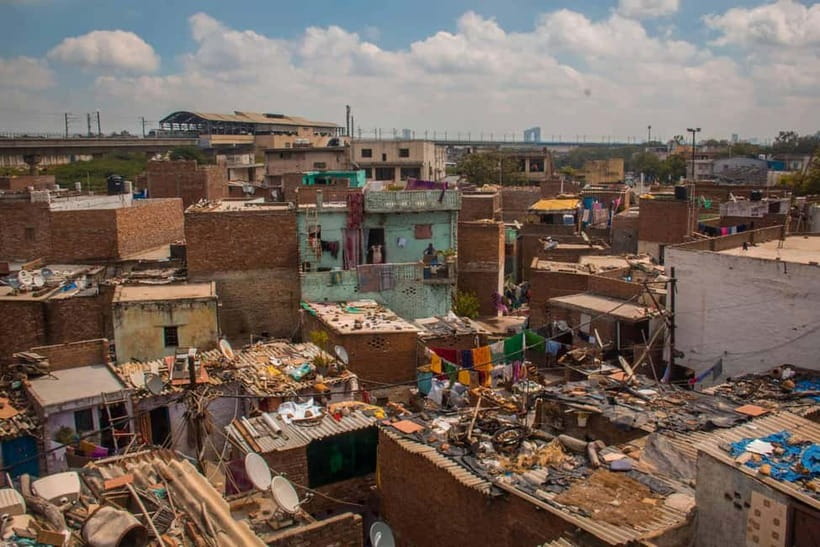
Sanjay Colony is a smaller slum community on about 25 acres in South Delhi, near major landmarks including the Bahá’í Lotus Temple and the ISKCON (Hare Krishna) temple area. It’s also surrounded by one of India’s biggest industrial zones, which helps explain why so many jobs are linked to recycling, manufacturing, and parts work.
The scale matters. It’s home to an estimated 50,000 people, so you’re not visiting a single, tiny street corner. You’re walking through a place with its own neighborhoods, routines, and small economies—plus shared spiritual spaces. That makes your visit more than a quick shock; it’s a glimpse into how a large community keeps itself functioning.
And here’s the useful mental shift: slums are not just “poverty scenery.” They’re built environments where labor, networks, and local skills keep things moving.
Price and Timing: $18 for 2–3 Hours That Isn’t Just a Walk
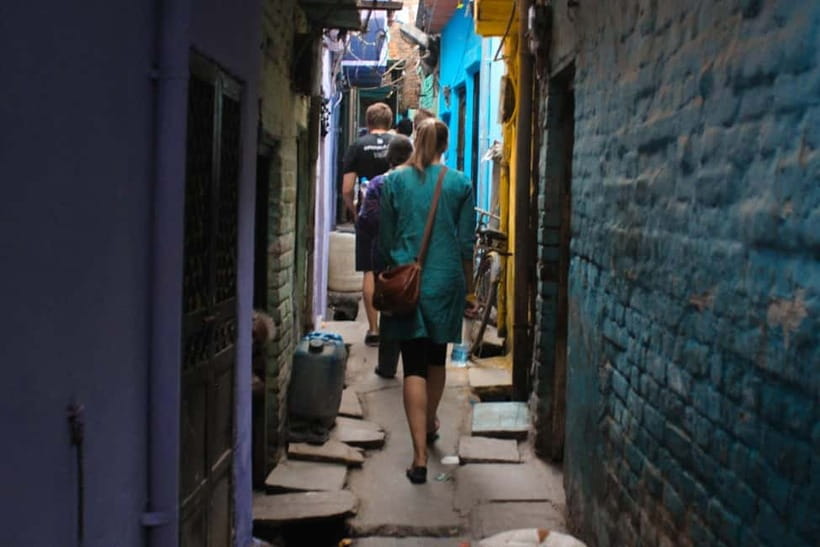
At about $18 per person for 2 to 3 hours, this is priced in the range of many standard Delhi walking tours. The difference is what you’re paying for: a guided route through residential streets, visits to small workshops, and a conversation-heavy format that’s meant to respect residents while still being educational.
You’ll usually be in a shared group unless you select a private or smaller-group option. Shared tours can mean you’re sharing attention with other visitors, but the walk is still structured with safety briefings and timed visits.
You’ll also get water or a cold drink, which sounds small until you’re halfway through a walking schedule in Delhi’s heat.
What’s not included is hotel pickup/drop-off, and food. So plan your day like a normal city walk: eat before, and keep your expectations focused on learning, not meals.
Meeting Points, Route Flow, and What the First Minutes Are Like
You start at one of several meeting points, depending on what you booked—either Harkesh Nagar, Harkesh Nagar Okhla, or Rajiv Chowk Metro Station. The tour ends at drop-off locations near Harkesh Nagar or Harkesh Nagar Okhla Metro Station.
Once you meet your guide, there’s a short safety briefing—about 5 minutes—then you head into Sanjay Colony on foot. That early orientation matters because this isn’t a typical “follow the leader” stroll. Your guide sets boundaries on behavior, explains what to watch, and encourages respectful questions.
You’ll also notice how the group moves: not quietly creeping around, and not barging. It’s a steady walking rhythm, with occasional stops for explanation at each key site.
Inside Sanjay Colony: Homes, Children, Shops, and Community Energy
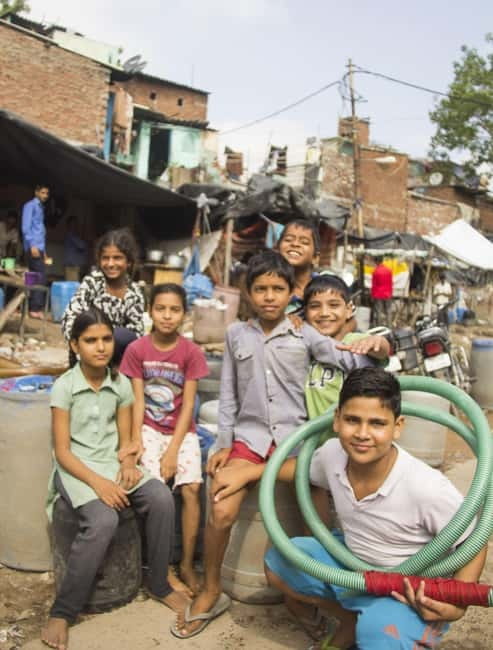
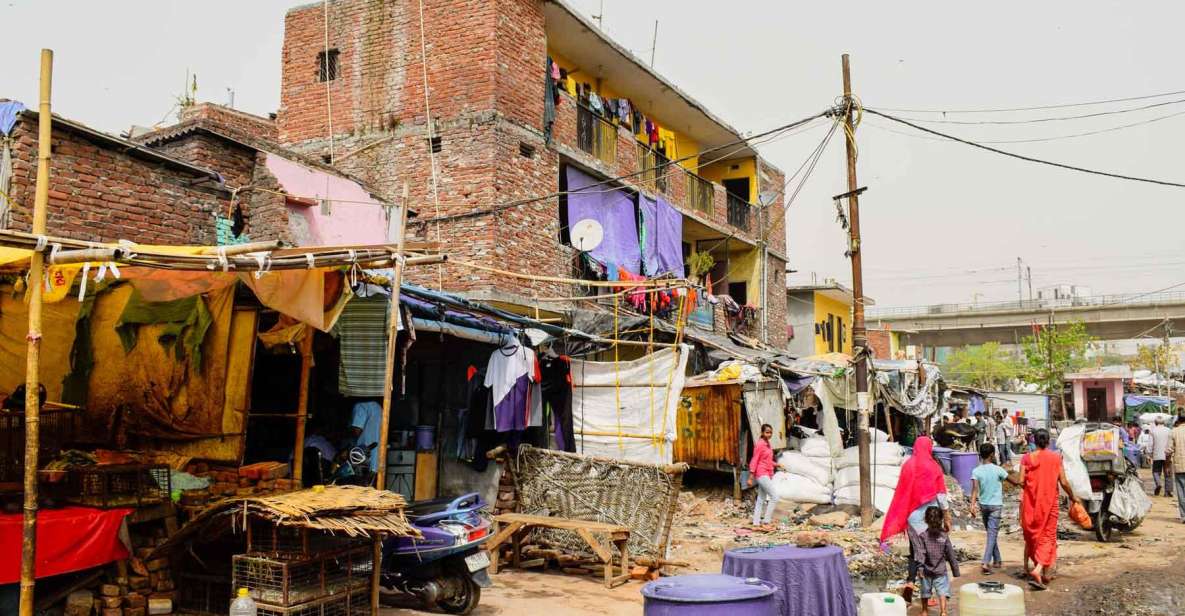
The main portion happens as you walk through Sanjay Colony itself. You’ll pass through residential areas and see small community spaces, including a small temple and a mosque. This is where the tour does its best work: turning the word slum into something you can picture—streets, homes, shared space, and daily decisions.
One of the most repeated themes in guide behavior is calm professionalism. Guides like Komal, Kiran, Naresh, and Kavita are described as patient, respectful, and able to answer questions clearly. That helps because it’s easy to arrive with assumptions, and the tour is structured to challenge them without shaming you for wondering.
You may also interact with children in the neighborhood. Kids often pause to watch, wave, and chat. Expect playful curiosity. This isn’t a staged photo moment—your guide keeps things respectful while you get to see what it looks like when a community continues living, joking, and learning even in tight conditions.




The Best Part for Most People: Garment Recycling and Small Workshops
If you’re coming for one specific reason, it’s usually this: the tour shows work you can’t easily understand from a distance.
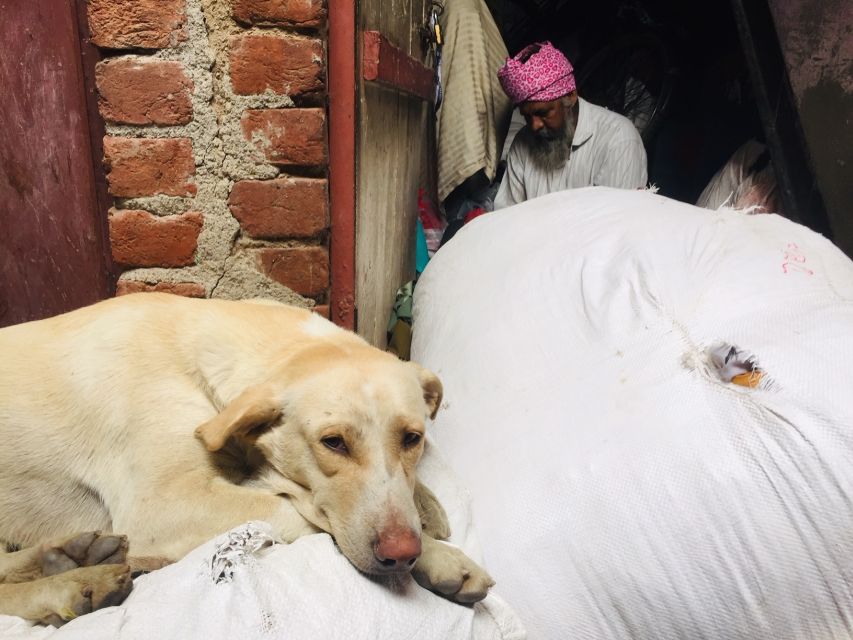
Garment recycling and manufacture are major industries in Sanjay Colony. You’ll see the process and the logic behind it—how fabric scraps move through sorting, repair, and re-production workflows. It’s part industrial supply chain, part local skill economy, and it’s visible in the way people organize tasks and space for production.
Along the way, you’ll visit small businesses, including a stop at S.K Beri & Brothers Private Limited for about 15 minutes and another workshop stop at VIJAY PRATAP for about 10 minutes. These aren’t huge factories with glass windows. They’re small, working spaces where you can often understand the scale of labor more clearly.
Beyond textiles, you’ll also hear about other micro-industries in the area, including automotive parts and electronics. The practical value for you is that the tour helps you connect a wider industrial Delhi to a community that feeds off it—work pulled in from outside, then shaped into livelihoods here.
Religious Landmarks: A Temple and Jama Masjid Sanjay Colony
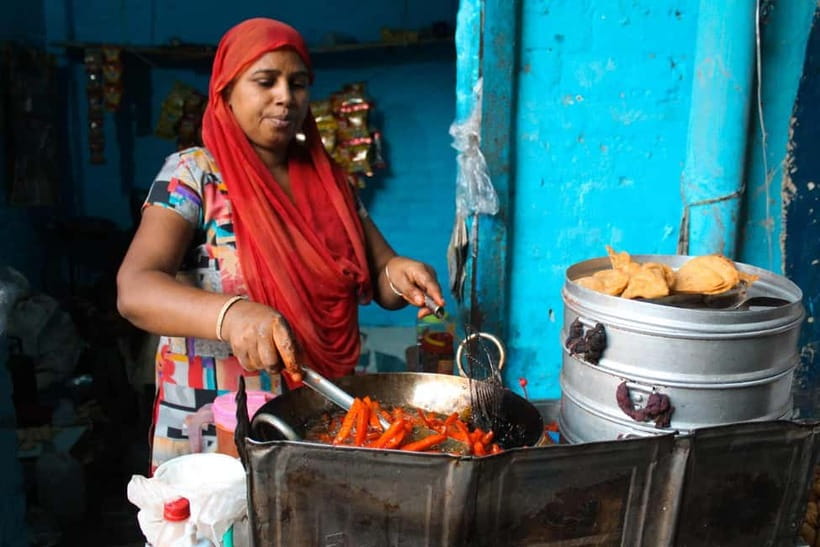
The tour includes visits to both a Hindu temple and the Jama Masjid Sanjay Colony. These stops are short—minutes rather than long services—but they matter.
They show daily life’s full texture: worship, community gathering, and shared public spaces. And they also reinforce the tour’s purpose. Instead of treating Sanjay Colony as one-note poverty, the religious sites remind you that residents live full cultural lives, not just survival routines.
The most important takeaway is how guides handle respect. You’re not treated like a spectator who can point and stare. You’re guided to look, listen, and understand what these places mean in ordinary life.
The View Point: Why They Stop You Mid-Walk
There’s a view point stop that lasts about 20 minutes. This isn’t about taking dramatic photos—remember the no-photography policy. It’s about using your eyes differently.
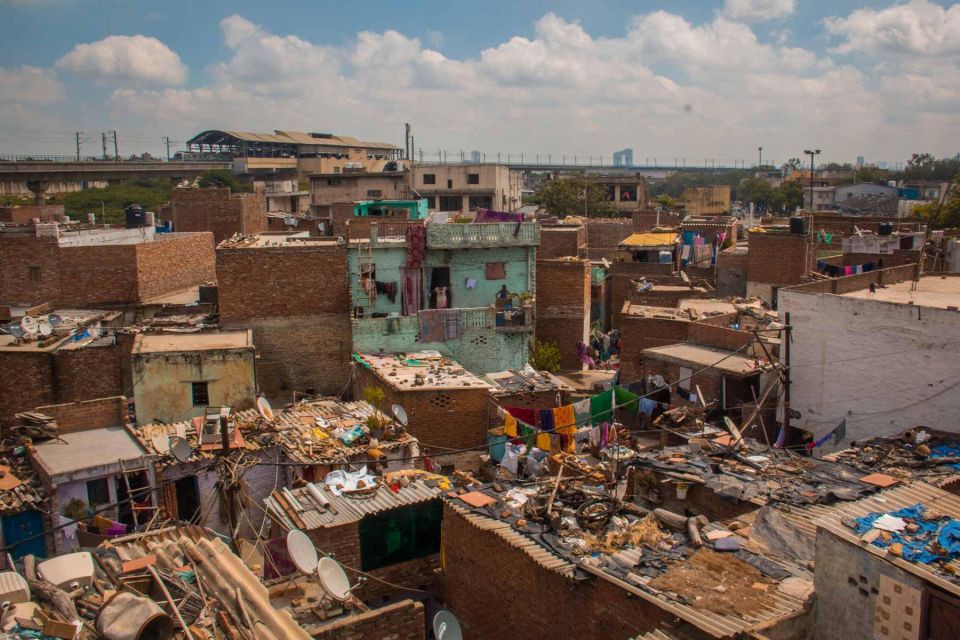
From a higher perspective, you can better understand how the community is laid out, how streets connect, and how the neighborhood functions as a whole. It’s a moment for perspective shift: you stop thinking about one lane or one workshop, and you start seeing the place as an interconnected system.
For many visitors, this is where the tour clicks mentally.
Reality Tours & Travel Base and How Reality Gives Supports Locals
Near the end, there’s time at the Reality Tours & Travel – Delhi office area (about 20 minutes). This is where the tour connects what you saw to what your payment supports.
The tour explains how the NGO work called Reality Gives supports local NGOs and brings its programs into Sanjay Colony. The most consistent theme from visitor comments is that a large share of the operator’s profits goes back into community projects, including education and youth support. You’ll also hear about classes and local learning initiatives, including English and computer education for kids.
Even if you care mostly about the street-level learning, I’d still say this stop is worth your attention. It helps you understand the difference between extractive tourism and a structured model where the community gets ongoing support.
Guides Make or Break This Tour: Names and What to Expect
This kind of visit depends on human skill. The tour’s safety and tone come from guides who know how to explain without turning residents into props.
A few guide examples mentioned include Kavita, Naresh, Khushi, Tarun, Dolly, Komal, and Kiran. Across these accounts, the pattern is the same: guides are described as professional, respectful, and quick to answer questions with context.
One detail I really like is that some guides help you with real logistics once the tour ends. For example, Kiran provided written metro-navigation instructions for getting back to the meeting area. That kind of extra care makes the experience less stressful, especially if you’re not a Delhi metro regular.
What to Bring (and What Not to Bring) for a Respectful Visit
This is a walking tour through areas that can be dirty. The tour strongly recommends comfortable closed-toe walking shoes and comfortable clothes, with an emphasis on modest clothing (no low-cut or sleeveless tops and no short shorts).
There’s also a seasonal note: during the monsoon months (June to mid-September), some areas may be extra muddy, so shoes matter even more.
Not allowed:
- Cameras (strict no-photography policy)
- Pets
- Baby strollers
- Luggage or large bags
It’s not just a rule; it changes how you experience the day. Without a camera in your hand, you’ll talk more, notice more, and rely on your guide’s explanations.
Safety, Comfort, and Group Size: How It Works in Practice
Most people worry about safety when the tour involves a slum neighborhood. Here’s what you can count on based on the tour’s structure and guide behavior: there’s a safety briefing at the start, the route is guided, and the experience is designed to be non-intrusive.
Group size can be shared or private/small group. Shared tours mean other guests may be with you, so keep your questions respectful and avoid turning the walk into a conversation that blocks others. Private tours are calmer if you want more back-and-forth.
Two other practical limits from the tour info:
- Not suitable for wheelchair users
- Not suitable for people over 95 years
If you’re within those boundaries, the walk is manageable for many visitors because the route is paced and guided.
Value and Impact: Why This $18 Tour Can Feel Worth It
Here’s my honest way to think about value. In Delhi, you can spend money on tours that give you photos, driver time, and a checklist of attractions. This tour is different. You’re paying for guided access that’s ethical, for educational context, and for visits to small working spaces tied to local livelihoods.
Add in the fact that the tour is connected to Reality Gives and community education support, and the money goes beyond your own itinerary. Multiple comments describe a significant share of profits returning to education and youth projects, which makes the experience feel less like you are consuming a place and more like you are supporting a long-term effort.
At the same time, you should match your expectations to what this tour is: it’s not about comfort, scenery, or monumental sights. It’s about understanding a real community and the work that sustains it.
Who Should Book This Sanjay Colony Walk—and Who Should Skip It
This is a great fit if:
- You want Delhi beyond the usual historic sites
- You care about how everyday economies work
- You’re comfortable asking questions and listening to respectful explanations
- You prefer learning through walking and conversation over museum-style viewing
You might skip it if:
- You need a fully accessible route (it’s not designed for wheelchair users)
- You want a camera-friendly, photo-based experience (the tour bans cameras)
- You’re expecting a view-heavy sightseeing format instead of a community-focused visit
If you want to pair your time in Delhi with related options, the tour description notes you can combine it with a food tour via their offerings or with a Delhi art tour. That pairing can balance your day: one side is street life and labor, the other is cultural expression and local creativity.
Should You Book This Ethical Sanjay Colony Tour?
If you’re curious about how modern Indian cities function when you look past the monuments, this tour is a strong choice. The no-photography rule isn’t there to limit you—it forces you to pay attention. The workshop stops around garment recycling give you a rare window into the informal and small-scale industries that support thousands of families.
Book it if you can walk, dress modestly, and show up with an open mind. Skip it if you want photos, easy access for mobility needs, or a purely scenic outing.
FAQ
Is this tour strictly no-photo?
Yes. The tour has a strict no-photography policy to respect local residents’ privacy.
How long is the Sanjay Colony slum tour?
It runs for about 2 to 3 hours.
What’s included in the price?
You get a local English-speaking guide, water or a cold drink, and either a shared or private walking tour depending on the option you choose.
Where do I meet the guide?
Meeting points can vary by option, but listed starting locations include Harkesh Nagar, Harkesh Nagar Okhla, or Rajiv Chowk Metro Station.
What should I wear and bring?
Wear comfortable closed-toe walking shoes and modest clothing. Avoid bringing cameras and large bags.
Is it wheelchair accessible?
No. The tour is not suitable for wheelchair users, and it’s also not suitable for people over 95 years.