REVIEW · AGRA
Agra: Baby Taj and Mehtab Bagh Guided Walking Tour
Book on GetYourGuide →Operated by Crystal India Holidays · Bookable on GetYourGuide
Agra can feel crowded. This guided Baby Taj and Mehtab Bagh walk trades the rush for calmer Mughal beauty and great Taj Mahal angles. You start at Itimad-ud-Daulah, then move through neighborhoods along the Yamuna before ending across the river in a garden built for symmetry. The guide explains what you’re seeing in plain, practical terms, so the details actually mean something.
Two things I especially like: the focus on intricate craftsmanship at the Baby Taj, and the photo-friendly payoff at Mehtab Bagh with an unobstructed view across the water. It’s also the kind of walking tour where the “local life” parts aren’t filler, they help you understand the setting, not just the monuments.
One consideration: this is still a walking tour (about 2.5 hours), so plan for warm weather and bring comfortable shoes and water. If you’re short on time in Agra or want zero walking, you may prefer a more stop-and-go option.
In This Review
- Key Points You’ll Feel Immediately
- Starting at Itimad-ud-Daulah: A Smarter Entry Into Agra
- Baby Taj Up Close: Pietra Dura, Jali Screens, and Nur Jahan’s Motive
- The Yamuna River Walk: Where Local Life Makes the Photos Better
- Mehtab Bagh: The Taj Mahal View That Feels Built for Framing
- Timing and Photo Strategy: Sunset Wins, But Morning Works
- Price and Value: What $14 Really Buys You Here
- What the English Private Guide Adds (Beyond Facts)
- Who Should Book This Tour in Agra
- Should You Book the Agra Baby Taj and Mehtab Bagh Guided Walk?
- FAQ
- Where is the meeting point for the tour?
- How long is the guided walking tour?
- What sites are included in the route?
- Is the guide available in English?
- Are entry tickets included?
- What should I bring for the walk?
- Is sunset time worth it for Mehtab Bagh?
- Can I cancel, and is payment flexible?
Key Points You’ll Feel Immediately
- Baby Taj details first: Pietra Dura inlay, marble jali screens, and the story of Nur Jahan commissioning the tomb
- Yamuna River stroll: calmer streets, small temples, and plenty of candid photo moments
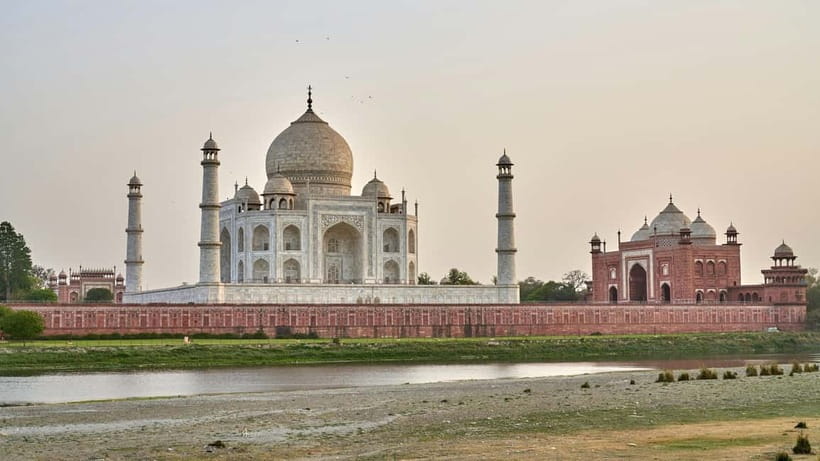
- Taj Mahal from Mehtab Bagh: a symmetrical view across the river, especially in soft morning light or sunset
- Black Taj legend: the guide shares the tale of a mythical twin planned by Shah Jahan
- Private, English-speaking guide: you can ask questions and move at an easy pace
Starting at Itimad-ud-Daulah: A Smarter Entry Into Agra
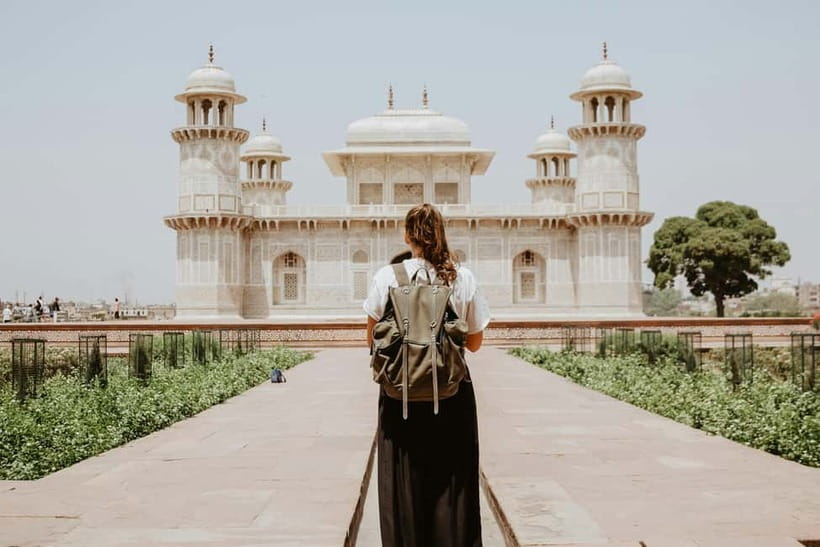
This tour begins at the Itimad-ud-Daulah Tomb Entrance Gate (East Gate). That matters because it puts you in the right frame of mind from minute one. Instead of starting with the Taj Mahal and then scrambling for the rest, you build context first: how Mughal rulers used architecture to signal power, love, and status.
Itimad-ud-Daulah is often described as a quieter cousin to the Taj Mahal. You’ll hear why: people consider it an early model or draft that influenced later designs. For you, that means the Baby Taj stop isn’t just a pretty tomb—it’s a lesson you’ll carry into the river-view finale.
Meeting here also keeps the route compact. In about 2.5 hours, you get two Mughal sites plus a river walk that feels like you’re passing through real Agra, not just touring monuments.
You can also read our reviews of more walking tours in Agra



Baby Taj Up Close: Pietra Dura, Jali Screens, and Nur Jahan’s Motive
The Baby Taj is the highlight that many visitors overlook. That’s your advantage. You get time to look, and a guide to translate what you’re seeing into story and meaning.
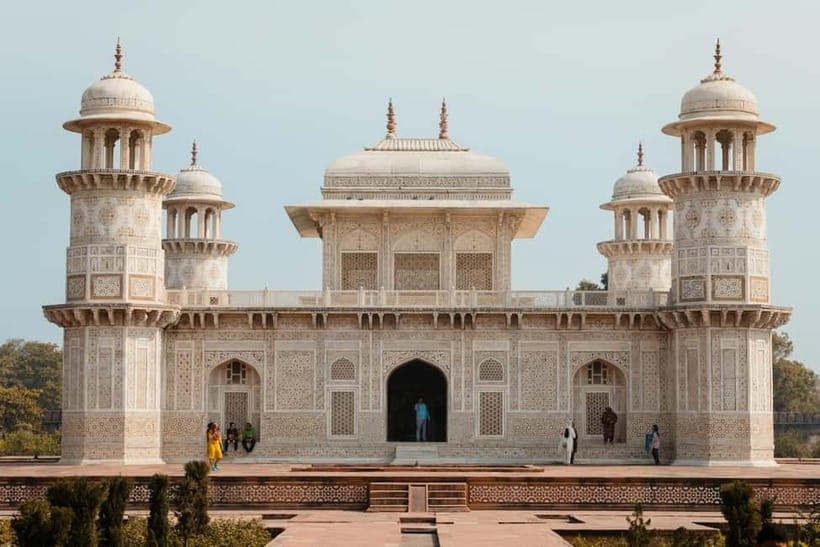
At the core is the tomb of Itimad-ud-Daulah, commissioned by Mughal Queen Nur Jahan for her father. The guide explains the politics and family ties behind such a commission, so the building stops being a generic “sight.” You start to notice how architecture can act like a message meant for specific people.
Watch for the craftsmanship. You’ll be pointed toward the Pietra Dura inlay work—the precise stone-and-marble technique that creates detailed patterns. Then there are the marble lattice screens, called jali. These aren’t just decorative. They create texture and light-play, and you’ll start seeing how Mughal design used both materials and spacing to create depth.
Another reason I like this stop: it’s serene. The location and the way the tomb is carved give you a calmer pace than the biggest-ticket attractions. If you like slow looking, this is where you do it.
The Yamuna River Walk: Where Local Life Makes the Photos Better
After the tomb, the tour shifts from architecture to setting. You’ll stroll along the Yamuna River through local neighborhoods and past small temples. This portion is about rhythm. It’s a gentle walking experience where your guide adds context about the area and what you’re passing.
The best part is that you’re not just taking pictures of stones. You’ll have chances for candid moments—children playing, boats on the river, and everyday pastoral scenes that feel almost still. Those details help you understand why the Mughal builders cared so much about this exact geography.
Practical tip: keep your camera ready but don’t stare through the screen the whole time. A quick glance around helps you spot where the river light is hitting, especially when the route opens toward viewpoints.
Also, because this is an actual neighborhood walk, things can feel more lived-in than tourist-heavy routes. That’s good value for your time: you get monuments plus context, and your photos look like you traveled with your eyes open.
Mehtab Bagh: The Taj Mahal View That Feels Built for Framing
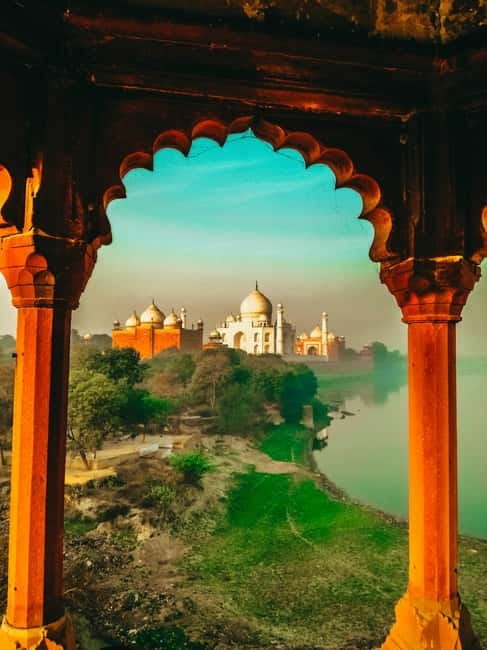
Mehtab Bagh is a garden across the river aligned with the Taj Mahal. That alignment is the whole point. You’ll arrive to a setup that makes viewing feel almost intentional—symmetry, spacing, and sightlines that naturally frame the Taj.
This is where the tour pays off for photography. You can aim for sunset or soft morning light, and the view tends to be especially strong at those times. Even if you’re not a serious photographer, you’ll appreciate how the scene is composed: the Taj Mahal appears in relation to the garden, not just from a random roadside angle.
Your guide also shares the legend of the Black Taj. It’s a story about Emperor Shah Jahan and a mythical twin—often described as planned for a different color or version of the Taj Mahal. You don’t need to treat it as fact to enjoy it; it helps you understand how later stories grew around the Mughal ambition and the emperor’s imagination.
And then there’s the simple comfort factor. You can sit in the shade of fruit trees, smell the flowers, and let the river air do its job. This isn’t a rushed “look, snap, leave” moment. It’s a chance to slow down and watch the light change on the Taj.
Timing and Photo Strategy: Sunset Wins, But Morning Works
If you have flexibility, go for a sunset tour. The tour notes call out that sunset is particularly stunning at Mehtab Bagh, and I agree with that logic. The sky tones help soften contrast, and the Taj Mahal often looks more sculptural when the light is lower.
That said, soft morning light can also be great. Morning usually means the air feels clearer and the glare can be gentler. If you’re trying to balance crowds, heat, and your own energy, you may find morning easier to enjoy—especially with a walking route in the mix.
For photos, don’t wait until you’re fully at the best spot. Step around for a minute and check angles. The Taj Mahal view is strong from Mehtab Bagh, but subtle shifts in position can change what you include: garden lines, river reflections, and the way the framing feels.
And bring water and a camera. The tour is only 2.5 hours, but you’ll be out in open areas at two points (the river walk and the garden). Hydration is the unglamorous detail that keeps your experience enjoyable.
You can also read our reviews of more guided tours in Agra





Price and Value: What $14 Really Buys You Here
At about $14 per person for a 2.5-hour private walking tour, the price feels fair—mainly because you’re not only paying for a guide’s presence. You’re also getting entry tickets included, plus a professional guide who stays with you for the whole route.
In plain terms: you get two major Mughal stops tied together by a real riverside walk. That’s harder to stitch together well on your own if you don’t know where to start and what to look for. The guide helps you connect the dots between Itimad-ud-Daulah’s design choices and the Taj Mahal view at Mehtab Bagh.
There’s also an option for transfer, if you choose it. If you’re arriving with limited time, that can reduce stress. If you enjoy moving on your own terms, you might skip it—but the tour does keep the logistics simple with a clear meeting point.
The value improves even more because this is a private group. That typically means you can ask follow-up questions and spend time where your attention lands, instead of feeling locked into a fixed script.
What the English Private Guide Adds (Beyond Facts)
A good tour guide doesn’t just recite dates. This one’s aim is to explain Mughal history and architecture in a way you can actually picture.
At the Baby Taj, that means understanding why Nur Jahan mattered and how design choices signal status. Along the Yamuna, it means interpreting the river setting and local life you pass. At Mehtab Bagh, it means giving you the story behind the Black Taj legend and helping you see the garden as part of a larger architectural idea.
In the guide feedback, Ashish is singled out as friendly, very well informed, and honest. That kind of guide energy matters on a short tour: you’ll get answers without feeling pushed, and you’ll notice more because the explanations match what you’re looking at right now.
Who Should Book This Tour in Agra
I think this works best if you want something calmer and more design-focused than a standard checklist day.
You’ll like it if:
- You care about Mughal architecture and want to understand the “how” and “why,” not just the “what”
- You enjoy photography but also want the view to make sense in context
- You want a quieter side of Agra with a river walk that feels more human than monumental
You might skip it if:
- You’re very sensitive to walking or plan to spend most of your day in a single heavy monument area
- You want only the Taj Mahal and nothing else connected to it
Should You Book the Agra Baby Taj and Mehtab Bagh Guided Walk?
Yes, if you want strong value in a short time and you’d rather spend 2.5 hours looking closely than rushing through sites. The mix is smart: Baby Taj for craftsmanship, the Yamuna for real-life atmosphere, and Mehtab Bagh for that classic Taj Mahal viewpoint across the river.
Book it especially if you’re planning around sunset. The timing helps the end scene land with maximum impact, and the guide’s stories give the view more meaning than just a pretty photo.
If you’re on the fence, the deciding factor is simple: do you enjoy slow looking and walking? If yes, this is a very solid way to experience Agra with more breathing room and better context.
FAQ
Where is the meeting point for the tour?
You meet at the Itimad-ud-Daulah Tomb Entrance Gate (East Gate).
How long is the guided walking tour?
The tour lasts about 2.5 hours.
What sites are included in the route?
You visit the Baby Taj (Itimad-ud-Daulah) and then Mehtab Bagh, with a guided walking segment along the Yamuna River.
Is the guide available in English?
Yes, the live tour guide language is English.
Are entry tickets included?
Yes, entry tickets are included in the tour.
What should I bring for the walk?
Bring comfortable shoes, a camera, and water.
Is sunset time worth it for Mehtab Bagh?
Sunset tours are particularly stunning at Mehtab Bagh, so it’s a great time to aim for.
Can I cancel, and is payment flexible?
Free cancellation is available up to 24 hours in advance for a full refund. You can also reserve and pay later to keep your plans flexible.