REVIEW · AGRA
Book Govt. Approved Tour Guide For Taj Mahal & Fort
Book on GetYourGuide →Operated by Taj Tour Guide · Bookable on GetYourGuide
Walking Agra, you get the story behind the stones. This private tour pairs a government-approved guide with a focused route that covers the Taj Mahal, Agra Fort, and optional Baby Taj, with clear facts and practical site guidance. I especially like how the narration connects Mughal monuments to what you’re actually looking at.
The main thing to watch is cost beyond the guide fee: entrance fees and lunch are not included, and Taj Mahal stays closed on Fridays. Also, while the tour is set up to help you move (golf cart access and shoes covers), it’s still a guided walking format, so wear comfy shoes.
Key things to know
- Skip-the-line entry with a separate entrance for Taj Mahal
- Govt-approved guide with live narration in multiple languages
- Taj + Agra Fort timeline that keeps you from wasting time
- Optional Baby Taj (Itimad-ud-Daulah) plus bazaar free time
- Golf cart to Taj Mahal, plus shoes covers and water bottles
- Private group with accessibility support (wheelchair accessible)
In This Review
- Why a Government-Approved Guide Changes Taj Mahal and Agra Fort
- Meeting in Agra: Quick Setup, Then Straight to the Best Parts
- Taj Mahal Walkthrough: Focus on the Details That Matter
- Agra Fort: Indo-Islamic Architecture in a Tight, Effective Window
- Baby Taj (Itimad-ud-Daulah) and Optional Bazaar Time
- Lunch Break: Plan for Good Food, Still Keep Your Budget Real
- Walking Logistics: Golf Cart to Taj, Shoes Covers, and Comfort Hacks
- Languages and Private Pace: Getting the Story in Your Language
- Price and Value: What You Pay for at $8 and What You Should Expect to Add
- Who This Private Taj Mahal and Agra Fort Tour Fits Best
- Should You Book This Taj Mahal and Agra Fort Tour?
- FAQ
- How long is the Taj Mahal and Agra Fort tour?
- What sites does the tour include?
- Is there skip-the-line entry?
- Which languages are available for the live guide?
- Is lunch included?
- Is Taj Mahal open every day?
Why a Government-Approved Guide Changes Taj Mahal and Agra Fort

Taj Mahal is famous, sure. But once you have a guide who can explain the why behind the details, the visit stops being just sightseeing and turns into a real sense of place.
What I like here is the pairing of monuments with story. You’ll get a “real history and story” style walkthrough from a govt-approved guide, not a generic script, and you’ll be able to follow the Mughal threads across the sites. Plus, the tour includes a way to cut waiting time at Taj Mahal with a separate entrance.
The other big value: guidance that keeps you calmer inside the crowds. In one solo-friendly experience, guide Wahid was described as meeting the guest at accommodation and then walking over and back, which is exactly the kind of support that helps when you’re traveling on your own. Guides such as Riyaz have also been described as kind and helpful, with guests feeling relaxed and comfortable.
Meeting in Agra: Quick Setup, Then Straight to the Best Parts

You’ll meet your local guide in Agra at your scheduled time and location. If you’re coming by car for city sightseeing, the guide can join you in your pre-booked car, which matters because it keeps the day from feeling like a series of awkward handoffs.
This is a private group setup, so the pace is less chaotic than a big group bus tour. Your guide can also adapt as the day goes along, and you’ll often feel it in small moments like photo stops or how you’re handled around vendor activity.
Plan for simple logistics. The tour is designed as a walking tour, but they set you up with help where it counts, like golf cart access to Taj Mahal. And since it’s wheelchair accessible, the provider clearly considers physical access needs in the overall flow.
You can also read our reviews of more guided tours in Agra



Taj Mahal Walkthrough: Focus on the Details That Matter
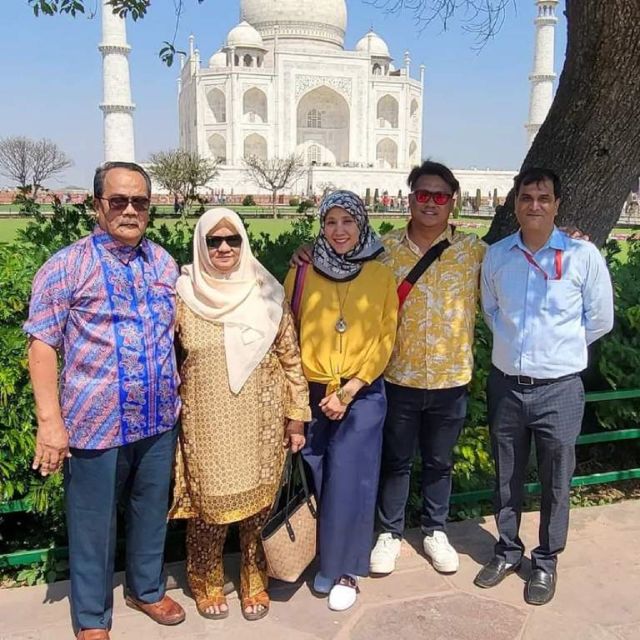
Taj Mahal is the headline, and this route treats it like one. You get a guided tour and sightseeing time of about 2.5 hours at Taj Mahal, with history and architectural context explained by the official guide.
Here’s what you should pay attention to during the visit:
- The design choices that make the Taj Mahal feel balanced and intentional, not random decoration
- The symbolism tied to who commissioned it and why
- The way the main mausoleum area changes your perspective as you move through viewpoints
The tour specifically frames Taj Mahal as the white marble mausoleum built by the fifth Mughal emperor Shahjahan in memory of his beloved queen. That context helps you understand why certain parts feel emotionally “direct” rather than only visually impressive.
Skip-the-line access is a practical win. You’ll enter through a separate entrance, which can be the difference between spending your energy waiting and spending it looking. Once inside, you’ll also get support that helps you stay comfortable and photo-ready, since shoes covers and a camera fee are included.
For people who care about photos, this tour also has a reputation for photo help. Wahid, for example, was described as taking amazing photos, and Mani’s experience highlighted how a guide can know the best photo locations. Even if you’re not trying to shoot like a pro, those little positioning tips can upgrade your results fast.
Agra Fort: Indo-Islamic Architecture in a Tight, Effective Window

Agra Fort is the second major stop, and the schedule respects it. You’ll spend about 75 minutes with a guided visit and sightseeing at Agra Fort, with the guide explaining what makes the place significant.
Agra Fort is dated to 1565 AD and is described as built by Emperor Akbar. That matters because it places the fort as a power hub in the Mughal world, not just an old stone landmark. You’ll also get context on the Indo-Islamic architecture, which helps you see the blending of styles instead of treating everything as generic “temple/fort design.”
What makes this part feel worth your time is how it complements Taj Mahal. Taj Mahal is emotional and memorial. The fort is control, governance, and the mechanics of empire. Put together, you get a fuller Mughal picture: love and power in the same city.
One practical note: 75 minutes can feel short if you like slow wandering. The upside is that you’ll avoid the “I saw it all but remember nothing” problem. With a guide, you’ll likely walk away with clearer landmarks and a better sense of how the sections relate to each other.
Baby Taj (Itimad-ud-Daulah) and Optional Bazaar Time

After Taj Mahal and Agra Fort, the day can include Baby Taj, known as Itmad-ud-Daulah. This stop is described as optional, and the tour frames it as being built by Noor Jahan in memory of her parents.
Even if you’re already Taj Mahal-ed out, Baby Taj has a different vibe. It tends to feel more intimate, and the story behind it adds emotional depth to the broader Mughal theme. It’s also a great choice if you want a smaller, more manageable monument that still feels worth your attention.
There’s also optional free time for the local bazaar. This is a good chance to get snacks, look around, or buy small souvenirs without turning your day into a free-for-all. If you’d rather skip the shopping side, you can usually keep the focus on monuments and photography, since the core route stays intact.
Lunch Break: Plan for Good Food, Still Keep Your Budget Real

You’ll have a break for lunch as part of the itinerary flow, and you get about 1 hour of break time. The tour description says lunch at a best restaurant, but the pricing details list lunch as not included, so you should assume you pay for your meal on the day.
That’s actually not a bad setup. A paid lunch break gives you flexibility based on what you eat and how much you want to spend. The key is that you’re not scrambling to find a place while hungry and tired. Your guide’s presence can also help you avoid the most chaotic side streets.
One more practical point: guides play a role in keeping vendor pressure from ruining the experience. In one described experience, Riyaz helped keep peddlers at bay, and Mani highlighted that the guide knew how to keep things calm. That kind of friction reduction is underrated. It means you stay present with the monument instead of constantly negotiating your way through distractions.





Walking Logistics: Golf Cart to Taj, Shoes Covers, and Comfort Hacks

Even with skip-the-line entry, Taj Mahal involves real walking. The good news is that this tour is built for comfort where it matters.
Included details that make the day smoother:
- Golf cart to Taj Mahal
- Shoes covers
- Water bottles
- A camera fee included
- The tour can include guidance that works with your car if needed
This combination matters because it reduces the most common headaches. Shoes covers can be the difference between a smooth start and a last-minute scramble. Water bottles keep you functional, especially in warmer months. And golf cart access cuts down on long, tiring transfers so you spend more time inside the monuments where the value is.
Bring your own comfort basics too. Wear shoes you trust for uneven surfaces, and keep a small bag ready for a phone, camera, and any personal items. Since it’s a walking tour, those basics are what turn the visit from exhausting into enjoyable.
Languages and Private Pace: Getting the Story in Your Language
Taj Mahal and Agra Fort are complicated sites. You’ll enjoy the tour more if the story clicks, and this one supports multiple languages for the live guide.
Available languages include English, French, Japanese, Spanish, Italian, German, Chinese, and Russian. That’s a big deal. When the guide can speak to you clearly, you stop “translating in your head” and start noticing the architecture, placement, and symbolism as you go.
There’s also flexibility in how guides handle groups. Claire’s experience described Iqbal adapting to the group, which suggests the guide isn’t just reciting facts but managing the visit flow in real time. If you prefer a quieter pace or more photo time, this style of guide support often makes it possible.
Price and Value: What You Pay for at $8 and What You Should Expect to Add

The listed price is $8 per group up to 1, with durations ranging from 2.5 to 6 hours depending on how the day is structured. That price is low enough that it’s worth looking closely at what’s included.
Here’s the value math as it stands:
- You get govt-approved guide services and guided visits at Taj Mahal and Agra Fort
- You also get extras like water bottles, shoes covers, and golf cart to Taj Mahal
- You get camera fee included
- Entrance fees are not included, and lunch is listed as not included
- Baby Taj and bazaar time are optional
So the tour fee is mostly paying for the human guide and the key convenience items that improve your day. If you’re visiting anyway, that can be a good deal because it avoids the common trap: spending more time figuring things out than enjoying the monuments.
The only real downside for budgeting is that you still need money for entrance fees at least, plus your lunch. If you plan for that upfront, the low guide price turns into a win rather than a surprise.
Who This Private Taj Mahal and Agra Fort Tour Fits Best
This tour is a strong match if you want structure. You get a guided walk at Taj Mahal, a guided fort visit, and the option to add Baby Taj, without having to plan every turn.
It also fits well if you’re traveling solo or want personal handling. Wahid’s described meeting-at-accommodation approach is exactly what many independent travelers look for in India: clear contact, guided movement, and help with photos. The private format matters because you’re not squeezed into someone else’s pace.
You may want a different style tour if you prefer very long, unstructured time inside monuments. The schedule is designed to keep momentum, so if you’re the type who likes hours of wandering with no prompts, this route might feel tight.
This is also handy for language comfort. If you don’t want to rely on your own translation skills, having a live guide in your language can turn the day from stressful to smooth.
Should You Book This Taj Mahal and Agra Fort Tour?
Book it if you want the Taj Mahal and Agra Fort experience to feel guided, not overwhelming. The big wins are the government-approved guide, skip-the-line entry, and practical inclusions like golf cart access and shoes covers.
Skip it or switch plans if you’re visiting on a Friday, since Taj Mahal is listed as closed that day. Also double-check your personal budget for entrance fees and lunch, since those aren’t included.
If you’re aiming for a day that’s simple, calm, and story-focused, this tour design hits the mark.
FAQ
How long is the Taj Mahal and Agra Fort tour?
The tour duration is listed as 2.5 to 6 hours. The exact length depends on the schedule and options you choose.
What sites does the tour include?
You’ll visit Taj Mahal and Agra Fort. Baby Taj (Itmad-ud-Daulah) is listed as optional, and there may be optional free time for the local bazaar.
Is there skip-the-line entry?
Yes. The tour includes skip-the-line entry through a separate entrance.
Which languages are available for the live guide?
The live guide is available in English, French, Japanese, Spanish, Italian, German, Chinese, and Russian.
Is lunch included?
Lunch is not included. The schedule includes a lunch break, but you should plan to pay for your meal.
Is Taj Mahal open every day?
Taj Mahal is listed as closed on Friday.