REVIEW · NEW DELHI
DELHI: NEW AND OLD SELF ITINERARY FULL DAY OR HALF DAY TOUR
Book on GetYourGuide →Operated by R R Voyages · Bookable on GetYourGuide
Delhi can feel chaotic; this route adds order. This is a smart, full-day plan that strings together Old Delhi icons and New Delhi landmarks, using an included rickshaw ride to get you oriented fast. I like the mix of major sites with different faiths and viewpoints, especially the chance to see Jama Masjid and other places of worship in one day. One thing to consider: monument entry fees aren’t included, so your total cost can move up depending on what you choose to enter.
You’ll cover a lot of ground, and some parts involve walking in tight streets and temple courtyards. Also, it’s not suitable for wheelchair users, so plan accordingly if mobility is an issue.
In This Review
- Key highlights worth your attention
- Private Pickup and an AC Escape From Delhi Traffic
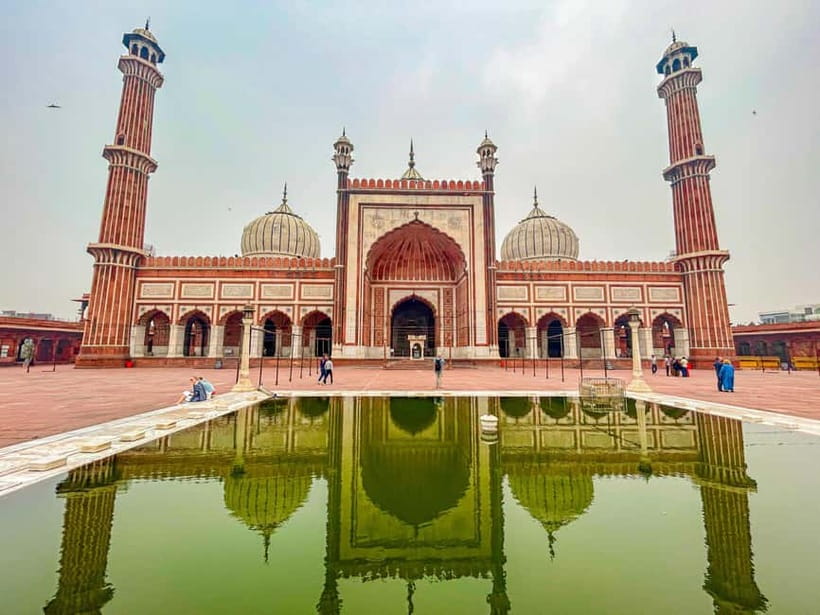
- Jama Masjid: India’s Largest Mosque and the First Wow Moment
- Chandni Chowk by Rickshaw: A Practical Old Delhi Orientation
- Gurudwara Bangla Sahib: Sikh Worship and a Kitchen on Real Scale
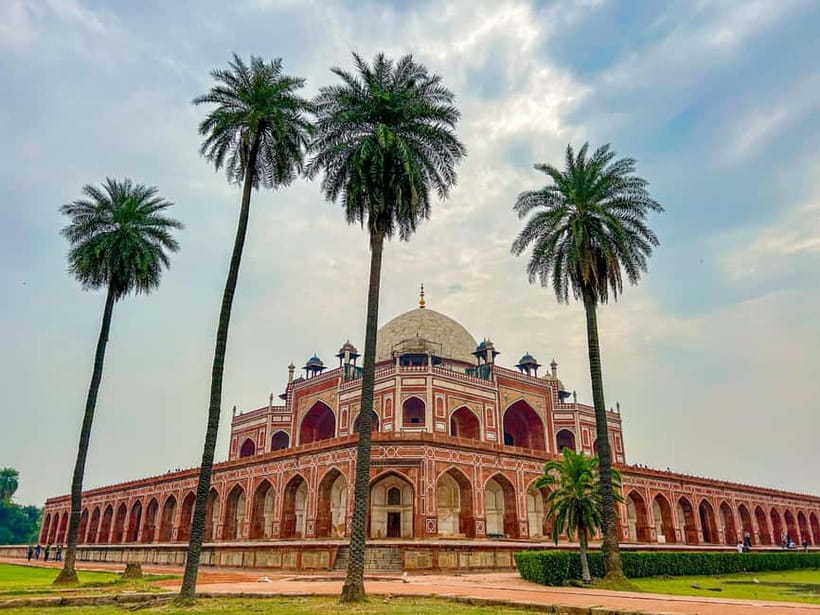
- Humayun’s Tomb: UNESCO Gravitas Without Feeling Too Heavy
- India Gate for Photos, Plus a Lunch Reset
- Qutb Minar and Lotus Temple: Two Faith Styles, One Day’s Flow
- Akshardham Temple: Ending the Day With Sunset Views
- The Guide and Driver Factor: Why This Tour Works in Practice
- Price and Value: What $2.50 Actually Means for Your Budget
- Best Fit: Who This Tour Suits (and Who Should Rethink It)
- What to Bring and How to Make the Day Easier
- Should You Book This Old and New Delhi Tour?
- FAQ
- How long is the tour?
- Are monument entry fees included?
- Is lunch included?
- What transportation is included?
- Where is pickup available?
- What languages are available for the guide?
- Is the tour wheelchair accessible?
Key highlights worth your attention
- Jama Masjid at the start: see the scale while your energy is still high
- Chandni Chowk by rickshaw: a practical way to move through narrow lanes
- Gurudwara Bangla Sahib’s kitchen scale: learn how Sikh hospitality works in real time
- Humayun’s Tomb as a UNESCO stop: slow down and look at details that Western photos miss
- Qutb Minar + Lotus Temple: two very different architectural moods in one stretch
- Akshardham near sunset: close the day with dramatic views and a big finish
Private Pickup and an AC Escape From Delhi Traffic
The best part of this tour format is simple: you get picked up from your hotel or the airport area in an air-conditioned vehicle. If you’re arriving, having the driver meet you with a name board at the airport reduces stress right away. If you’re already in the city, it means you don’t waste your first hours figuring out transport or routes.
It’s also a private group, so you’re not stuck with a rigid mass-schedule. Your guide can adjust the timing a bit to keep the day feeling manageable, even when traffic is doing its own thing. And you get one mineral water bottle per person for the day, which is useful once you start moving between markets and monuments.
You can also read our reviews of more tours and experiences in New Delhi


Jama Masjid: India’s Largest Mosque and the First Wow Moment
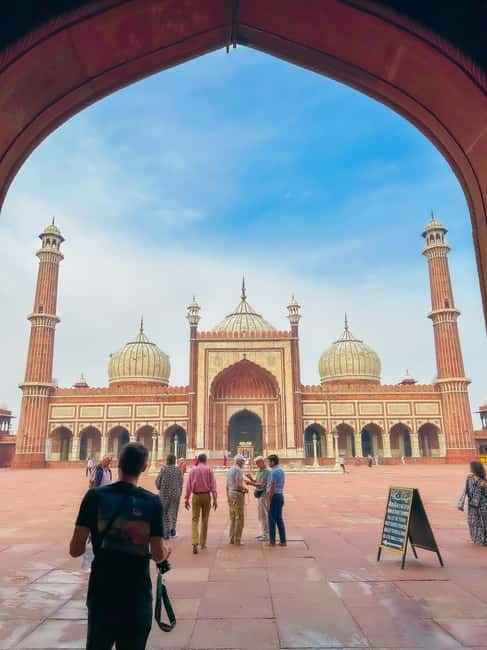
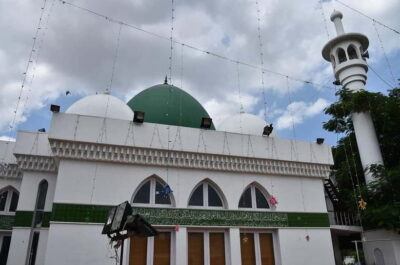
Jama Masjid is often called the biggest mosque in India, and seeing it as an early stop makes a difference. You arrive before the day fully heats up and before your feet get tired. Your guide walks you through its significance, so you’re not just looking at architecture—you’re getting context for what you’re standing inside.
What I like here is that the tour doesn’t treat this as a quick photo stop. You’re given about an hour for a guided visit and sightseeing, which is long enough to notice how the complex is laid out and how people use the space. If you’re into architecture, this is where Delhi starts to click: you see how power, religion, and city planning all show up in one place.
Possible consideration: this is an active house of worship. Even with a guided experience, you’ll want to move respectfully, follow instructions, and expect a bit of crowd flow.
Chandni Chowk by Rickshaw: A Practical Old Delhi Orientation
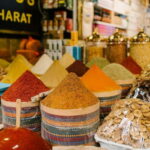
Next comes Chandni Chowk, one of Delhi’s oldest market areas. This is where you trade wide roads for narrow lanes and smell the city through spice and food stalls. Your guide leads the walking portion, roughly an hour, so you understand what you’re seeing instead of just passing storefronts.
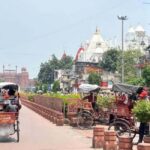
The included rickshaw ride/tuk tuk ride is a smart touch. It’s not just for fun. It’s a way to move through traffic-tight streets without burning the whole day on slow walking. When you get off, you’re in the right mindset to explore the spice market area with your guide.
Tips that matter here:
- Bring your camera, but also keep your hands free so you’re not juggling bags in crowded lanes.
- Wear comfortable shoes; this part is hands-on, feet-first sightseeing.
- If you’re planning to buy anything, ask your guide what’s reasonable so you don’t get overwhelmed by the pace and sales talk.
A small caution: market areas can get intense. You’ll likely be surrounded by noise, people, and constant motion, so it helps if you’re comfortable with that kind of sensory overload.
Gurudwara Bangla Sahib: Sikh Worship and a Kitchen on Real Scale
Gurudwara Bangla Sahib adds a different rhythm to the day. Instead of the formal monument vibe, you get a living spiritual space. Your visit includes guided time and a walk, roughly 1.5 hours, and the standout detail is the donation kitchen.
You’ll learn about the Sikh religion and see how meals are served at scale. That changes how you think about houses of worship. It’s not only about architecture or prayer; it’s also about systems of hospitality that keep working day after day.
What I like: the tour doesn’t just name the site. It gives you something concrete to observe, like how the donation kitchen operates and what that means for the community. It’s a calmer pause before the next big architecture-and-landmark stretch.
Possible consideration: depending on timing, you may be asked to follow worship etiquette. Plan for quiet respect and slower movement.
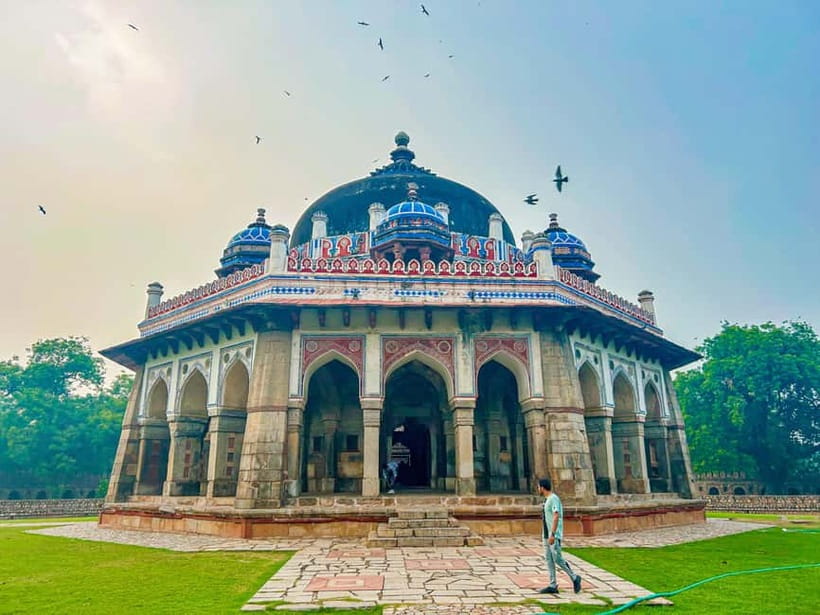
Humayun’s Tomb: UNESCO Gravitas Without Feeling Too Heavy
Humayun’s Tomb is a UNESCO World Heritage Site, and the point of including it after the religious stops is balance. You’ve already seen Delhi’s living faith spaces. Now you get a monument that asks for attention—lines, symmetry, and the long arc of Mughal-era influence.
You get about 1.5 hours for the guided visit and sightseeing, including a walk. That’s a sweet spot: enough time to step back, understand the layout, and notice the architectural elements that make this site feel both grand and human-sized.
Practical note: tombs mean open courtyards, stone surfaces, and more walking than you might expect from a single “tomb photo.” If you’re visiting in warmer months, keep your pace slow and drink water when you can.



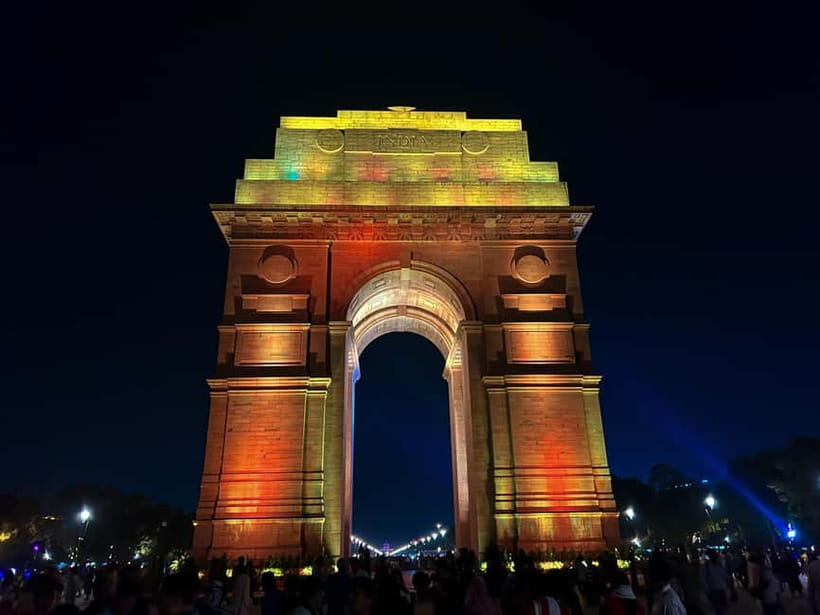
India Gate for Photos, Plus a Lunch Reset
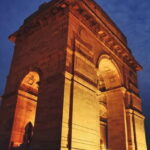
India Gate is a prominent war memorial. Your day includes a drive past it, then a photo stop with guided sightseeing time. It’s roughly 30 minutes for the photo portion, plus about an hour for lunch.
Lunch is not included, but you do have a helpful fallback: your guide can recommend North Indian and Mughlai restaurants so you can eat something local and make logistics easier. This matters in Delhi. With so many options, it’s easy to pick something that’s convenient but forgettable. A good local recommendation can be the difference between a quick meal and a solid one.
After lunch, you’ll also get glimpses from the road of modern governance landmarks like Parliament House and the Presidential Palace. You won’t have long guided time inside those areas, but the drive-by context helps connect Delhi’s old imperial layers to the present-day city.
Qutb Minar and Lotus Temple: Two Faith Styles, One Day’s Flow
Qutb Minar is next, and it’s a must for architecture lovers. The tour includes about 1.5 hours for the guided visit and sightseeing. This is where Delhi shows its scale in brick minaret form: it’s described as the tallest brick minaret in the world, and you can see why once you’re there.
Then comes Lotus Temple, which you’ll likely recognize by shape even before you arrive. Your stop includes a photo moment and guided sightseeing for about 30 minutes. The Lotus Temple is associated with the Baha’i faith and is often highlighted as a symbol of unity and peace—useful context that turns your photos into something more meaningful than a pretty landmark.
What you’ll enjoy about this stretch is variety. Qutb Minar pulls you toward vertical detail and historical construction methods. The Lotus Temple is calmer and more geometric in feel.
Possible consideration: weather can shift the experience. If it’s hot, you’ll want to move efficiently through each site and save your detailed looking for moments when the light and shade cooperate.
Akshardham Temple: Ending the Day With Sunset Views
Akshardham Temple is your final big stop, with around two hours including sunset/scenic views on the way. If you like finishing a sightseeing day with something that feels expansive, this works well. It’s a guided visit with time to take it in, plus extra viewing built into the schedule.
This is also a good place to slow down and let the day settle. By the time you reach Akshardham, you’ve already seen Mughal architecture, market life, Sikh worship, and modern Delhi landmarks. That makes the closing visuals more satisfying: you’re ending with something distinctly designed for visitors to experience at full scale.
The Guide and Driver Factor: Why This Tour Works in Practice
The big difference between a good Delhi tour and a frustrating one is the human setup: the guide and the driver.
From the experience details and confirmed names attached to guides and drivers, you may tour with people like Sumit and driver Raju, or Ravi with support from a driver team, or Jaspal with a driver like Habib. Other guides that have been assigned include Chetan, Nawin, Vikram, Sunil, Sujal, Ankit, and Sanjay Singh, often described as energetic, friendly, and willing to help with on-the-ground problem solving.
Why that matters for you: Delhi runs on logistics. Traffic, meeting points, and small navigation choices can make or break your day. A driver who handles traffic calmly and a guide who knows where to stand for photos and how to manage timing can save you time and stress.
Price and Value: What $2.50 Actually Means for Your Budget
This tour lists a very low price per person, and that’s the headline. Here’s the practical reality: monument entry fees are not included, and lunch isn’t included either. So your true cost will depend on what you pay at each site and what you choose to eat.
What you’re getting for the price you pay:
- AC vehicle transfers for the day
- A local English-speaking guide (with available languages in English, Spanish, German, and French)
- The included rickshaw/tuk tuk ride
- One mineral water bottle per person
- Support that includes skipping the ticket line (so you spend less time stuck waiting)
So the value is strongest if you’re comfortable paying site fees separately and if you want an efficient route. If you prefer a fully packaged, everything-included day with no extra charges, you may need to budget a bit more for entry and meals.
Best Fit: Who This Tour Suits (and Who Should Rethink It)
You’ll likely love this tour if:
- It’s your first time in Delhi and you want Old and New Delhi in one go
- You like comparing architectural styles across eras and faiths
- You want a guided plan that reduces navigation stress
- You appreciate photo stops that are timed well, not random stops with no context
You may want to rethink it if:
- You have limited mobility. It’s not suitable for wheelchair users.
- You hate walking or crowded areas like Old Delhi markets.
- You want a low-spending day where every cost is included in the base price. Entry and lunch are separate.
What to Bring and How to Make the Day Easier
Keep it simple. Bring your camera. Wear shoes you don’t mind getting dusty, and choose clothing that works for houses of worship and open courtyards. A hat and light layers can help, especially if your day runs later.
If you’re sensitive to schedules, remember this is a full sighting day option (up to 8 hours). You’ll be moving between multiple major stops, so plan your energy accordingly.
Also, alcohol and drugs are not allowed. It’s a normal travel rule, but it’s worth keeping in mind for a day spent around religious sites and public spaces.
Should You Book This Old and New Delhi Tour?
If you want a single-day plan that hits the big names without turning Delhi into a confusing puzzle, I’d say yes. The included AC transfers, the rickshaw ride through Chandni Chowk, and the mix of major monuments plus places of worship make it a solid way to see Delhi fast while still feeling guided.
Book it if you’re okay with extra spending for monument entries and you’re comfortable walking in market areas. Skip it if you need wheelchair access or you’d rather spend longer at fewer sites instead of covering more ground.
If you do book, I’d recommend messaging your preferences in advance, like what kind of lunch you want (North Indian or Mughlai) and how many sites you most care about. That helps the day feel tuned to you.
FAQ
How long is the tour?
The duration is listed as 4 to 8 hours, depending on the selected option and starting time availability.
Are monument entry fees included?
No. Monument entry fees are not included in the price.
Is lunch included?
Lunch is not included. Your guide can recommend North Indian and Mughlai restaurants.
What transportation is included?
All transfers are done by an AC vehicle, and the Old Delhi portion includes a rickshaw ride/tuk tuk ride.
Where is pickup available?
Pickup is available in New Delhi, and also includes New Delhi Airport or your hotel in Delhi, Noida, and Gurugram. The driver meets you with a name board.
What languages are available for the guide?
The tour guide is available in English, Spanish, German, and French.
Is the tour wheelchair accessible?
No. The tour is not suitable for wheelchair users.