REVIEW · NEW DELHI
Delhi: Mehrauli Archaeological Park Tour with Qutub Minar
Book on GetYourGuide →Operated by Zaara Travels · Bookable on GetYourGuide
Old Delhi history hides in plain shade. This tour threads you through Mehrauli Archaeological Park and Qutub Minar with a calm forest-walk feeling, then snaps you back across eras with real, touchable ruins and stories. I especially love the mix of viewpoints and the way the guide connects what you’re seeing to the empires that built, ruled, and re-used the area. One drawback: it’s still a walk with uneven stone, so it’s not a great fit if you have back problems or need wheelchair access.
You’ll start outside the Qutub Minar Metro Train Station Exit Gate, then move site to site for about four hours, with pickup and drop-off options across Delhi. I like that the experience is guided (and it’s been described as friendly and passionate), with guides such as Mayank (Mike) and Lerab turning the monuments into a story you can actually follow. At around $21 per person, the value is strongest if you want a guided route plus pickup, water, and time-savers like a separate entrance.
In This Review
- Key things that make this Delhi heritage walk worth your time
- Meeting at Qutub Minar: how the 4-hour flow actually feels
- Qutub Minar: why it matters even if you’ve seen photos
- Mehrauli Archaeological Park: shade, stone, and layered empire stories
- Metcalfe Canopy: the 1850s “folly” that makes you smile
- Rajon ki Baoli: the stepwell you’ll want to stand in front of longer
- Jamali Kamali: red sandstone, a saint’s following, and tomb-mosque mood
- Tomb of Balban: the heavier, empire-era stop
- Dovecot Metcalfe’s Boathouse: a short stop with a different feel
- What you get for the price: $21 per person, and where the value comes from
- Timing, rules, and small things that can save your day
- Who should book this tour (and who might skip it)
- Should you book the Mehrauli Archaeological Park tour with Qutub Minar?
- FAQ
- Where does the tour start?
- How long is the tour?
- Is pickup and drop-off included?
- Is entry to Mehrauli Archaeological Park included?
- Is Qutub Minar included?
- What language guides are available?
- Are there rules on photography or smoking?
- Do I need a photo ID?
- Is the tour refundable if I cancel?
Key things that make this Delhi heritage walk worth your time
- A shaded forest-walk pace inside Mehrauli, so the day feels calmer than pure sightseeing
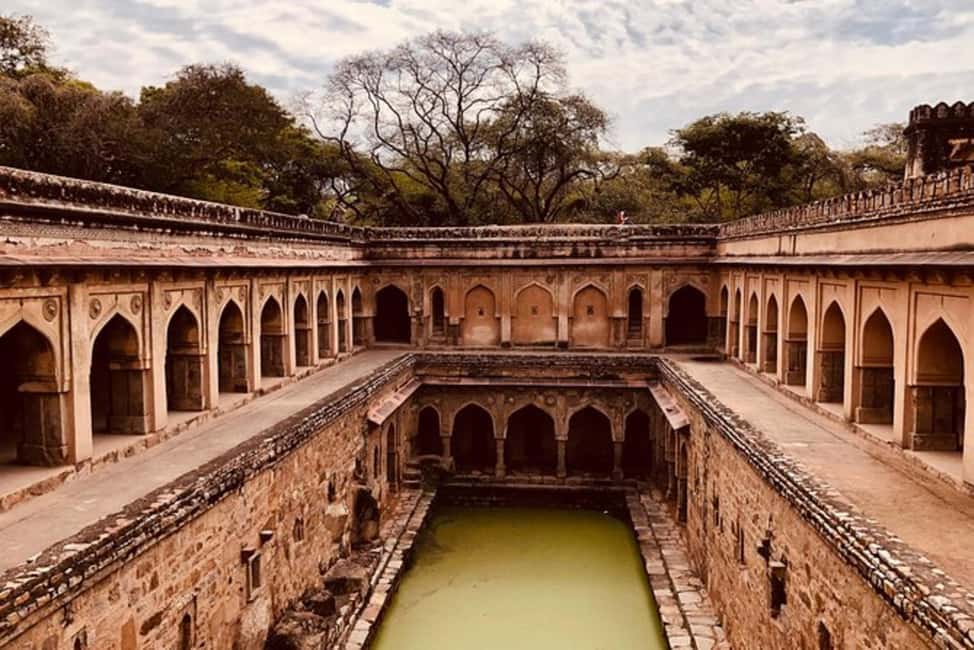
- Rajon ki Baoli stepwell, with a vertical water shaft and side passages meant to beat heat
- Jamali Kamali red-sandstone mosque-tomb stop that’s known for local ghost stories
- Metcalfe’s 1850s “folly” (a hexagonal canopy built to look like it’s old)
- Qutub Minar as the anchor, so the rest of the park makes more sense
Meeting at Qutub Minar: how the 4-hour flow actually feels
This tour is built around a simple rhythm: you meet at the Qutub Minar Metro Train Station Exit Gate, then you’re guided through a sequence of monuments and ruins in and around Mehrauli, finishing back at the metro. The total time is about 4 hours, so you’re not stuck for a whole day, and you also don’t feel rushed between stops.
Pickup is offered from a bunch of places around Delhi—Old Delhi, Paharganj, New Delhi, Gurugram, Faridabad, Ghaziabad, Noida, and Greater Noida—so you’re not forced to fight transit right at the start. If you want the smoothest door-to-door comfort, there’s also a note about arranging private car transport for getting to and from the walk spot safely.
Practical tip: even though the day is described as calm, you’ll still be walking. Bring comfortable shoes with grip, and keep water handy. Bottled water is included, which is one less thing to think about.
You can also read our reviews of more tours and experiences in New Delhi.



Qutub Minar: why it matters even if you’ve seen photos
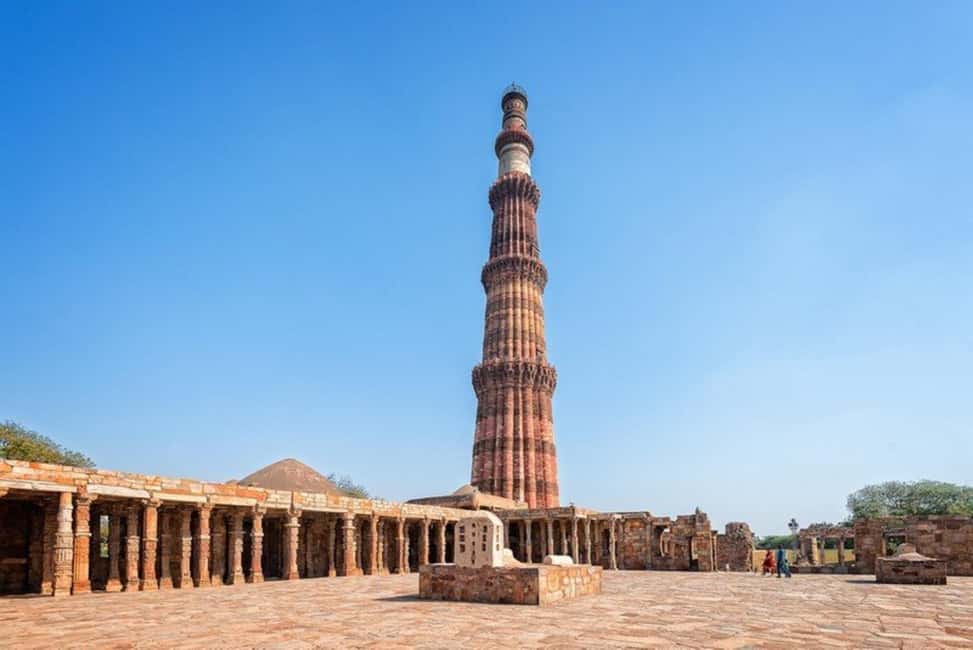
Your first major stop is Qutub Minar with guided sightseeing for about 1 hour. It’s the kind of landmark that changes the way you read the rest of the sites. When you start here, the later stops in Mehrauli don’t feel random. They start to feel like part of one long Delhi story.
Qutub Minar is also where your group timing becomes clear: 1 hour gives enough time for you to get oriented, take photos where permitted, and understand what to look for before you move into the more spread-out park ruins.
Also, you’ll benefit from the skip-the-line approach via a separate entrance. That doesn’t erase crowds entirely, but it does help you start your walk without losing half your morning in a queue.
Mehrauli Archaeological Park: shade, stone, and layered empire stories
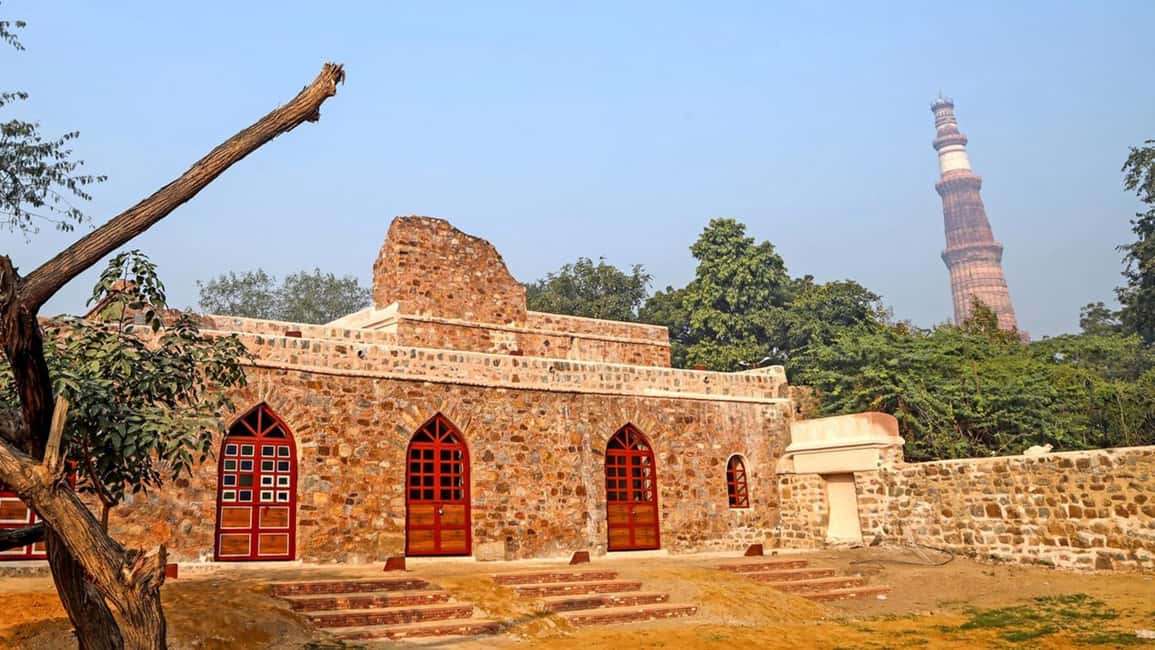
The heart of the experience is a guided walk in and around Mehrauli Archaeological Park, including time to explore ruins and monuments while a walk leader narrates the stories of the area. The highlight that matters most for comfort is the dense forest cover. It turns the experience from hot-city sightseeing into something quieter and more soothing.
This park is famous for layers—Delhi didn’t grow in one straight line. Over time, different rulers left marks, and structures were repurposed, repaired, or built close to older ones. With a good guide, you’ll start to notice how the style shifts from period to period, and you’ll understand why the same landscape can feel like multiple centuries at once.
If you’re the kind of traveler who gets more out of monuments when someone explains what you’re looking at, this is exactly where you’ll feel the value of a professional English-speaking guide.
Metcalfe Canopy: the 1850s “folly” that makes you smile
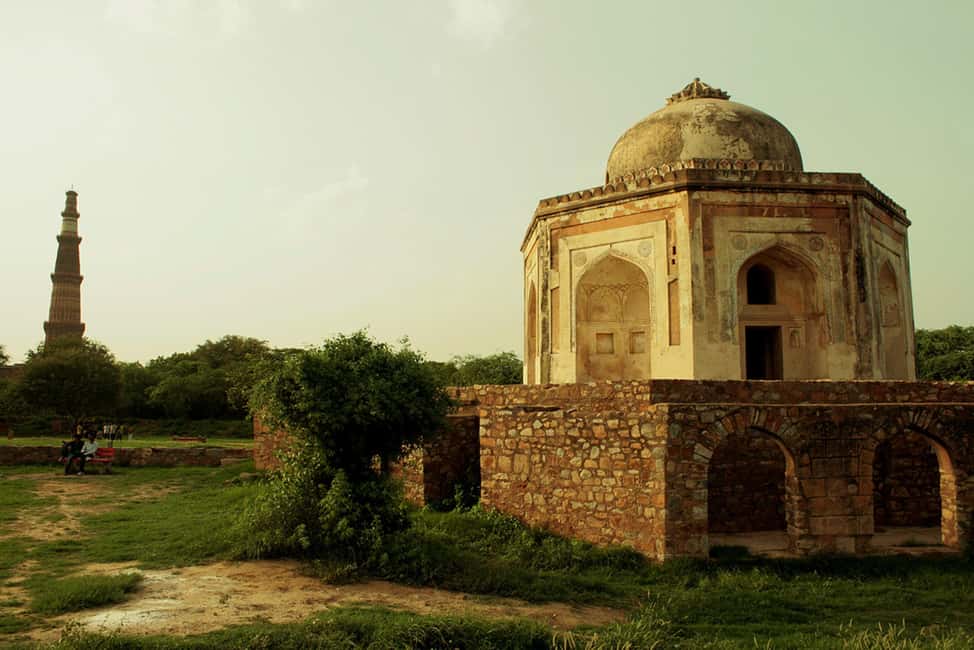
One of the most fun surprises here is Metcalfe Canopy. It’s a “folly,” built in the 1850s by British scholar Charles Metcalfe, designed to look like it belongs to an earlier, older style. That’s why it’s called a folly: it’s a newer structure with an older-looking attitude.
Structurally, it’s built like a hexagon, perched on the peak of a hilly mound. Even if you only catch it for a short stop, it changes the tone of the walk. You go from ancient ruins to a later-era interpretation of the past, and that contrast helps you remember Delhi history isn’t just one chapter—it’s stacked pages.
Practical note: because it’s on a mound/peak, wear shoes that handle uneven ground, and don’t rush photos. With the canopy views and the park’s tree cover, you can get some very atmospheric shots without needing to sprint.
Rajon ki Baoli: the stepwell you’ll want to stand in front of longer
The star stop for many people is Rajon Kee Baoli (often called Rajon ki Baoli). This is a breathtaking stepwell where water was drawn down via a vertical shaft, while side-by-side hollow passageways and small chambers helped people handle the heat during Indian summers.
What makes it especially striking on a guided walk is the engineering logic you can actually see. Stepwells aren’t just “old wells.” They’re climate systems built in stone—cooler air at depth, shade through architecture, and practical routes to and from water.
There’s also local folklore that it’s considered the most haunted place in Delhi during late-night hours. I’d treat that as legend, not instruction. Go with a respectful attitude, stick with the group, and you’ll enjoy the spooky stories as part of the cultural layer without turning the visit into a stressful nighttime quest.




Jamali Kamali: red sandstone, a saint’s following, and tomb-mosque mood
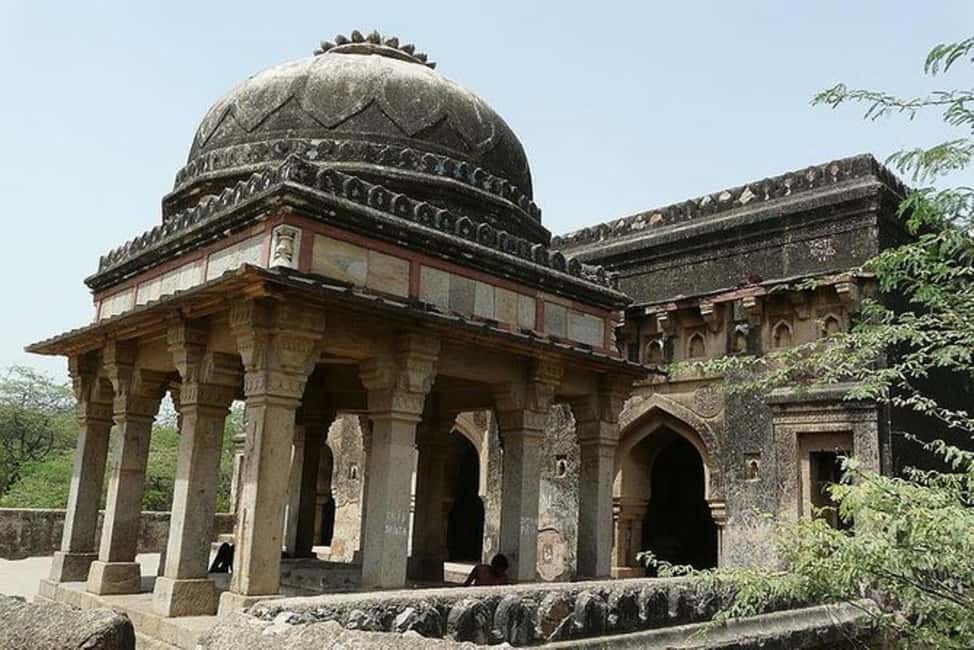
Next up is Jamali Kamali Mosque, built in red sandstone, designed as both a mosque and tomb. It belonged to a saint with a huge local following, which helps explain why it still holds attention far beyond its architecture.
This stop also comes with its own ghost stories—people tend to stay away during late evenings, and it’s known as a haunted spot. Again, I’d treat the “haunted” label as cultural storytelling. During normal daytime visiting, it’s more about atmosphere: the red stone, the tomb-mosque layout, and the way it fits into the surrounding park environment.
Time-wise, you’ll usually have around 30 minutes here. That’s enough to see the main forms, take photos where allowed, and let the guide connect it to the bigger Delhi timeline.
Tomb of Balban: the heavier, empire-era stop
You’ll also visit the Tomb of Balban with guided sightseeing for about 40 minutes. This is a good “slow down” moment on the route because it helps anchor you in the kind of royal authority that shaped Delhi’s monumental landscape.
A guided approach matters here: without context, tombs can blur into one another. With context, you start noticing how power shows up in design, placement, and scale—and you’ll remember that a city’s history is often written as much in where leaders chose to be remembered as in what they built.
If you’re balancing photography and walking comfort, this is the stop where you can pause longer, sit if there’s a safe spot, and let the guide’s explanation land.
Dovecot Metcalfe’s Boathouse: a short stop with a different feel
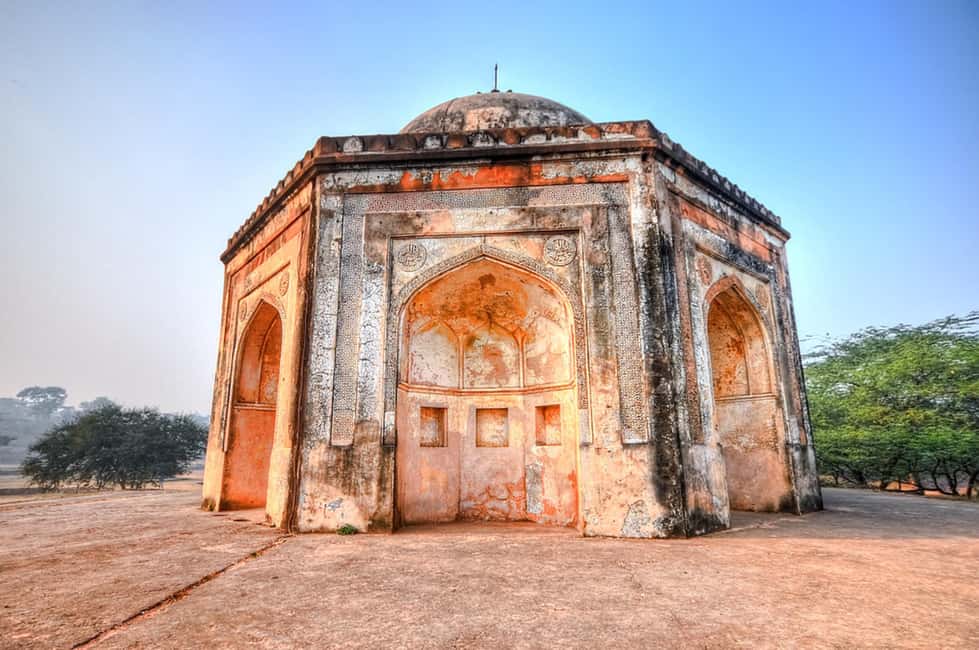
The last named monument stop is Dovecot Metcalfe’s Boathouse with guided sightseeing for about 25 minutes. The time here is short, so treat it like a palate cleanser at the end of your park circuit.
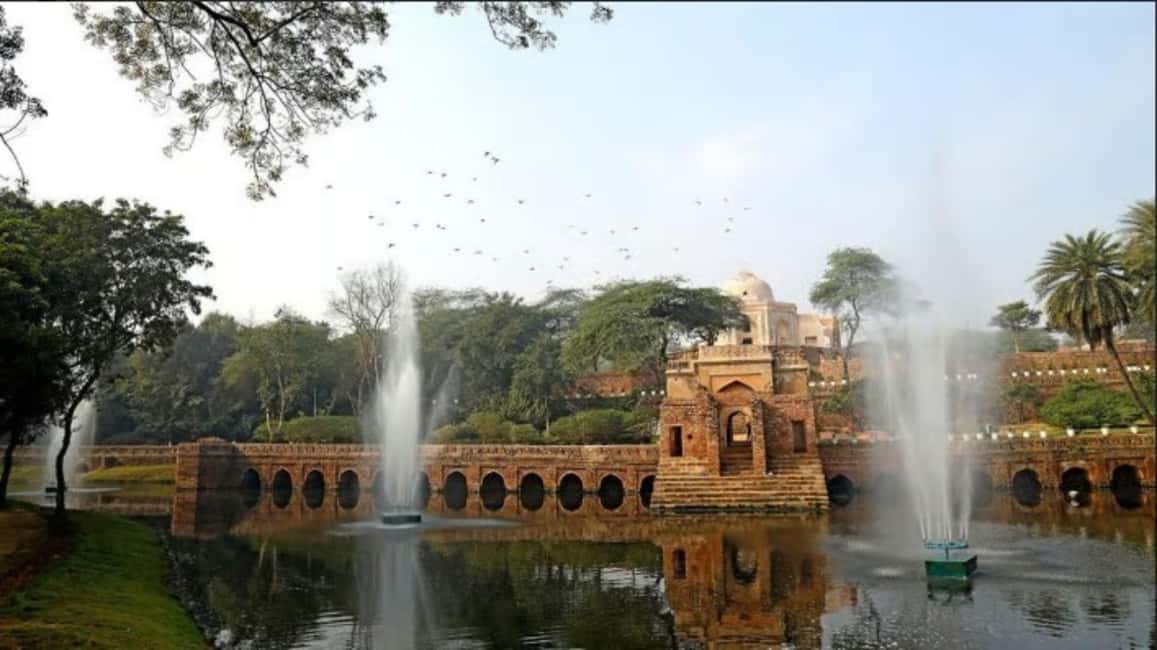
Even without getting lost in details, this final segment helps you understand that Mehrauli isn’t only medieval stone. The park area also contains structures linked to later periods, including the Charles Metcalfe connection that also shows up with Metcalfe’s Canopy.
You end by walking back with your walk leader to the Qutub Minar Metro Station, so you can keep the day moving without extra planning.
What you get for the price: $21 per person, and where the value comes from
At about $21 per person for a 4-hour guided tour, the value really depends on how you’d otherwise plan this day.
This tour includes:
- a professional English-speaking guide
- private hotel pickup and drop-off in Delhi (if you choose the pickup option)
- bottled water
- guided entry into the park and Qutub Minar if those options are selected
- a guided walking route across multiple stops
In other words, you’re paying for a guided order of operations. Instead of trying to coordinate multiple monuments, entrances, and timings yourself, you get a structured route that keeps the story coherent from Qutub Minar to stepwell and tomb-mosque sites.
One tradeoff: meals and snacks aren’t included, so you’ll want to plan food separately. Also, entry is conditional based on selected options, so double-check what’s included in your booking choice.
Timing, rules, and small things that can save your day
A few “know before you go” items are worth taking seriously:
- Bring a valid photo ID for entrance to monuments.
- No smoking.
- No flash photography.
- The tour isn’t suitable for wheelchair users, and people with back problems may find it uncomfortable.
Languages: the guide can be English, Italian, German, Russian, Spanish, French, Japanese, or Chinese. If you want a specific language, confirm availability when you book so you don’t get surprised at the meeting point.
Side planning note: the Taj Mahal is closed on Fridays, and photography is prohibited inside the main mausoleum there. That’s not part of this walk, but it matters if you’re mixing a Mehrauli day with another Agra plan.
Who should book this tour (and who might skip it)
I’d point you to this tour if:
- you like guided explanations that make monuments easier to understand
- you want a heritage walk that mixes major landmarks with smaller, atmospheric stops
- you want to cover multiple Mehrauli and Qutub Minar sites without building the route yourself
- you appreciate oddball historical details like Metcalfe’s 1850s hexagonal folly
I’d hesitate if:
- you need wheelchair access or have serious back limitations
- you’re only interested in one or two iconic monuments and don’t care about the full park sequence
- you hate walking on uneven stone paths
If you’re okay with a moderate walk and you enjoy history presented in plain, human terms, this is a strong way to get your bearings fast in Delhi’s oldest pockets.
Should you book the Mehrauli Archaeological Park tour with Qutub Minar?
Yes—if you want a guided, story-driven route through Mehrauli Archaeological Park anchored by Qutub Minar, with a standout stop at Rajon ki Baoli. For the price, the biggest advantage is not just the monuments—it’s the order, context, and the quiet shade you get compared to a purely road-based sightseeing day.
If you’re sensitive to walking discomfort or you need full accessibility support, you may want to look for a different format. But for most visitors, this is a smart, efficient, and genuinely interesting way to see why Delhi’s past feels alive in the middle of today’s city.
FAQ
Where does the tour start?
You meet the walk leader outside the Qutub Minar Metro Train Station Exit Gate.
How long is the tour?
The duration is 4 hours.
Is pickup and drop-off included?
Yes. Private hotel pickup and drop-off in Delhi are included, with pickup and drop-off options in multiple areas.
Is entry to Mehrauli Archaeological Park included?
Entry to Mehrauli Archaeological Park is included if you select the option.
Is Qutub Minar included?
Qutub Minar is included if you select that option.
What language guides are available?
Live tour guides are available in English, Italian, German, Russian, Spanish, French, Japanese, and Chinese.
Are there rules on photography or smoking?
Smoking is not allowed, and flash photography is not allowed.
Do I need a photo ID?
Yes, you should carry a valid photo ID for entrance to the monuments.
Is the tour refundable if I cancel?
There is free cancellation up to 24 hours in advance for a full refund.