REVIEW · NEW DELHI
Delhi: Old and New Delhi Full or Half Day Guided Tour
Book on GetYourGuide →Operated by Agra Route Tours · Bookable on GetYourGuide
Old Delhi and New Delhi in one guided sweep.
I like the practical setup: a private A/C car with pickup and drop-off, plus a real rickshaw ride through the tight lanes of Chandni Chowk. I also love that the guide can keep things flexible, with names like Manav, Adil, Tabrej, and Zayn coming up for being clear, organized, and easy to work with. The one catch to plan around is time: even on an 8-hour option, this is a “see the big stuff well” day, not a slow wander where you can linger forever.
You get a focused mix of eras, from Mughal monuments (Jama Masjid, Humayun’s Tomb, Red Fort area) to New Delhi’s broad ceremonial sights (India Gate, Rashtrapati Bhavan area, Parliament area). Depending on your chosen option, you’ll also hit a few standout religious sites, with a calm counterweight to the street-level chaos of Old Delhi. Do note one timing wrinkle: Lotus Temple is closed on Mondays.
In This Review
- Key Things That Make This Delhi Tour Worth Your Time
- How the Old-and-New Delhi Plan Works in 4–8 Hours
- Pickup That Actually Removes Stress
- The Mughal Core of Old Delhi: From Red Fort Area to Jama Masjid
- Chandni Chowk by Rickshaw: The Best Kind of Slow Motion
- Raj Ghat: A Thoughtful Pause Midday
- New Delhi’s Big Icons: Qutub Minar and Humayun’s Tomb
- India Gate and the Ceremonial Belt
- Lotus Temple and the Monday Reality Check
- Gurudwara Bangla Sahib: Calm, Order, and People
- Laxmi Narayan Temple and Agrasen ki Baoli: Short Stops, Big Feel
- Rashtrapati Bhavan and Parliament House: Quick Views of Power
- Price and Value: Why $10 Can Make Sense
- Guides, Languages, and Why Names Matter
- Practical Tips So Your Day Doesn’t Feel Like a Whirlwind
- Who This Tour Is Best For
- Should You Book This Old and New Delhi Tour?
- FAQ
- What’s the duration of this Delhi tour?
- Where can I be picked up and dropped off?
- Is a rickshaw ride included?
- Are monument entry tickets included?
- Which languages are available for the live tour guide?
- Is Lotus Temple open every day?
- What’s included in the price?
Key Things That Make This Delhi Tour Worth Your Time
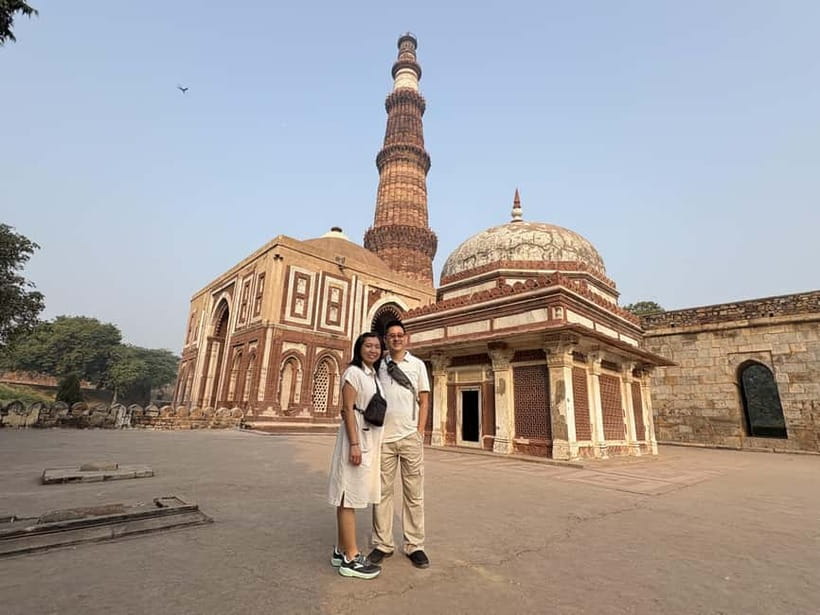
- Rickshaw ride in Chandni Chowk gives you the street-level Delhi you can’t recreate from a car window.
- Private A/C transport saves energy on hot days and keeps the day moving.
- A guide who adjusts on the fly, including flexible planners like Tabrej and Manav, can make the route feel personal.
- Major Mughal and New Delhi landmarks are covered in one day, so you don’t spend your limited time guessing what to prioritize.
- Skip-the-line access is available via a separate entrance for the sites included.
- Free bottled mineral water helps you stay steady through temple visits and market stops.
How the Old-and-New Delhi Plan Works in 4–8 Hours
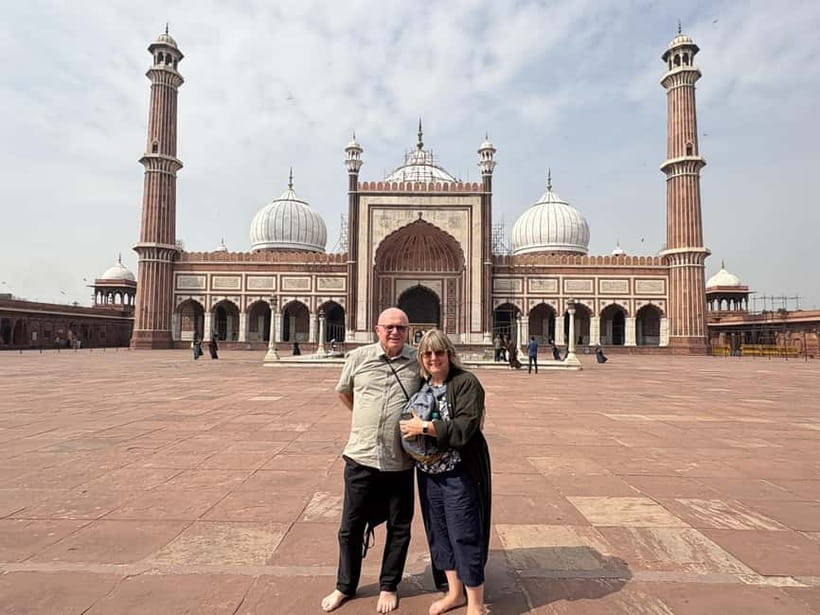
Delhi can feel like two different worlds that share the same skyline. This tour is built for that reality. You pick either a half-day style focus on Old Delhi or New Delhi, or you choose an option that combines both in an 8-hour day.
What I like about that structure is simple: it matches how most visitors actually travel. If you’ve got limited time, you need the highlights without turning the day into a logistics puzzle. If you have a bit more time, the full version lets you compare the city’s power centers—forts and mosques on one side, monuments and government buildings on the other.
Still, be honest about the pacing. This is a “guided highlights” day. That’s great if your goal is seeing the essentials and understanding what you’re looking at. It’s not ideal if your goal is slow photo walks, long café breaks, or deep dives into one site only.
You can also read our reviews of more guided tours in New Delhi



Pickup That Actually Removes Stress
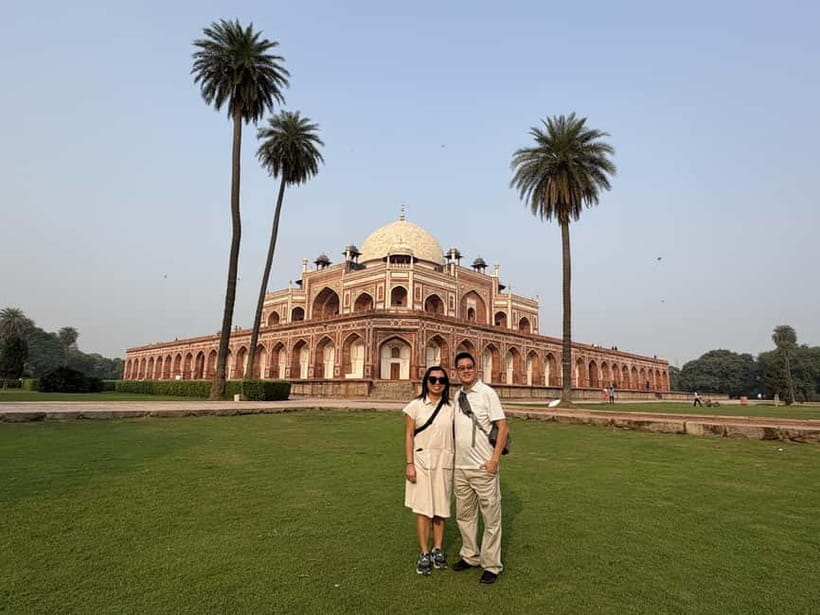
The tour starts with pickup from your hotel or from Delhi Airport, and the pickup options cover Delhi and the nearby NCR towns: places like Gurgaon, Noida, Ghaziabad, and Faridabad are included. You can choose a starting time between 7:00 AM and 4:00 PM, which matters in a city where heat and traffic can change your mood fast.
Why this is a big deal: Delhi rewards good planning. The difference between arriving at a monument with energy versus arriving drained is huge. With an A/C car and driver handling the route, you can spend your brain on the sights instead of on directions.
And yes, the drop-off is set up too: you’ll return to your hotel or to Delhi Airport after the tour. One of the recurring strengths with guides (like Adil) is keeping the day structured, and that usually starts right at pickup.
The Mughal Core of Old Delhi: From Red Fort Area to Jama Masjid
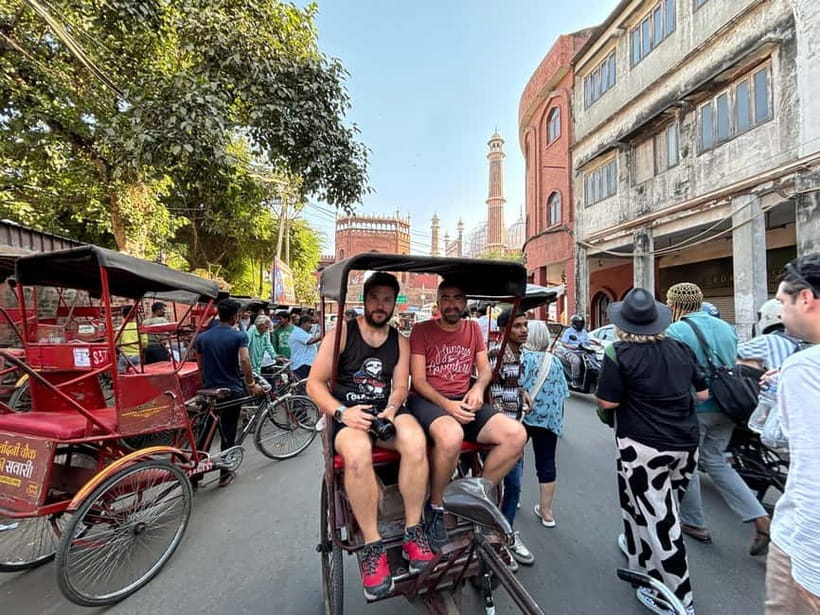
Even if you’ve seen photos, Old Delhi hits differently in person. The buildings look heavy and real, and the streets feel like they were made for walking, not for vehicles.
A typical Old Delhi run begins with the Red Fort (outside). You get a guided orientation and sightseeing time focused on what it represents and how it fits into Delhi’s Mughal era. Since it’s outside on this plan, don’t expect a full inside visit. Think of it as your anchor point—one of those moments that helps everything else click.
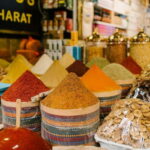
Next comes Jama Masjid, a major landmark of Mughal architecture and one of the biggest “you are here” moments in the city. Your time includes guided sightseeing plus a food market stop, which is where Old Delhi starts to feel like a living city instead of a museum.
Here’s the practical tip: wear footwear you can trust and keep your schedule flexible for small delays. This part of Delhi moves at street speed. When you’re with a guide, they can help you read what’s important and when to step aside, but the street itself still sets the tempo.
Chandni Chowk by Rickshaw: The Best Kind of Slow Motion
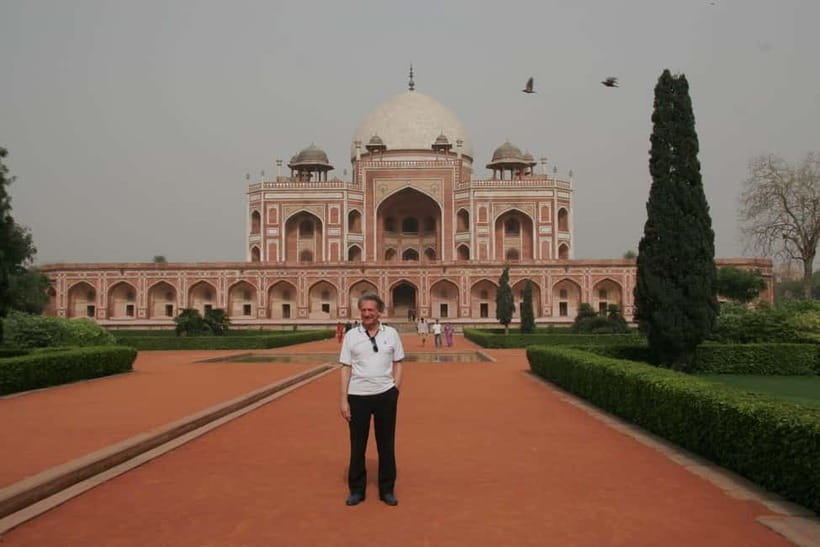
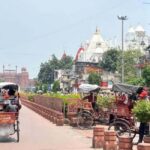
The rickshaw ride through Chandni Chowk is the highlight for a reason. It’s not just a novelty. It changes how you perceive the area.
From the car, you see a corridor. From the rickshaw, you feel the narrowness, the density of shops, and the rhythm of people moving. You also get a better sense of why this marketplace has lasted for generations. You’re traveling through the city’s daily life, not just its monuments.
Also, the rickshaw ride is part of what makes the price feel like a steal in a city where transport and guide time can add up quickly. You’re paying for a full guided day, but you’re also getting a street experience you’d be hard-pressed to replicate on your own safely and efficiently.
Raj Ghat: A Thoughtful Pause Midday
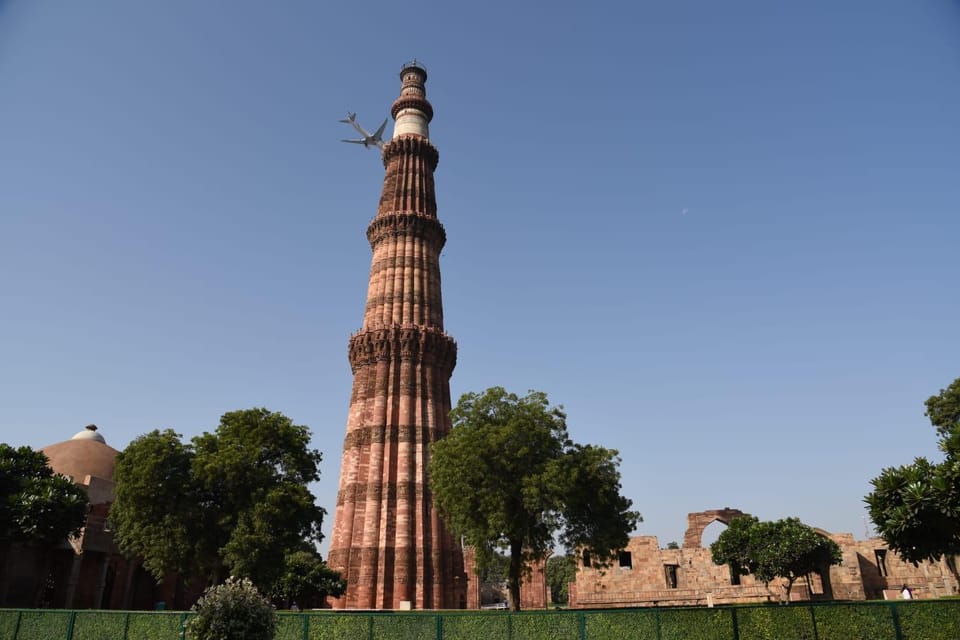
After the sensory overload of Old Delhi, there’s a built-in reset at Raj Ghat. Expect a guided visit with time for sightseeing and a slower tone than markets and mosques.
This stop is valuable because it gives you context for modern India alongside the Mughal-era monuments. It’s a reminder that Delhi isn’t only about what’s old—it’s also about what shapes people now.
If your day includes lunch time, this is the kind of pacing choice you’ll appreciate. You’re not sprinting from one spectacle to the next without breathing room.





New Delhi’s Big Icons: Qutub Minar and Humayun’s Tomb
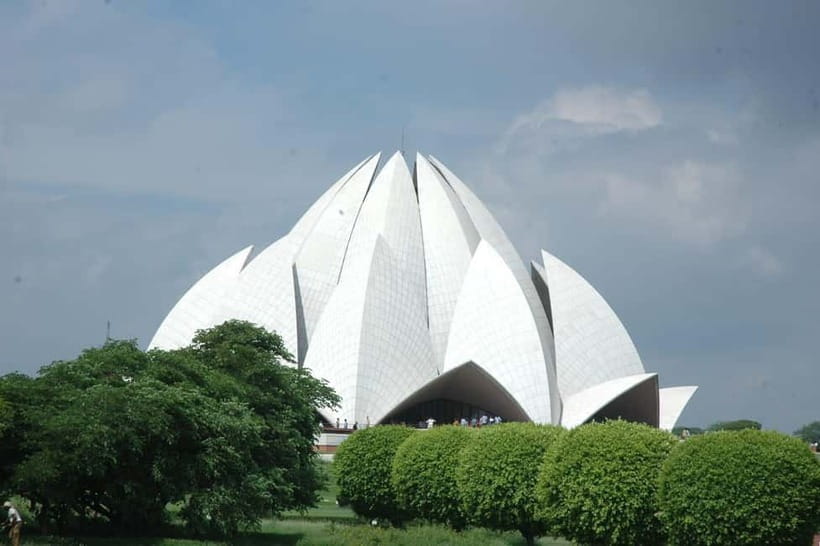
Switching to New Delhi feels like stepping onto a wider stage. The streets open up, and the architecture starts playing a different visual game: grand angles, more symmetry, and monuments set with breathing space.
A strong New Delhi segment typically includes Qutb Minar with a longer sightseeing block. You’ll get guided context so the tower doesn’t stay as just a famous photo. The point is to understand why this complex matters and how it connects to the city’s long architectural timeline.
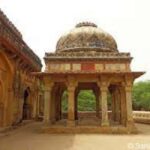
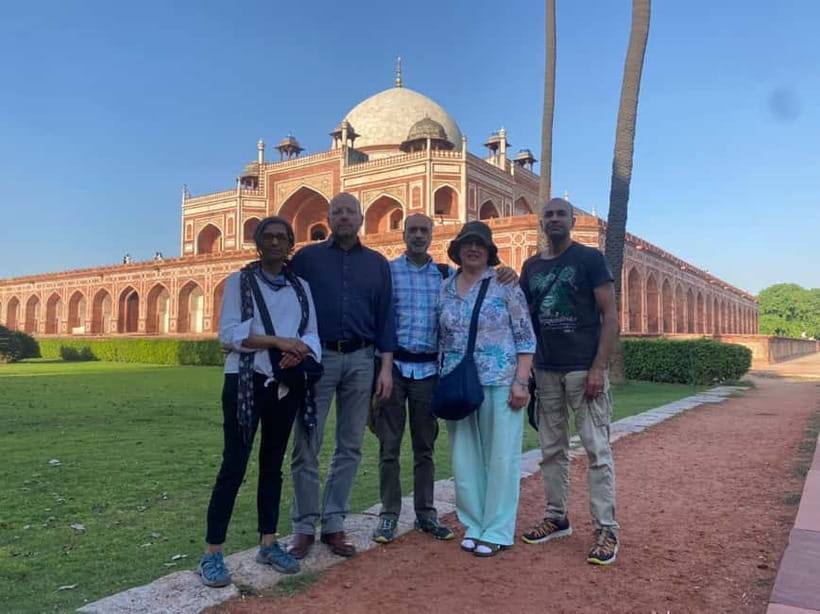
Then you move to Humayun’s Tomb, where the focus turns to Mughal design and the way the space is composed. This stop tends to land well because it’s not only about the building—it’s about the planning around it, the mood, and the sense of order that contrasts with Old Delhi’s tight lanes.
India Gate and the Ceremonial Belt

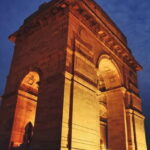
Next up is India Gate, which is treated as a guided stop with shorter sightseeing time. Even with limited time, it helps your mental map. It anchors your understanding of New Delhi’s ceremonial geography—where major roads, monuments, and government spaces relate to each other.
If you’re short on time and want your day to feel “complete,” this is the kind of stop that does the job. You don’t need hours here to get something meaningful.
Lotus Temple and the Monday Reality Check
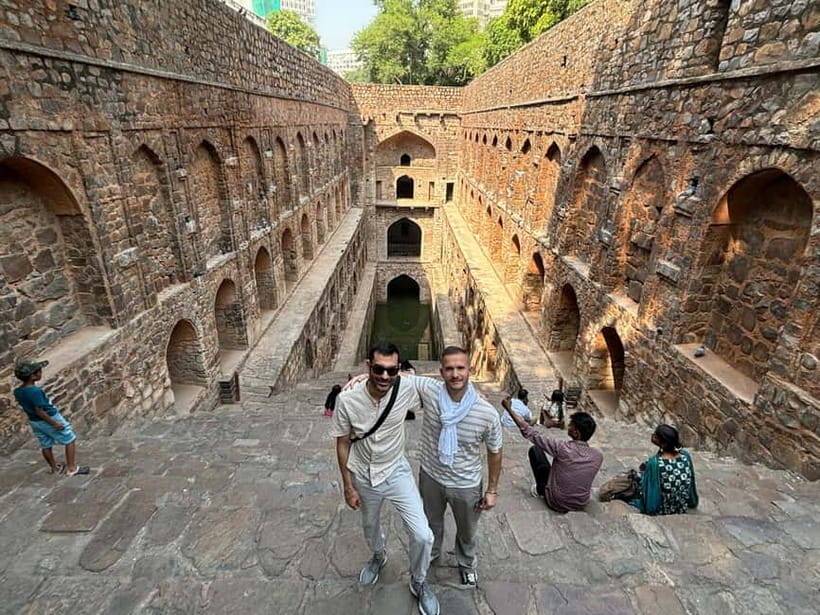
The Lotus Temple is a major “modern spirituality” moment. Your time here is built into the plan as a guided visit with sightseeing time, and it’s one of the stops that breaks up the day nicely.
Important heads-up: Lotus Temple remains closed on Mondays. If your schedule lands on a Monday, you’ll want to choose a different day or accept that your guide will have to adjust the flow based on what’s available.
Gurudwara Bangla Sahib: Calm, Order, and People
After Lotus Temple, the tour typically continues to Gurudwara Bangla Sahib. Expect guided sightseeing time, plus the chance to experience an active place of worship as part of your city day.
What I like about including a site like this is that it shifts your focus from monumental architecture to how the city’s communities actually live. Delhi isn’t only built from stone. It’s built from routines, prayers, and daily movement.
Even if you’re not sure what to do as a visitor, a guide helps you understand the basics of respectful behavior so you don’t feel lost.
Laxmi Narayan Temple and Agrasen ki Baoli: Short Stops, Big Feel
A couple of extra sites appear in the New Delhi side that work well when you’re traveling with limited time:
- Laxmi Narayan Temple for a guided visit with sightseeing time.
- Agrasen ki Baoli for another guided stop where the site’s character becomes the story.
These are good “supporting actors” for a highlights day. They don’t swallow your entire schedule, but they add variety. You come away with more than one type of architecture and more than one feel for Delhi.
Rashtrapati Bhavan and Parliament House: Quick Views of Power
On the full combined option, you’ll also get Rashtrapati Bhavan and Parliament Building via short guided passes, including sightseeing time.
These stops matter because they frame how New Delhi is designed. Even if you can’t spend long inside, seeing where the power sits helps you connect the dots between earlier monuments like India Gate and the more modern civic spaces.
Just remember: these are pass-by moments here, not marathon museum sessions.
Price and Value: Why $10 Can Make Sense
At $10 per person, the headline price feels almost too low for what you’re getting: pickup and drop-off, an A/C car with driver, a live guide, bottled mineral water, and a rickshaw ride. Add in a skip-the-line setup for certain visits, and it starts to look like good value for a first-time Delhi day.
That said, value is not only the price tag—it’s what you actually use. To get the most from this deal, you should have one clear goal: seeing major Old and New Delhi landmarks with context, in a single day, without wasting your energy on transport logistics.
Also, monument entry tickets are listed as included if selected. So when you book, check what’s covered for your specific option. If tickets aren’t included for a site you care about, that can change the real cost of the day.
Guides, Languages, and Why Names Matter
This tour runs with live guides in several languages: Chinese, English, French, German, Italian, Japanese, Portuguese, Russian, and Spanish. That’s a genuine comfort factor, especially when you want more than surface facts.
One of the strongest signals from the guide experience is flexibility. People mention guides like Tabrej adjusting to what they wanted to see and taking great photos. Others highlight Manav for being organized and professional, with Adil and Zayn also noted for strong host energy and clear explanations. The common theme is that the day doesn’t feel rigid.
If you care about context—why a mosque looks the way it does, what a tomb’s layout tells you, why one monument sits where it sits—this is the right kind of tour.
Practical Tips So Your Day Doesn’t Feel Like a Whirlwind
A day with Old Delhi markets plus New Delhi monuments can be a lot, even when it’s well run. Here’s how to make it feel manageable.
- Bring light layers and plan for sun. You’ll be outside for parts of the day.
- Wear shoes that can handle uneven sidewalks.
- Use the free bottled mineral water and bring extra if you get thirsty fast.
- If food calls to you at Jama Masjid’s area food market, keep it simple and steady. Drinks aren’t included, so budget for that.
- Expect a photo-friendly day, but don’t treat every stop like a race. Your guide can help you time it.
Who This Tour Is Best For
This is a great fit for:
- First-timers who want Old and New Delhi highlights in one organized day.
- People who want the street feel of Old Delhi, including a rickshaw ride, without the stress of navigating traffic.
- Short on time visitors—especially those who need a structured plan from pickup to drop-off.
It might be less ideal if:
- You hate schedules and want long unbroken time in one place.
- You’re traveling on a Monday and you were counting on Lotus Temple as a must-see.
Should You Book This Old and New Delhi Tour?
If you want a smart, time-efficient Delhi day that includes both sides of the city—Mughal monuments plus New Delhi’s big ceremonial landmarks—this is an easy yes. The combination of A/C comfort, a live guide, a rickshaw ride, and free water makes the day feel practical, not touristy.
Book it if your goal is to get your bearings fast and leave with a clear picture of Delhi’s layers. Skip it only if you’re Monday-dependent on Lotus Temple, or if you prefer slow travel where each stop is the main event rather than part of a guided sweep.
FAQ
What’s the duration of this Delhi tour?
The tour runs for about 4 to 8 hours, depending on the option you choose and what sights you plan to cover.
Where can I be picked up and dropped off?
You can be picked up from Delhi, Gurgaon, Noida, Ghaziabad, Faridabad, Old Delhi, New Delhi, Greater Noida, or Delhi Airport, and you’ll be dropped back to your hotel or the airport.
Is a rickshaw ride included?
Yes. You’ll enjoy a rickshaw ride through the streets of Old Delhi as part of the experience.
Are monument entry tickets included?
Monument entry tickets are included only if selected. The tour also notes skip-the-line access through a separate entrance.
Which languages are available for the live tour guide?
The live guide is available in Chinese, English, French, German, Italian, Japanese, Portuguese, Russian, and Spanish.
Is Lotus Temple open every day?
No. Lotus Temple remains closed on Mondays.
What’s included in the price?
Pickup and drop-off, an air-conditioned car with a driver, a tour guide, the rickshaw ride, free bottled mineral water, and all taxes and fees are included. Drinks and meals are not included.