REVIEW · NEW DELHI
Delhi Footsteps of Mahatma Gandhi Half-Day Tour
Book on GetYourGuide →Operated by Go City Adventures · Bookable on GetYourGuide
A morning walk through Gandhi’s final chapter is quietly powerful. I love the way this tour uses Gandhi Smriti and Raj Ghat to make his last days feel close, and I also like the National Gandhi Museum for turning big ideas into real artifacts. One drawback to keep in mind: the day can run fast, and not every stop is equally relevant to Gandhi for everyone.
Because it is a private group with an English-speaking guide (and other languages available), you’ll get more than a simple museum circuit. I’ve seen strong notes tied to guides like Deepanshu, Suraj, and Victor, plus smooth driving from people like Mr. Dimpal, which matters in Delhi’s traffic. Still, I’d watch the pace and any added side stops, since a small number of experiences reported feeling pressured when extra shopping stops appeared.
In This Review
- Key moments that make this tour worth your time
- A five-stop Gandhi run that starts at 10:00 AM
- Gandhi Smriti (Birla House): the last 144 days and the museum stop
- The Indira Gandhi Memorial Museum connection that matters
- Raj Ghat on the Yamuna: where Hey Ram is etched into the visit
- National Gandhi Museum: original books, journals, and audio-video
- How the AC vehicle and Delhi timing affect your day
- Price and value: what $51 buys you in real terms
- Guide quality can make or break the experience
- Shopping add-ons: how to keep the day on your terms
- Logistics, rules, and small comfort details
- Who this half-day Gandhi tour fits best
- Should you book Delhi Footsteps of Mahatma Gandhi?
- FAQ
- How long is the Delhi Footsteps of Mahatma Gandhi half-day tour?
- Where does the tour pick up in Delhi NCR?
- Is there an extra fee for pickup or drop-off?
- What happens at the stops during the tour?
- Does the tour operate on Mondays?
- What’s included in the price?
- Are meals and drinks included?
- What dress code should I follow?
- What languages are available for the live guide?
- Is this tour a private group?
Key moments that make this tour worth your time
- Gandhi Smriti (Birla House): where Gandhi spent his last 144 days and where he was assassinated
- Raj Ghat on the Yamuna: a short visit with the words Hey Ram at the memorial
- National Gandhi Museum: original books, journals, documents, plus audio-video materials
- Indira Gandhi Memorial Museum: a helpful context stop that connects the Nehru-Gandhi family story
- AC pickup and local driving: timed to keep transfers efficient during a half-day window
A five-stop Gandhi run that starts at 10:00 AM
This is built as a half-day with a clear purpose: you’re out from around 10:00 AM and typically back in the 4 to 6 hour range. The format is simple—guided visits at a few key sites, plus a short break built in near the end.
You’ll ride in an air-conditioned vehicle, and you’ll be picked up from multiple Delhi NCR options such as New Delhi, Delhi, Noida, Gurugram, and Ghaziabad. Just know that pickup/drop can involve an extra $20 paid in cash to the guide for hotels in Noida, Gurgaon, and Gurugram, so plan for that if your hotel is in those areas.
You can also read our reviews of more tours and experiences in New Delhi

Gandhi Smriti (Birla House): the last 144 days and the museum stop
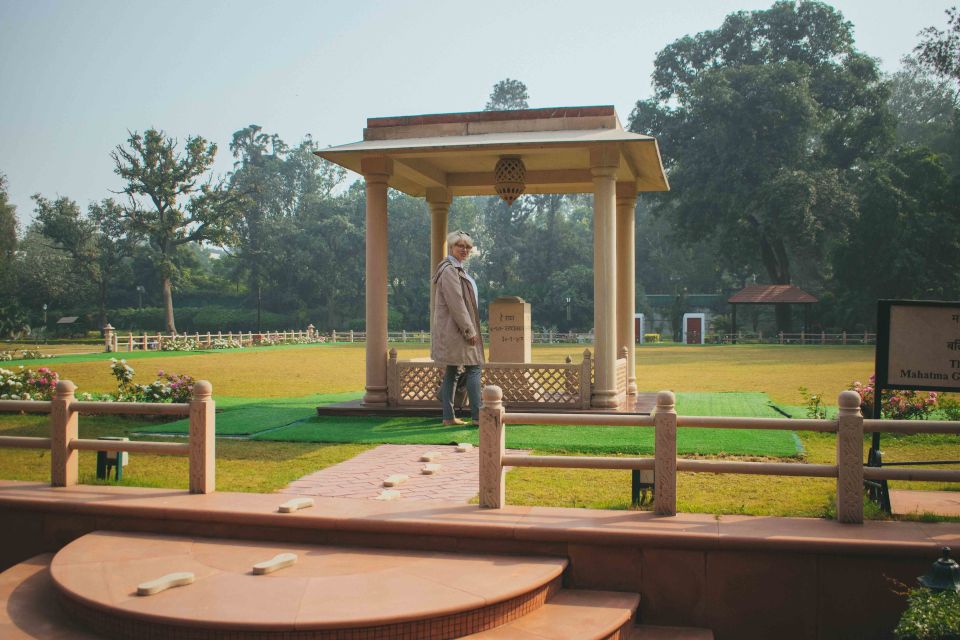
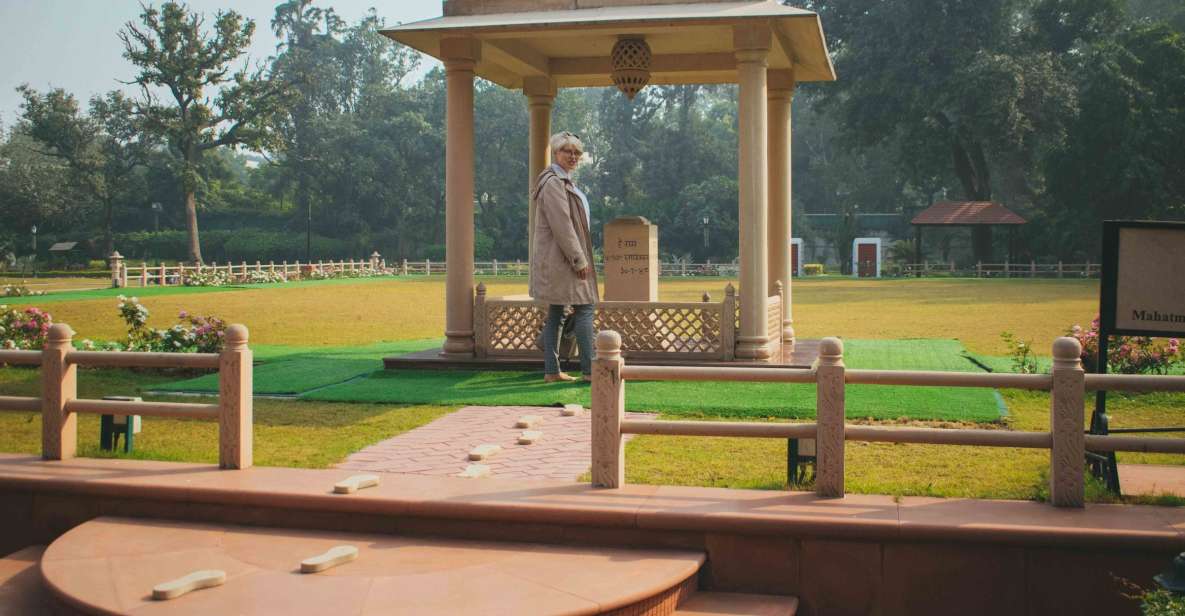
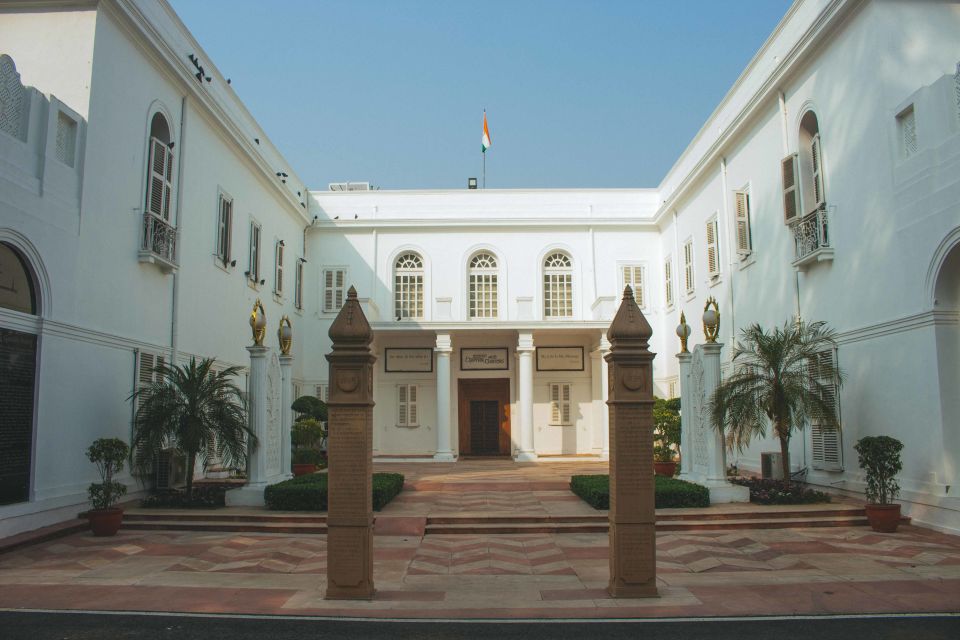
Your first stop is Gandhi Smriti, tied directly to Birla House. This is where Gandhi spent his last 144 days and where he was assassinated on 30 January 1948. It’s one of those places where you can feel the weight of dates in the air.
Expect both a guided look around and museum time—about 1 hour—so you don’t just see the setting. The goal is to connect the physical location to the story, which is exactly why this start works so well for first-timers. If you like learning in layers, this opening stop gives you the emotional and historical footing for what comes next.
Practical tip: the tour includes a shoe-keeping tip, which usually means you’ll remove or manage shoes at certain places. Wear footwear that’s easy to slip on and off. And go in with a calm pace—this isn’t a quick photo sprint.
The Indira Gandhi Memorial Museum connection that matters
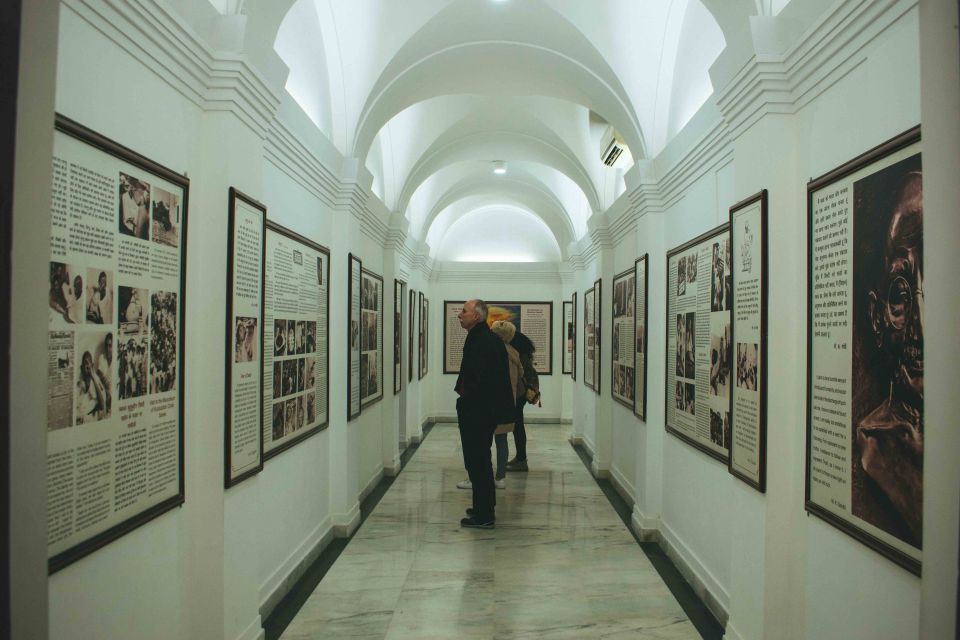
After Gandhi Smriti, you’ll head to the Indira Gandhi Memorial Museum, guided for about 40 minutes. This museum is housed in Indira Gandhi’s former residence and includes personal and historical items—like rare photographs, pieces related to the nationalist movement, and Nehru-Gandhi family moments including her childhood.
Here’s why I think this stop is useful even if your main focus is Mahatma Gandhi. Gandhi is only one part of the independence-to-leadership storyline. Seeing family-era context helps you understand how national politics and ideals lived on through later generations.
Don’t expect it to replace Gandhi-focused artifacts. Instead, think of it as a short bridge: it adds human detail to the big narrative you’re building.
Raj Ghat on the Yamuna: where Hey Ram is etched into the visit
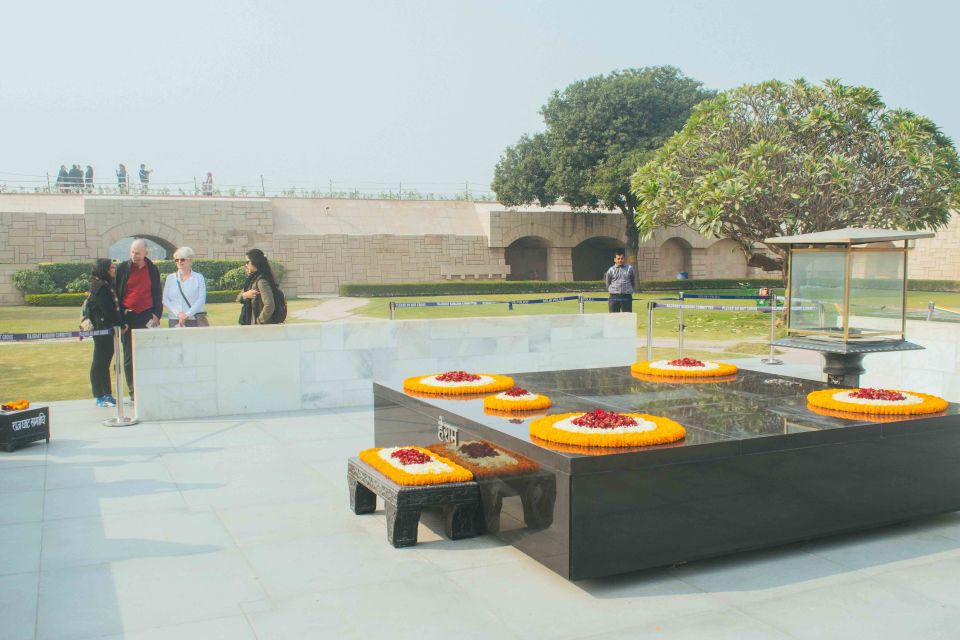
Next comes Raj Ghat, on the banks of the Yamuna River. This memorial to Gandhi carries the words Hey Ram, described on-site as Gandhi’s last words, and it’s also where he was cremated.
Your guided time here is around 30 minutes. That’s long enough to slow down and take it in, but short enough that the tour doesn’t drag. I like that the visit is designed to be respectful and focused rather than stretched into a long lecture.
If you’re the type who gets emotional at memorials, you’ll probably want a little extra quiet time before the rest of the stops. If you’re traveling with kids or an older parent, this is still manageable because the experience is contained and walking is limited.
National Gandhi Museum: original books, journals, and audio-video
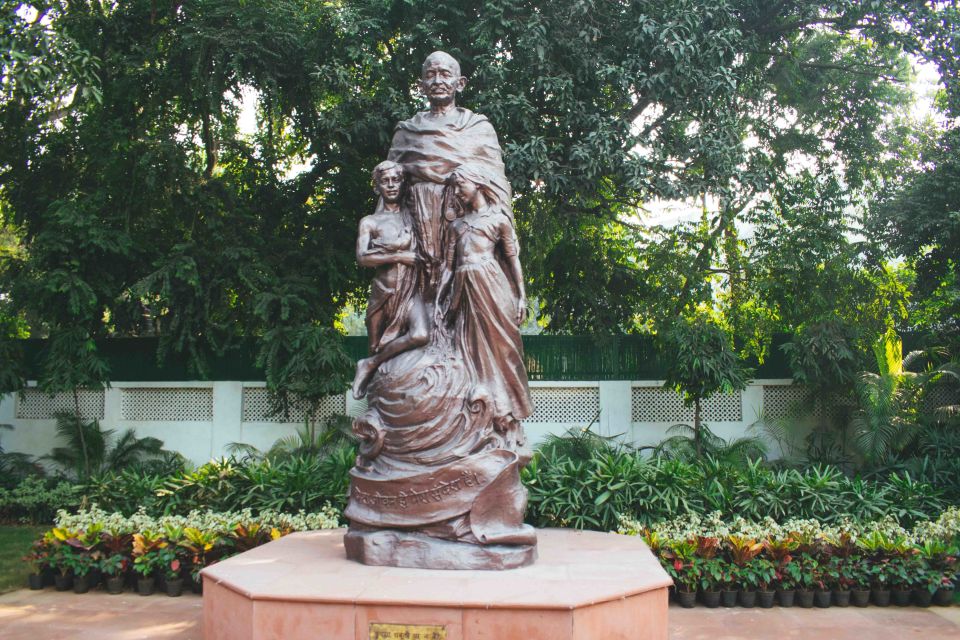
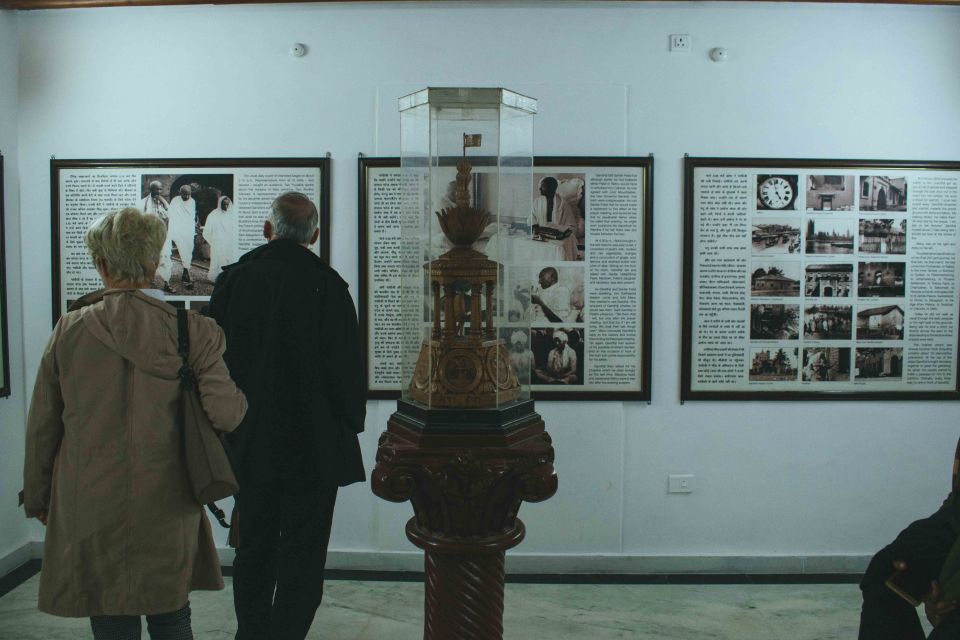
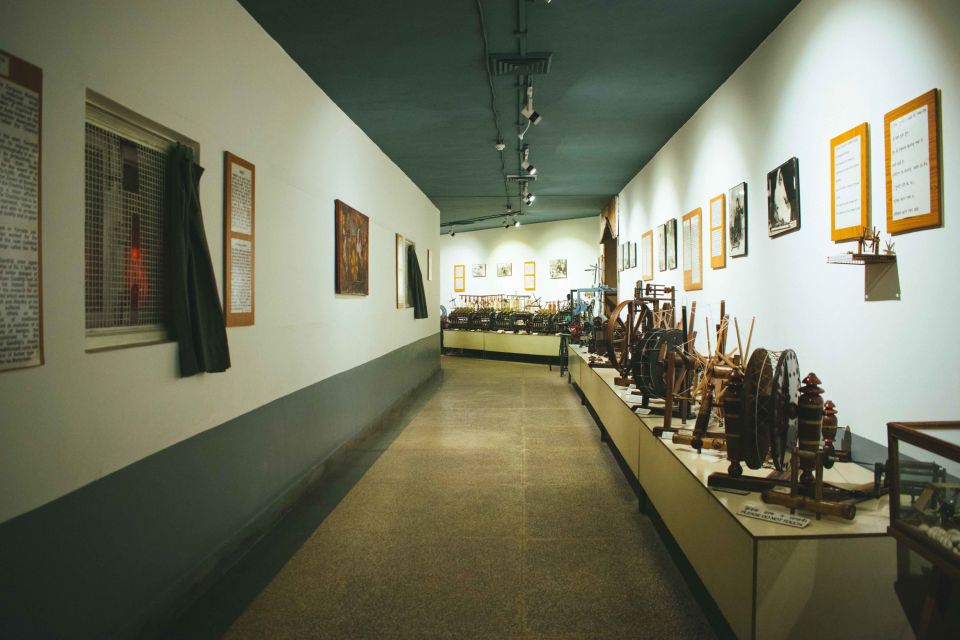
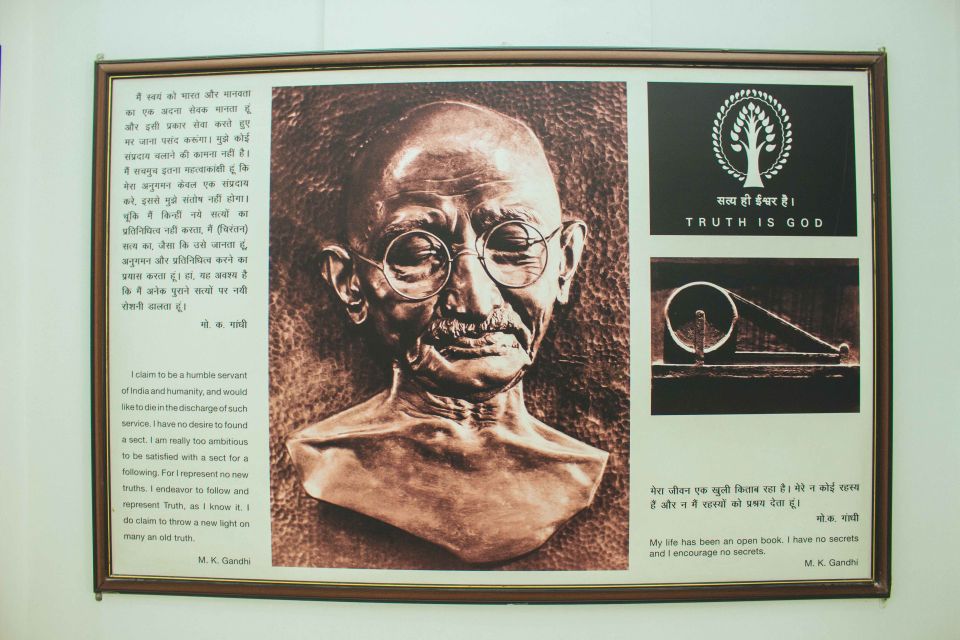
The final major stop is the National Gandhi Museum, guided for about 1 hour. This is where the tour shifts from sites to materials: you’ll see original books, journals, documents, and photographs, plus audio-video visuals linked to Gandhi.
This is the part that tends to click for people who want evidence, not just atmosphere. Museums can be hit-or-miss, but the emphasis on original printed materials and documents makes this one feel grounded. It also gives you something practical to take home—names, dates, and ideas you can later look up.
If you learn best by doing, give this stop your full attention. The other sites are powerful, but the museum is where you get the most concrete content in one sitting.






How the AC vehicle and Delhi timing affect your day
Delhi’s the kind of city where good driving makes a real difference. The tour’s timing and AC vehicle transfers are there for a reason: you’re visiting multiple locations in a half-day.
One review highlighted a driver, Mr. Dimpal, for getting between sites quickly through traffic. That’s the type of detail that matters. When transfers are smooth, your brain has energy left for the next memorial or museum.
Still, you should build flexibility into your expectations. Even with a tight plan, Delhi traffic is Delhi traffic. If you hate rushing, set your mindset to steady and respectful, not complete and perfect.
Also keep in mind that the tour includes a 20-minute break near the end with time described for shopping. That doesn’t mean it will be hours of browsing, but it does mean your schedule can include commercial areas before you head back.
Price and value: what $51 buys you in real terms
At $51 per person, this tour sits in the “reasonable for guided cultural value” zone. You’re paying for more than transport. You’re getting:
- Hotel pickup and drop-off
- Air-conditioned vehicle
- A professional English-speaking guide (and other language options)
- Guided museum time across multiple stops
A key value point: some of these sites can be accessible independently, so if you were only after entry tickets, you might feel the price more sharply. But the guide’s job isn’t just getting you through doors—it’s connecting places to meaning and keeping the flow coherent. In a time-limited day, that guidance is what you’re really buying.
Where price becomes less satisfying is if your guide expands the day into unrelated shopping stops. A couple of accounts reported discomfort around added places and pressure to buy items. If that sort of thing happens to you, it can turn a “teach me” tour into an “eventful errands” tour.
Guide quality can make or break the experience
This tour is heavily guide-driven. The format relies on a guide to explain the sites, manage the pacing, and keep you comfortable with timing and transitions.
I’ve seen examples of guides that get strong marks—Deepanshu, Suraj, and Victor were named in feedback tied to being helpful and effective. The best guides in this style do two things: they respect the solemnity of memorial sites, and they make the museum content feel organized rather than overwhelming.
On the flip side, one report claimed the guide didn’t know Gandhi-related details well and struggled with language, which led the day to feel like mostly transportation. Another account described a guide who did not clearly communicate a plan and also added stops that didn’t match the focus.
My practical advice: treat the first stop as your baseline. If early explanations feel thin or the day’s focus starts drifting, politely reset expectations with your guide. You can say you want the Gandhi sites to be the main focus.
Shopping add-ons: how to keep the day on your terms
The tour includes a short window for shopping near New Delhi—about 20 minutes. That part can be harmless, even fun, if it stays light and respectful.
But Delhi has a known pattern: a “quick stop” can sometimes turn into a sales pitch, especially around clothing or goods. One account mentioned being taken to places not tied to the tour focus and described feeling pressured to buy. Another described a narrow, busy shopping area that made the experience uncomfortable.
So here’s how I’d handle this before you go:
- Decide in advance if you want shopping time at all.
- If you don’t, make it clear at the start that you prefer a short break and back on schedule.
- If you do shop, set a spending cap and stick to it.
This keeps the day about Gandhi, not about sales counters.
Logistics, rules, and small comfort details

A few basics to plan around:
- Dress code: smart casual
- Shoes: comfortable walking shoes recommended
- Shoe-keeping tip: included
- Private group: yes
- Languages: English, Spanish, German, Italian, French, Russian
- Operating day: the tour does not run on Mondays
- Meals and drinks: not included
Because meals aren’t included, I suggest you treat the break as a chance to refuel, not as your only nutrition opportunity. Carry water if you need it, and don’t assume the schedule will pause long enough for a full meal.
Also: this is described as a private group, which generally means fewer distractions and more flexibility than a big bus tour. Still, you’ll be on a set route, so come prepared for guided time blocks.
Who this half-day Gandhi tour fits best
This tour works best if you want a focused Gandhi day without spending the whole trip planning routes. If you like a blend of memorial + museum artifacts, you’ll probably enjoy how the stops build on each other—from last days to cremation site to documents and audiovisual materials.
It’s also a good match for first-timers who want a guided overview that still doesn’t feel like a blur. The time allocation—1 hour at Gandhi Smriti, 40 minutes at Indira Gandhi Memorial Museum, 30 minutes at Raj Ghat, 1 hour at the National Gandhi Museum—creates structure.
If you strongly dislike any shopping or any change from a narrow itinerary, you should consider asking your guide about the final break and whether it will include sales-style stops. And if you’re very sensitive to pace, keep an eye on how long you’re given at each site after the guided portions.
Should you book Delhi Footsteps of Mahatma Gandhi?
Book it if you want a respectful, efficient Gandhi-focused morning with AC transport, a professional guide, and a museum finish that gives you something to read and research later. I’d especially recommend it if you’re pairing this with other Delhi sites and need a tight schedule that still feels meaningful.
Skip—or at least ask extra questions—if you know you’ll be unhappy with shopping detours or if you prefer totally self-paced stops. In one worst-case scenario, added sales stops and weak guiding can turn the day into a mismatch. You can reduce that risk by setting clear expectations early about focusing on the Gandhi sites.
If you want, tell me your travel dates and your language preference, and I’ll help you plan the best half-day order with nearby sights so you don’t lose time.
FAQ
How long is the Delhi Footsteps of Mahatma Gandhi half-day tour?
It runs for about 4 to 6 hours.
Where does the tour pick up in Delhi NCR?
Pickup is available from New Delhi, Delhi, Noida, Gurugram, and Ghaziabad. Pickup and drop-off can be available from hotels in Delhi NCR, with an extra fee mentioned for some areas.
Is there an extra fee for pickup or drop-off?
Yes. Pickup and drop-off from hotels in Noida, Gurgaon and Gurugram is available for an extra fee of $20 (or equivalent in Indian Rupees), payable in cash to the guide at pickup.
What happens at the stops during the tour?
You visit Gandhi Smriti (Gandhi Memorial), the Indira Gandhi Memorial Museum, Raj Ghat, and then the National Gandhi Museum.
Does the tour operate on Mondays?
No. The tour does not operate on Mondays.
What’s included in the price?
Included are hotel pick-up and drop-off, air-conditioned transportation, a professional English-speaking guide, shoe-keeping tip, and booklets.
Are meals and drinks included?
No. Meals and drinks are not included.
What dress code should I follow?
Dress code is smart casual, and comfortable walking shoes are recommended.
What languages are available for the live guide?
The live guide is available in English, Spanish, German, Italian, French, and Russian.
Is this tour a private group?
Yes, it’s described as a private group.