REVIEW · NEW DELHI
Delhi: Old and New Delhi Private Full or Half-Day Tour
Book on GetYourGuide →Operated by Greek India Tour · Bookable on GetYourGuide
Delhi hits hard on your first day. This private Old and New Delhi day plan gives you structure fast, with a driver + local guide working together so you can focus on monuments instead of logistics. I especially like the mix of big ticket sights and small-lane street energy, plus the option for a rickshaw ride through Old Delhi. One heads-up: it’s a packed route, so comfortable shoes and a calm attitude toward timing matter.
I also like that the guide role can flex. Names that repeatedly pop up in the feedback—Ali, Adil, Shikha, Sam, and Gopal Jaat—show a pattern: they’ll explain what you’re seeing and adjust the pace if you don’t want to treat markets like a checklist. If you’re the type who hates crowds, this is still doable, but you’ll want to go in expecting a sensory city day.
Lastly, New Delhi’s monuments and Old Delhi’s lanes are very different kinds of travel. That contrast is the point, but it means you’ll be doing a lot of stepping, photo stops, and short visits—so it’s not a slow museum crawl. If you need a lighter day, you can choose the half-day option.
In This Review
- Key highlights worth caring about
- Old Delhi to New Delhi: a smart route for first-time focus
- Jama Masjid: Mughal scale you can feel from the street
- Chandni Chowk and the rickshaw option: street life in motion
- Khari Baoli: the spice market that smells like a chapter
- Red Fort: a photo stop that still does its job
- Gurudwara Bangla Sahib: a reset in the middle of the day
- India Gate and Rashtrapati Bhavan photos: New Delhi’s formal look
- Humayun’s Tomb (UNESCO): the Mughal blueprint lesson
- Agrasen ki Baoli: the stepwell that feels older than you expect
- Lotus Temple or Qutub Minar: pick the vibe you want
- Lotus Temple (guided visit and sightseeing time)
- Qutub Minar (guided visit and sightseeing time)
- Pacing, timing, and what to watch for on a full-day version
- Price and value: why it can be a smart bargain at $2.75
- Who this tour fits best (and who should adjust expectations)
- Should you book this Old and New Delhi private tour?
- FAQ
- How long is the Old and New Delhi private tour?
- What’s included in the price?
- Is lunch included?
- Does the tour include a rickshaw ride in Old Delhi?
- Which languages are available for the live guide?
- Is the tour wheelchair accessible?
- Are monuments like Red Fort and Lotus Temple open every day?
- Where are pickup and drop-off points?
- Do I need to buy tickets in advance?
- Is this tour suitable for pregnant women?
- Are alcohol, pets, or drugs allowed?
Key highlights worth caring about

- Private car comfort with real local guidance so you spend less time figuring out where to go next
- Jama Masjid + Chandni Chowk as your Old Delhi anchor, with the option to ride a rickshaw through the lanes
- Khari Baoli spice market walk to turn your sense of smell into part of the story
- Humayun’s Tomb (UNESCO) for Mughal architecture that directly sets up why the Taj Mahal looks the way it does
- Two styles of New Delhi temples via Lotus Temple or Qutub Minar, depending on your route
- Photo-friendly stops at India Gate and Rashtrapati Bhavan without making the day feel like only monuments
Old Delhi to New Delhi: a smart route for first-time focus
The big value of this tour is simple: it strings together the places that define Delhi into one coherent flow. You start in Old Delhi, where Mughal-era buildings and old bazaars shape the look and feel of the city. Then you move into New Delhi, the British-planned zone with broad roads, ceremonial spaces, and government architecture.
I like this format for a practical reason: Delhi is not a “one neighborhood at a time” city. Traffic, distance, and chaos can eat your day. A private vehicle keeps things moving, and a guide helps you understand what you’re looking at while you’re still there—rather than decoding it later from your phone.
The guide-driven approach matters even more if you’re visiting solo. Many guides on this kind of route are used to adapting the day for travelers who want a sense of ease in busy areas. In the feedback, solo female travelers specifically praised the feeling of safety and the calm, organized handling of Old Delhi’s street flow.
You can also read our reviews of more private tours in New Delhi



Jama Masjid: Mughal scale you can feel from the street

Your first major stop lands at Jama Masjid, widely known as India’s largest mosque. This isn’t a quick peek from the outside; you get a guided visit with time to take it in. Even if you don’t follow every architectural detail, you’ll recognize the sheer scale—this is one of those places where your brain goes quiet for a moment because the space is so big.
What makes the stop work on a private tour is pace. You’re not stuck in a giant group shuffle. You can stand where you want for photos, ask questions, and move through with a guide who can explain why things are positioned the way they are.
Practical tip: dress respectfully and wear shoes you can trust. This is a site where you’ll be on your feet longer than you might expect, and long pants are recommended for comfort and respect.
Chandni Chowk and the rickshaw option: street life in motion

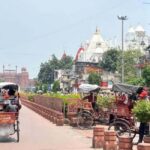
Next comes Chandni Chowk, the famous Old Delhi market zone. Think narrow lanes, layered markets, and constant movement. This is where Delhi’s energy shows up at full volume—sweet stalls, spice sellers, everyday shops, and people going about their day.
A big perk here is the optional rickshaw ride through Old Delhi. If you’ve never done one in a busy market area, it’s the fastest way to get oriented without walking every tight turn. You see what the streets feel like and still get a guided context for what you’re passing.
If you prefer to keep your feet on the ground, you can spend more time walking rather than riding. Either way, I’d treat Chandni Chowk as a living neighborhood, not a store window. Try one small street taste, notice the way shopfronts cluster, and then let the guide connect it to the city’s older rhythms.
Khari Baoli: the spice market that smells like a chapter
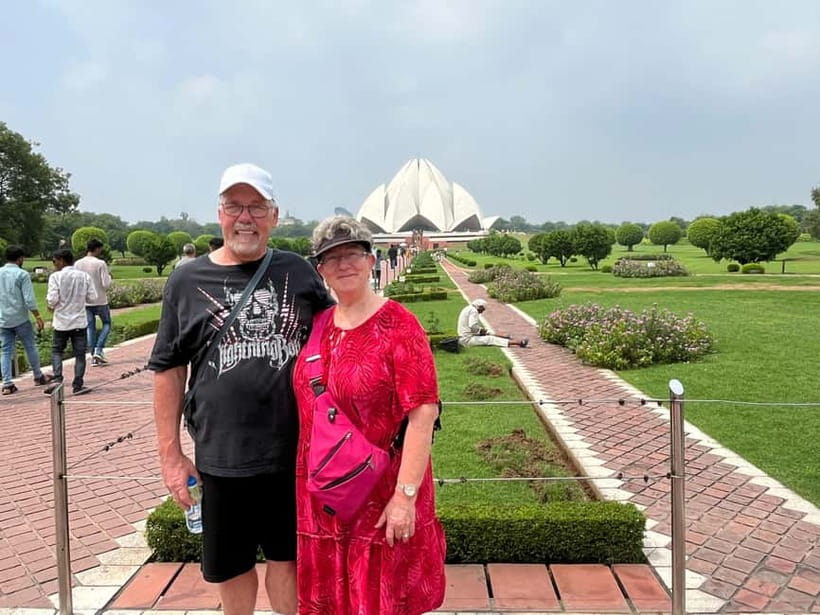
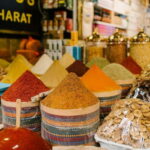
After Chandni Chowk, you shift to Khari Baoli, another Old Delhi market area—but this one with a strong spice focus. A guided walk gives you something most self-guided market visits miss: the story behind the scents.
Spice markets are easy to wander through like a shopping stop. The guide approach turns it into cultural context. You’ll be able to ask why certain items are sold in particular patterns, how traders think about quality, and what makes the market feel so intense during certain hours.
Practical tip: keep your breath cool and your nose ready. If you’re sensitive to strong smells, it helps to pause in quieter lane sections rather than rushing through every stall. Comfortable shoes matter here more than you think.
Red Fort: a photo stop that still does its job
You’ll pass by Red Fort for a photo opportunity rather than a full guided deep-dive. That can sound like “only photos,” but in a packed day it’s a strategic choice. The fort is one of Delhi’s most recognizable landmarks, and a quick guided framing helps you place it in your mental map of the Mughal era.
If Red Fort is on your personal must-see list, this tour still gives you a grounding look. But it’s not trying to replace a dedicated Red Fort visit with longer ticket time and extended inside-the-complex exploration.
You can also read our reviews of more tours and experiences in New Delhi



Gurudwara Bangla Sahib: a reset in the middle of the day
From Old Delhi’s street heat, you move into a calmer, more reflective stop: Gurudwara Bangla Sahib. You get a guided visit and walk time. This is a useful pivot point. Markets can wear you out fast, and a religious site adds a different kind of pace—more space to slow down, more focus on the people in the moment.
Even if you’ve seen other gurdwaras before, the value here is how it breaks up the day. You’re not only moving locations; you’re switching modes: from busy commerce to a place designed for devotion and community.
India Gate and Rashtrapati Bhavan photos: New Delhi’s formal look
When you arrive in New Delhi, the mood changes instantly. Wide roads. Clean sightlines. Monumental architecture set along ceremonial routes.
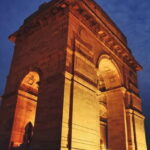
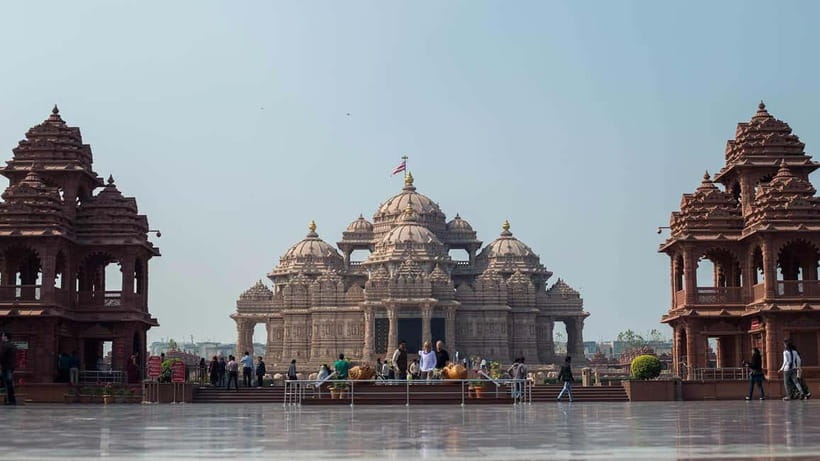
You’ll stop at India Gate for a visit and photo stop, and you’ll also have Rashtrapati Bhavan as a photo moment. These stops work best when you take them as orientation points. You’ll understand the geometry of New Delhi—how the city is planned around major axes—rather than treating each building as an isolated photo.
Practical tip: New Delhi can be sun-happy depending on the season. Hat and water help. The tour includes bottled water during the journey, which is useful in a day like this.
Humayun’s Tomb (UNESCO): the Mughal blueprint lesson
Then comes the star for architecture lovers: Humayun’s Tomb, a UNESCO World Heritage site. This is a guided visit with enough time to let the details land. Humayun’s Tomb is often discussed as a key precursor in the Mughal architectural story, including connections people make to the later evolution of Taj Mahal style.
What I like here is that the guide can translate design into meaning while you’re still standing in front of it. You’ll learn what makes it “Mughal” in structure—symmetry, layout, and how the complex creates a sense of order. Even if you’re not an architecture buff, you’ll feel why it’s so influential.
Time matters: you’re not rushing past the tomb structure. This stop gives you a chance to slow down and actually look.
Agrasen ki Baoli: the stepwell that feels older than you expect
After Humayun’s Tomb, you visit Agrasen ki Baoli, a historical step well. You get a guided visit here too, with time to absorb the scale and the strange, quiet vibe of a place built for water management centuries ago.
Stepwells can be hard to appreciate if you treat them like another monument. But on this route, Agrasen ki Baoli adds texture. Between major tomb architecture and modern city planning, the stepwell reminds you that Delhi was once shaped by infrastructure—practical systems that became cultural landmarks.
Practical tip: take your time looking down and around. The geometry of the steps is the whole point, and it’s one of those places where a guide’s explanation can transform it from “cool structure” into “I get why this mattered.”
Lotus Temple or Qutub Minar: pick the vibe you want
Depending on your chosen itinerary, you’ll get one of two New Delhi icons:
Lotus Temple (guided visit and sightseeing time)
If you choose Lotus Temple, expect a calmer, modern-spiritual feel. It’s a contrast to the older Mughal tomb. The guided visit helps you understand why the temple’s form is so distinctive.
This stop can be great if you want a breather after stepwell time—somewhere you can reset mentally with quieter visuals.
Qutub Minar (guided visit and sightseeing time)
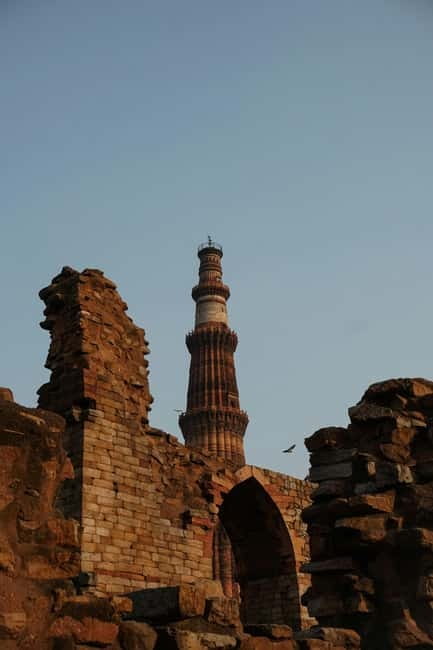
If your route includes Qutb Minar, you’ll spend more time in an older, monument-heavy atmosphere tied to early Indo-Islamic architecture. It’s visually dramatic and historically important, and the guided time is the difference between passing by and actually learning what you’re seeing.
If you like tall structures, inscriptions, and “how this civilization built” stories, Qutb Minar is the better match.
Pacing, timing, and what to watch for on a full-day version
This tour is designed to cover a lot of ground without making you run. Still, it’s not a long-lunch, slow-wander day. Many stops are guided for shorter windows, with photo stops and transition time built in.
What makes it work is the private format. A private guide can adjust for how long you linger at a doorway, which lane you want to take in a market area, and whether you’re more interested in architecture or daily life.
A few “go in prepared” points:
- Wear comfortable shoes. Old Delhi walking adds up fast.
- Long pants and a hat are smart for comfort and respect.
- Lunch isn’t included. You’ll get a lunch break in New Delhi area time, so plan to eat something quick and not too heavy if you still have more walking after.
- Closed days can change your day. Red Fort, Lotus Temple, and Akshardham remain closed on Mondays. If your dates land on Monday, you might want the itinerary to shift accordingly.
Price and value: why it can be a smart bargain at $2.75
The headline price can look almost too low for a private guide and a private car. On paper, $2.75 per person sounds like it can’t cover much. In reality, the value comes from what you’re not paying for with your time.
A private car plus hotel/airport pickup and drop-off matters because Delhi’s traffic can turn “one hour between sites” into an afternoon. You’re buying back your schedule. You’re also paying for someone to connect the dots while you’re there—so the sights don’t become empty checkmarks.
Also, the tour includes bottled water during the journey, which sounds small until you’re walking Old Delhi in heat and doing back-to-back stops. If entry fees are chosen as part of your setup, that’s another cost that can be handled rather than you scrambling at the gate.
Where value can drop a bit: lunch isn’t included, and some monuments may be pass-by/photo stops rather than full timed entries, depending on your exact route choice.
Who this tour fits best (and who should adjust expectations)
This is a strong match if you:
- Are visiting Delhi for the first time and want a single day map of both Old and New Delhi
- Prefer private car comfort over public transport scrambling
- Like guided context and don’t want to guess what you’re seeing
- Want Old Delhi’s street energy without doing it alone
It may feel less ideal if you:
- Want a slow, deeply paced day with long museum time
- Dislike crowds so much that markets will stress you out
- Need a lighter physical day. The tour isn’t suitable for pregnant women, and the amount of walking/standing is a real factor.
Should you book this Old and New Delhi private tour?
I’d book it if you want an efficient, guided “Delhi 101” that still includes the personality of the city—mosques, markets, tomb architecture, and the formal New Delhi look—without turning your day into transport problems.
I’d skip it or modify it if you’re aiming for a very relaxed pace, expect lunch included, or your Monday plans would hit closed sites that you personally care about most.
If you do book, my best advice is to message your preferences early: whether you want more architecture and less market time, more photography breaks, or a quieter rhythm. The guides listed for this route have a track record of adapting the day, and that’s where this tour becomes more than a route—it becomes your day in Delhi.
FAQ
How long is the Old and New Delhi private tour?
The tour runs for about 4 to 8 hours, depending on whether you choose the half-day or full-day option and the starting time available.
What’s included in the price?
You get a private tour with transport in an air-conditioned car, hotel or airport pickup and drop-off, a private local professional guide, bottled mineral water during the journey, and all taxes/fees/handling charges. A rickshaw ride in Old Delhi is included if you choose that option, and entry fees are included if monument entry is part of your selected plan.
Is lunch included?
No. Lunch is not included, though the schedule includes a lunch time stop.
Does the tour include a rickshaw ride in Old Delhi?
Yes, but only if you select the option that includes the rickshaw ride.
Which languages are available for the live guide?
The tour offers English, Arabic, French, Spanish, Chinese, Italian, Russian, Japanese, German, Portuguese, Hindi.
Is the tour wheelchair accessible?
Yes, it is listed as wheelchair accessible.
Are monuments like Red Fort and Lotus Temple open every day?
No. Red Fort, Lotus Temple, and Swaminarayan Akshardham remain closed on every Monday.
Where are pickup and drop-off points?
Pickup and drop-off are available at many locations, including areas like Old Delhi, Paharganj, Karol Bagh, Dwarka, Aerocity, Noida, Gurugram, Ghaziabad, Faridabad, and some airport locations. The driver holds a placard with the lead traveler’s name.
Do I need to buy tickets in advance?
The tour includes skip-the-ticket-line access, where applicable. Entry fees are included only if you choose the option that includes monument entry.
Is this tour suitable for pregnant women?
No. It is not suitable for pregnant women.
Are alcohol, pets, or drugs allowed?
No. Alcohol and drugs are not allowed, and pets are not allowed.