REVIEW · AMRITSAR
Amritsar: Wagah Border Flag-Lowering Ceremony Tour
Book on GetYourGuide →Operated by Go City Adventures · Bookable on GetYourGuide
Wagah is drama you can feel. I love the daily flag-lowering spectacle and the way the Indian Border Security Force and Pakistan Rangers work in a tight back-and-forth routine. I also like that the pick-up and drop-off is handled cleanly, so you spend your time watching instead of figuring things out. The one catch: food and drinks aren’t included, so you’ll want a plan for before and after.
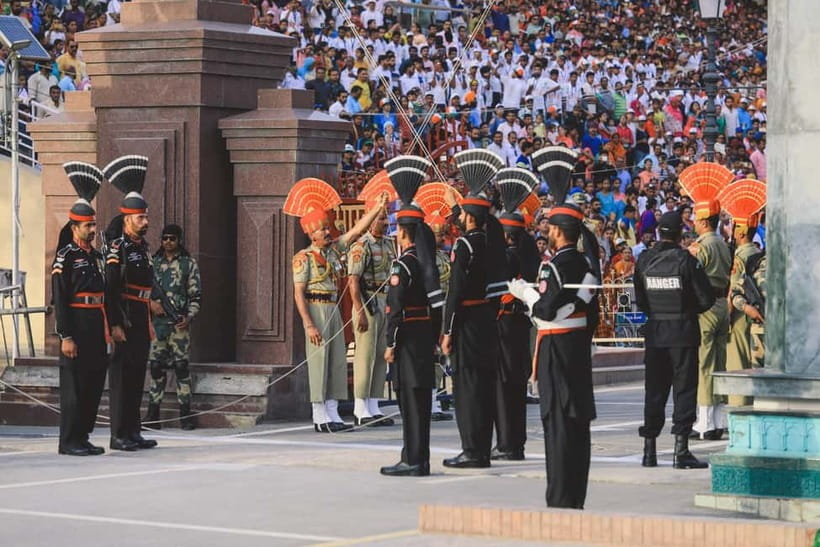
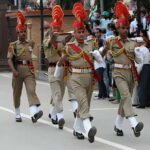
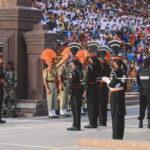
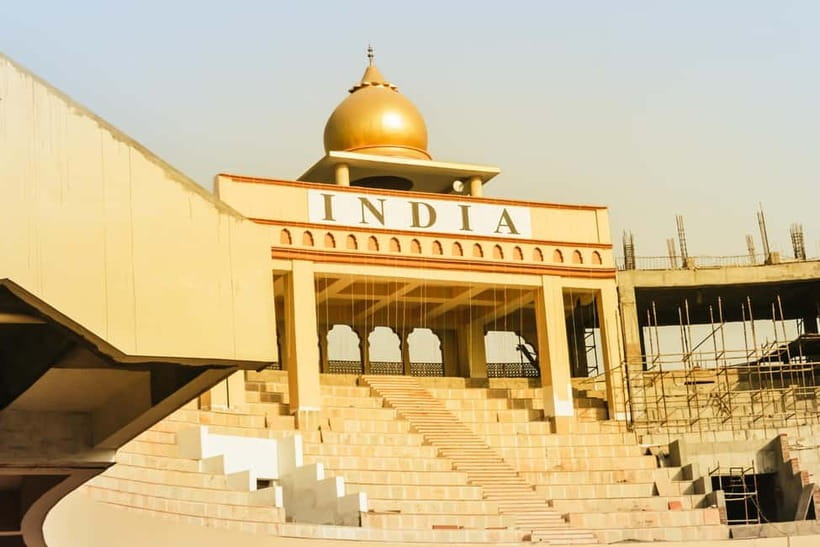
You’ll be at the Wagah Border Crossing Station for the beating retreat, a ceremonial tradition tied to the daily flag routine. Expect synchronized marching by troops in bright, distinctive uniforms and huge turbans, plus the sharp, accurate gate-action that makes the whole show feel like something precise, not just performative.
Timing is part of the experience. Your tour leader picks you up at 3:00 PM, and you’re back at your hotel by 7:30 PM, which makes it a doable add-on even if your Amritsar day already includes other stops.
In This Review
- Key highlights you’ll actually notice
- Wagah Border Beating Retreat: What you’re really watching
- The 3 PM hotel pick-up and A/C ride to the border
- Flag-raising and flag-lowering: the core of the show
- The synchronized uniforms and the beating retreat energy
- The gate-slamming moment: why precision is the point
- Price and logistics: is $131 worth it?
- What to bring (and how to dress for comfort)
- Who this tour suits best (and who should skip it)
- Should you book the Amritsar Wagah Border ceremony tour?
- FAQ
- What time is the pick-up?
- How long is the tour?
- When will I return to my hotel?
- What’s included in the price?
- Is food or drinks included?
- What should I bring?
- Is smoking allowed and is the tour wheelchair-friendly?
Key highlights you’ll actually notice
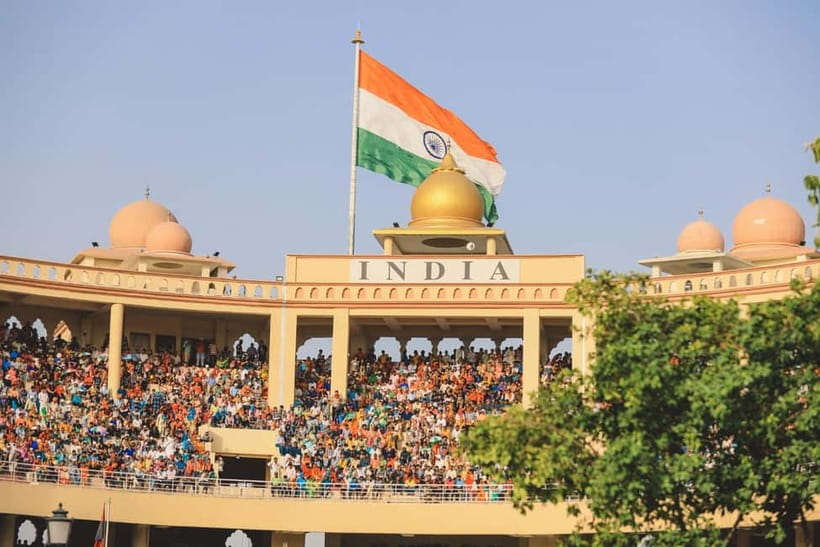
- Flag ceremony focus: daily flag-raising and flag-lowering at the India–Pakistan border
- Beating Retreat atmosphere: a tradition that brings both sides into the same moment of ceremony
- Marching with impact: troops in colorful uniforms and enormous turbans moving in unison
- Gate action: the slam-and-accuracy part that turns watching into paying attention
- Comfortable transport: A/C coach plus hotel pick-up and drop-off
- English live guide: help understanding what you’re seeing in real time
Wagah Border Beating Retreat: What you’re really watching
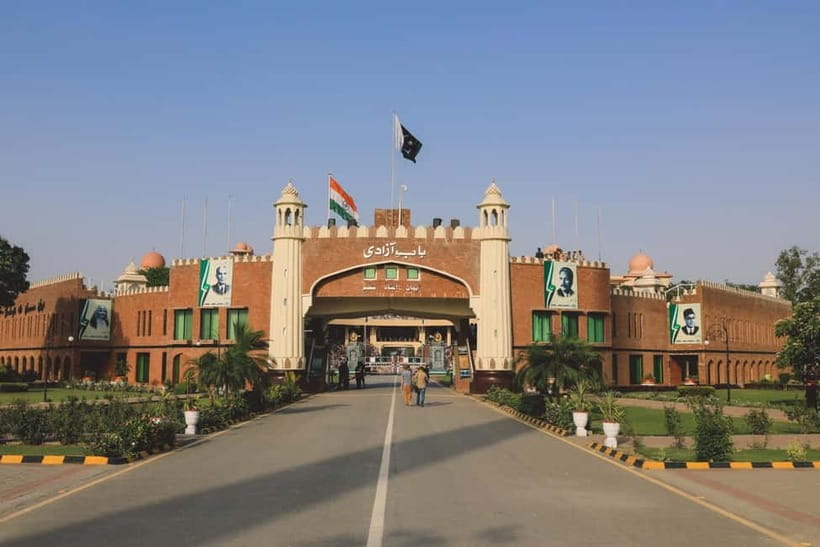
This isn’t a passive “stand behind a fence and hope” kind of event. The Wagah ceremony is built around timing, precision, and pageantry, so your attention has a job to do. As the flag routine unfolds, the beating retreat tradition adds an extra layer of spectacle, with both sides framed in a formal, rhythmic show.
What I like most here is that the show is easy to follow even if you’re not an expert. You’ll quickly understand the basic flow: ceremonial movement, flag-focused moments, then the dramatic gate-action that people often remember long after the uniforms and colors blur together. It’s not subtle. It’s meant to be seen.
And yes, the uniform details matter. Those tall troops in oversized turbans moving in unison gives you a real sense of discipline and coordination. Even if you only catch parts of it, the overall effect lands: this is a daily ritual with a built-in sense of seriousness.
You can also read our reviews of more tours and experiences in Amritsar.

The 3 PM hotel pick-up and A/C ride to the border
Your day is paced to keep things simple. At 3:00 PM, your tour leader picks you up from your accommodation. From there, you’re transported by an air-conditioned coach to the Wagah Border Crossing Station.
Why that matters: border-area events can eat time if you’re trying to DIY transport. With the organized ride, you can focus on arrival, finding your place, and settling in. It also reduces stress if you’re traveling with kids, older family members, or anyone who doesn’t love last-minute navigation.
You’ll also get a live, English-speaking guide with you. That helps because ceremonies have context that’s hard to guess from visuals alone. When you know what each segment is supposed to represent, the whole show becomes more than a photo op.
Flag-raising and flag-lowering: the core of the show
The ceremony starts with the daily rhythm of flag-raising and flag-lowering at the India–Pakistan border. This is the centerpiece. Everything else you see is in service of that central routine and the ceremonial sequence around it.
When you’re watching it, pay attention to the order of events rather than trying to capture everything at once. The show is structured, so once you pick up the pattern, you’ll feel like you’re “in on it.” The flag moments give you clear anchors in time, and the marching gives you the visual story that connects those anchors.
Also, remember this is a border crossing station setting. That means the ceremony is not just about aesthetics; it’s about official drill, movement, and controlled timing. You’ll feel that from the way the troops move and from the accuracy of the actions that follow.
The synchronized uniforms and the beating retreat energy
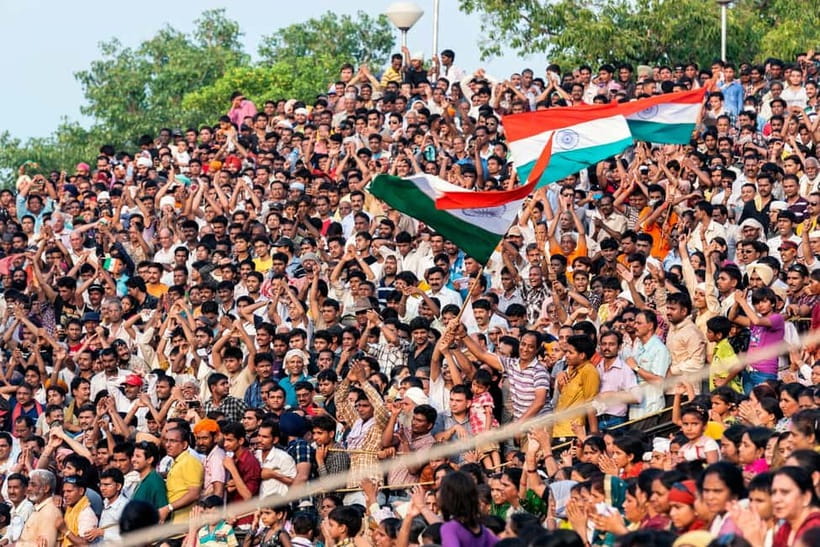
Here’s where Wagah really becomes a crowd experience, even if you came for the flags. The beating retreat tradition is described as bringing people from both sides together, creating an exhilarating spirit of patriotism. You can feel that in the way the ceremony is framed and performed.
A few details to watch:
- The synchronized march: troops move in unison, not as a loose lineup. That coordination is part of the show’s power.
- The color and formality: uniforms and turbans aren’t random costumes. They’re visually bold, designed to read from a distance.
- The pacing: the energy rises as the routine becomes more pointed and more exact.
This is also a good place to practice patience with your photos. You’ll want a camera ready, but don’t keep your phone glued to your face. Step back for a few seconds so you can actually see the sequence. You’ll enjoy it more, and your pictures will improve because you’ll understand what you’re trying to capture.
The gate-slamming moment: why precision is the point
One of the most memorable parts is the gate-action. You’ll see the soldiers slam gates with accuracy as the ceremony transitions. It’s dramatic, but it’s not random noise—precision is the whole message.
If you’re wondering what to focus on in that segment, think of it like this: the gate-action is the punctuation mark. It happens at a key moment, then the routine continues. The sound and impact can be startling, so if you’re photographing, keep your camera stable and don’t fumble when everyone reacts at once.
I also find this part helps you understand why the ceremony draws attention daily. People don’t just watch for spectacle; they watch for control—who moves when, and how exact the actions are.


Price and logistics: is $131 worth it?
At $131 per person for a roughly 3-hour tour, you’re paying for three things: controlled access to a highly structured event, transportation, and an English live guide. You’re not paying for a long multi-stop itinerary. You’re paying to show up at the right place, at the right time, without turning your day into a logistics puzzle.
For value, I’d look at what’s included:
- Pick-up and drop-off at your accommodation
- Transportation by air-conditioned coach
- Live tour guide (English)
And what’s not included:
- Food and drinks
So the math depends on your day. If your Amritsar schedule is already packed, the transport and guide make this feel like a low-effort add-on. If you’re traveling on a tight food budget, you’ll want to eat before you go (or plan to grab something after you return around 7:30 PM).
One more practical note from a real booking experience: there was a report about incorrect advertised timings that got corrected after it was raised. That doesn’t mean your day will be chaotic, but it does mean you should double-check the timing details provided to you close to departure, so you’re not surprised on the ground.
What to bring (and how to dress for comfort)
This tour comes with a simple packing list, and it’s worth following:
- Camera
- Water
- Comfortable clothes
Wear comfortable shoes. Even if you’re not walking far, you’ll likely want footwear that can handle standing and waiting. Choose clothes that suit the weather, because a ceremony outing can stretch your comfort more than you expect.
Bring a water bottle. Hydration matters more than people think, especially when you’re in the middle of a structured event and you don’t want to step away at the wrong time.
Rules are straightforward:
- No smoking
If you like taking photos, keep your camera ready, but don’t forget that the best photos often happen when you’re watching first and shooting second.
Who this tour suits best (and who should skip it)
This experience fits best if you want:
- A focused, time-efficient activity in Amritsar
- A highly structured cultural/political ceremony setting
- The chance to see Indian Border Security Force and Pakistan Rangers performing in the daily routine
It’s less ideal if:
- You have back problems
- You use a wheelchair
That’s not a minor detail. The ceremony setting can involve standing and limited flexibility, so it’s worth taking seriously.
If you’re traveling with teens, older kids, or anyone who likes disciplined performances and ceremonial traditions, this is a strong match. If you’re expecting a relaxed museum-style visit, you’ll likely prefer something calmer.
Should you book the Amritsar Wagah Border ceremony tour?
I’d book this if you want a hassle-free way to see the daily flag routine and the beating retreat at Wagah. The included transport and live English guide do real work here. They cut the stress, and they help you understand what you’re seeing instead of just collecting images.
Don’t book it if food and comfort logistics are a deal-breaker for you, or if mobility issues make standing difficult. Also, check your timing details carefully before you head out; there has been at least one case where advertised timings were reported as off and later corrected.
If you’re game for a short, focused 3-hour experience packed with ceremony, this is one of those rare activities where you can show up, follow the rhythm, and genuinely feel like you witnessed something specific to the day—not just a generic sightseeing stop.
FAQ
What time is the pick-up?
Your tour leader picks you up at 3:00 PM from your accommodation.
How long is the tour?
The tour duration is 3 hours.
When will I return to my hotel?
You’ll be transported back after the ceremony and arrive at your hotel at about 7:30 PM.
What’s included in the price?
The tour includes pick-up and drop-off at your accommodation, transportation by air-conditioned coach, and a live tour guide in English.
Is food or drinks included?
No. Food and drinks are not included.
What should I bring?
Bring a camera, water, and wear comfortable clothes.
Is smoking allowed and is the tour wheelchair-friendly?
Smoking is not allowed. The tour is not suitable for wheelchair users and people with back problems.