REVIEW · AGRA
Agra: Taj Mahal, Agra Fort & Fatehpur Sikri Guided Tour
Book on GetYourGuide →Operated by Adventure waves India · Bookable on GetYourGuide
Sunrise in Agra changes everything. This one-day tour strings together three UNESCO sites—Taj Mahal, Agra Fort, and Fatehpur Sikri—so you see the story of Mughal power and love without wasting time.
I especially like the practical setup: hotel pickup and drop-off plus a private AC vehicle means you’re not juggling rickshaws or meeting points all day. And I love that the Taj Mahal visit is guided at sunrise, with a guide adding context and smaller details you’ll miss if you’re just following the crowd.
The main thing to consider is timing. If you’re picked up later (especially from Delhi), you may lose flexibility for Fatehpur Sikri, since the day is built around getting to the Taj Mahal early.
In This Review
- Key highlights worth your time
- A sunrise Taj Mahal that feels less like a photo stop
- Agra Fort: Mughal power you can walk through (and feel)
- Fatehpur Sikri: a capital city abandoned after about 14 years
- Private AC transport and how to avoid a long-day headache
- Lunch and craft stops: what to watch for
- Guide quality really changes the day
- Price and value: why $17 can work (and when it might not)
- Who this tour fits best (and who should look elsewhere)
- Should you book this one-day Agra highlights tour?
- FAQ
- FAQ
- What’s the duration of the tour?
- Where does the tour pick you up and drop you off?
- Which languages are available for the live guide?
- Is the Taj Mahal ticket line skipped?
- Are entrance fees and lunch included automatically?
- Is the Taj Mahal open every day?
- What should I bring for the tour?
Key highlights worth your time
- Sunrise Taj Mahal visit with a guide who adds the emotional and architectural backstory
- Agra Fort walkthrough, including courtyards and royal spaces tied to Shah Jahan’s final years
- Fatehpur Sikri as a ghost city, abandoned after about 14 years, with gateways, palaces, and mosques to explore
- Private AC transportation with door-to-door pickup and drop-off options across Agra and the Delhi region
- Live multilingual guides (Japanese, French, Spanish, German, and more), plus bottled water during sightseeing
A sunrise Taj Mahal that feels less like a photo stop
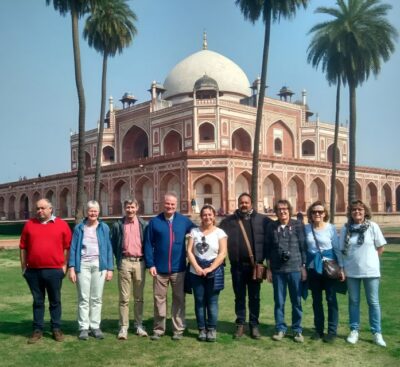
The day starts before the crowds really settle in. You’ll head straight to the Taj Mahal at sunrise, which matters more than people think. Early light softens the famous white marble, and the monument’s symmetry hits harder when the atmosphere is calm instead of chaotic.
A good guide can also turn this from a checklist into a story. On this tour, you’re not just looking—you’re getting explanations about love, loss, and what the Mughals were trying to build in stone. I like that the experience is guided, because the Taj Mahal can feel slightly abstract if you only see it through postcards.
Also, do yourself a favor: wear comfortable shoes and keep your expectations realistic. You’ll be walking, taking photos, and moving with a schedule. And note the basic rule that the Taj Mahal is closed on Fridays, so don’t plan around a Friday visit unless you have a backup date.
You can also read our reviews of more guided tours in Agra



Agra Fort: Mughal power you can walk through (and feel)
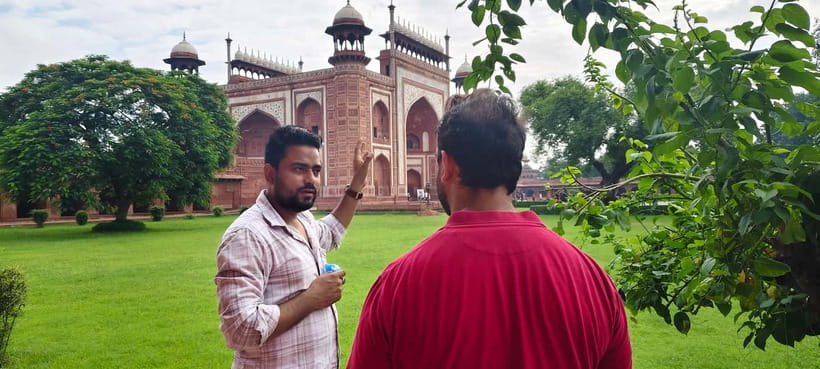
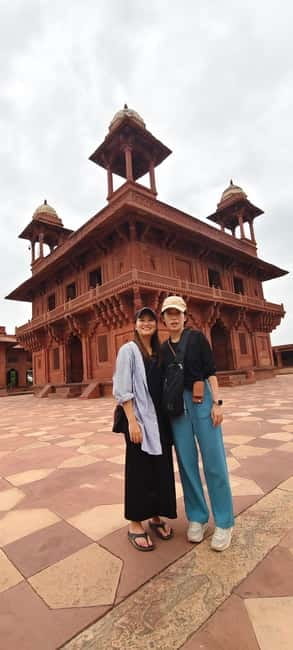
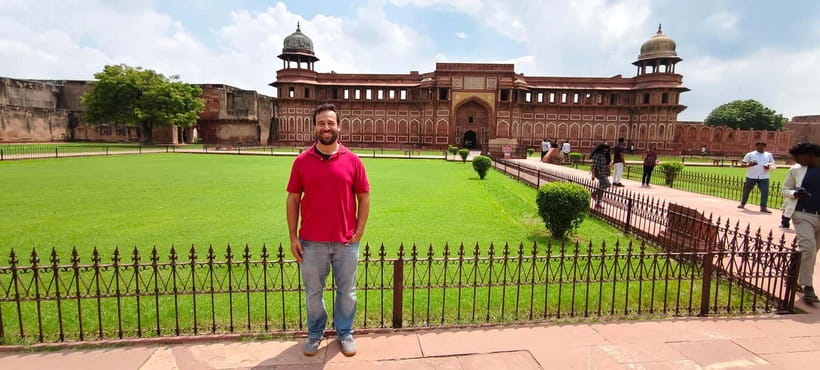
After the Taj Mahal, the tour shifts from romance to authority. Agra Fort is a massive red-sandstone fortress that once functioned as a royal residence, and walking its spaces changes how you understand Mughal history. It’s not just walls and gates—you get to move through courtyards and rooms that make the empire feel physical.
The highlight here is the guided tour through the fort’s interior, including the prison chamber where Shah Jahan spent his final years. This is the spot where the story becomes visual: from inside, you’re meant to grasp the idea of him looking toward the Taj Mahal from afar. That kind of detail is exactly why a guided visit helps. Without context, you might see the chamber as just another room; with context, it becomes a chapter.
One balanced note: the fort experience depends on the guide’s pacing. Some guides are strong on structure and photos; others lean more into talking. Either way, you should still expect the day to run fairly efficiently—there’s a lot to fit in before heading toward Fatehpur Sikri.
Fatehpur Sikri: a capital city abandoned after about 14 years
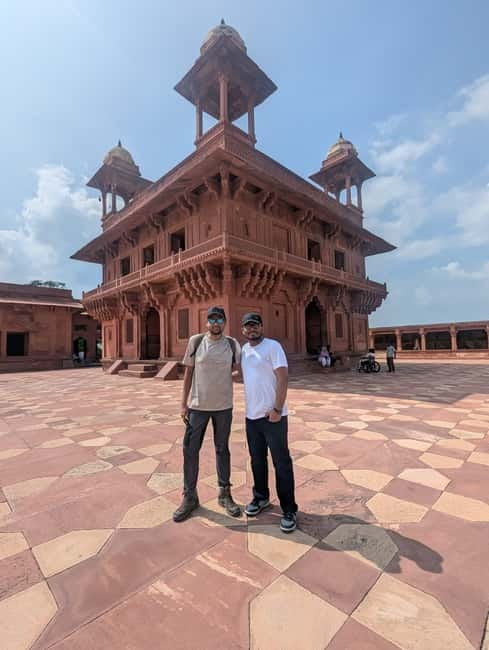
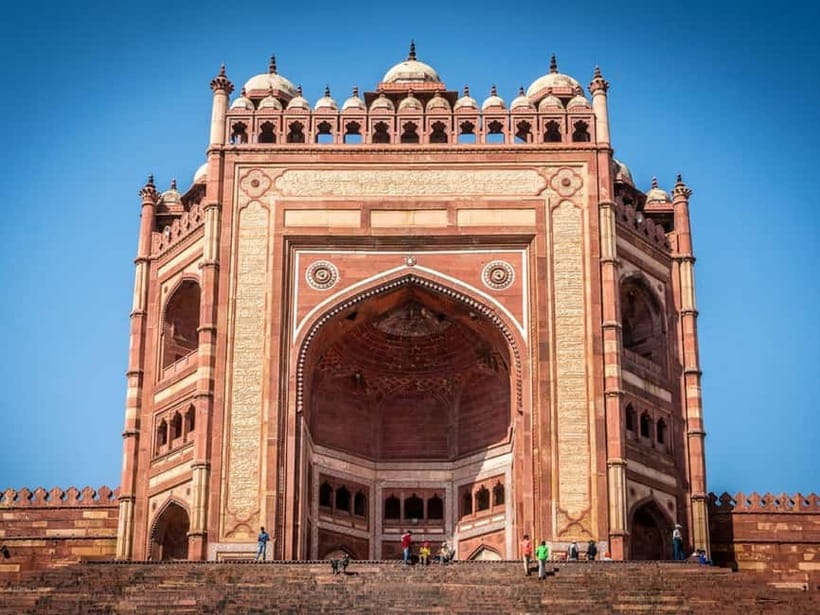
Then comes the “how is this real?” part of the day. Fatehpur Sikri is an abandoned city—built as a thriving capital under Akbar, then left behind after roughly 14 years. The eerie feeling isn’t just about emptiness. It’s in the scale of the gateways and the craftsmanship of the palaces and mosques, all sitting there as reminders of how fast plans can change.
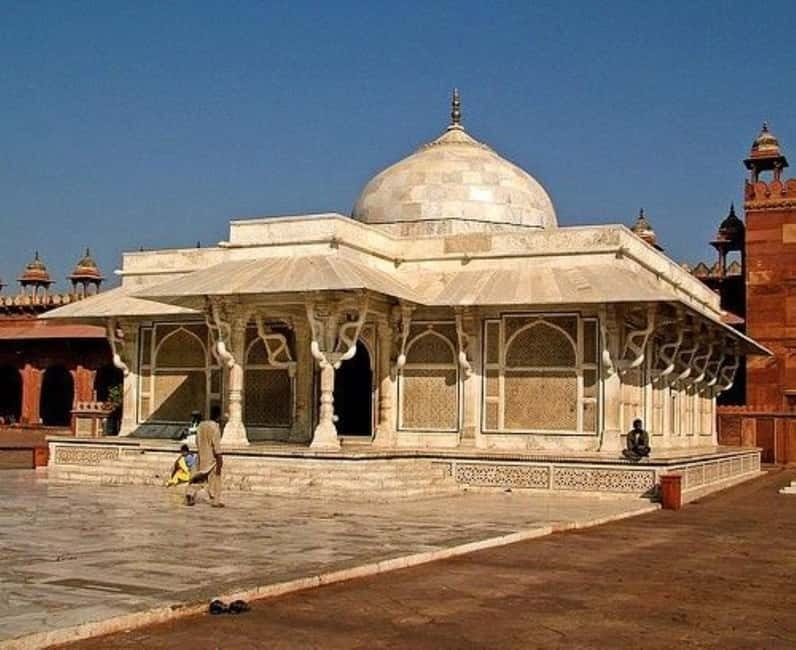
The tour includes photo stops and guided sightseeing across the key areas: carved gateways, palace spaces, and religious architecture. I like that it’s guided, because Fatehpur Sikri is easy to wander through without knowing what each space was meant to do. A good guide helps you read the layout instead of just taking pictures.
One practical caution: it’s an extra drive. The tour sets it at about an hour from Agra, but that still adds up in a day that already starts at sunrise. In one example from a Delhi pickup, a 9:00 departure meant Fatehpur Sikri couldn’t be included. If Fatehpur Sikri is a must for you, plan a pickup early enough to protect that time.
Private AC transport and how to avoid a long-day headache
This is a private group tour with a private AC vehicle and driver. For me, that’s the real value of a one-day itinerary in India: you avoid spending your day negotiating transport and waiting for people. Door-to-door pickup and drop-off across Agra (and select Delhi-region locations) helps you keep your energy for the sights.
Your route is structured around three main stops, so the car time is mostly transfer time—not constant delays. You’ll also get bottled water during sightseeing, which is a small thing that makes a big difference when you’re walking in the sun.
Still, manage expectations about duration. The itinerary lists 8 to 14 hours, which is a wide range for a reason. Pickups from different cities and starting times can shift how much you do. If you’re trying to fit in dinner plans or a train later the same night, keep a buffer. This is the type of day that can run long if your schedule is tight.
Lunch and craft stops: what to watch for
Lunch is included only if you book the all-inclusive option. If not, you’ll be managing food on your own or depending on the tour’s timing.
There’s also a practical reality: some guides may take you to local craft or inlay/gem showrooms during the day. In one case, that created discomfort because the visitors weren’t asked about their preferences and felt pressured. I’m mentioning this not to scare you, but to help you stay in control.
My advice: if you’re not interested in shopping-style stops, set a simple expectation early with your guide. You can politely say you’d rather spend that time walking, photographing, or resting. A good guide will respect that. And if you do want small local crafts, keep your eyes open on prices and quality—some guides are genuinely helpful with negotiating and avoiding overpriced souvenirs.





Guide quality really changes the day
On a tour like this, the guide isn’t optional. The difference between a solid day and a memorable one is usually the storytelling and the tone. The tour provides live guides in several languages, including English, Japanese, French, Spanish, German, Russian, and Chinese.
I saw examples of what that can look like in real life. One Japanese-speaking guide, Bilal, was reported to be fluent and attentive to questions. Another guide, Adnan, was praised for being local to Fatehpur Sikri and enthusiastic about his town. Rehan Ali, with excellent French and outgoing energy, also got strong feedback for making the experience feel personal and well cared for.
So here’s the practical takeaway: if language matters to you, choose your tour option with your preferred language and plan to ask questions at each stop. You’ll get more out of the Taj Mahal and Agra Fort if you ask what to look for—especially with architecture details and the historical connections.
Price and value: why $17 can work (and when it might not)

The listed price is $17 per person, which is hard to beat for a full-day run across three UNESCO sites. The reason it can be that low is usually the structure: you’re paying for a guided route plus transport, while major spending items like personal purchases stay separate.
This tour can be strong value because it includes:
- a licensed guide (live, multilingual)
- private AC transport with driver
- hotel pickup and drop-off
- bottled water
- entrance fees to Taj Mahal, Agra Fort, and Fatehpur Sikri only if you choose the all-inclusive option
- tolls, parking, and fuel charges
But here’s where you should be picky: confirm whether entrance fees and lunch are included in the option you book. If you accidentally select a lower-cost variant without those items, your real cost can climb. Also factor in your own priorities: if you hate shopping stops, you may prefer a guide known for sticking to the sightseeing plan.
If you want a simple, efficient way to hit the big three in one day—with comfort and explanations—this tour often makes sense. If you want maximum freedom to linger, you might find the schedule less flexible.
Who this tour fits best (and who should look elsewhere)
This tour is a smart fit if you:
- want to see Taj Mahal + Agra Fort + Fatehpur Sikri without planning connections yourself
- appreciate sunrise timing and guided storytelling
- want door-to-door comfort in a private AC vehicle
- are traveling in a group size that works well with a private tour setup
It may be less ideal if you:
- need lots of free time to wander without a schedule
- have very tight travel constraints for the end of the day
- dislike any possibility of craft/showroom stops unless you set boundaries early
It’s also not suitable for babies under 1 year and people over 95 years. The good news is that it is wheelchair accessible, so mobility needs can be supported.
Should you book this one-day Agra highlights tour?

If your goal is to cover Agra’s top UNESCO sights in one packed day, I think this tour is worth serious consideration—especially because the sunrise Taj Mahal visit plus guided Agra Fort makes it more than just driving around.
Book it if you value convenience (pickup, private AC, drop-off), want a structured plan, and will use the guide time to ask questions. I’d also recommend an early pickup if Fatehpur Sikri is a must for your itinerary.
Skip it or choose another option if you want total flexibility, you’re sensitive to shopping pressure, or you’ll be arriving on a schedule so late that Fatehpur Sikri gets cut.
FAQ
FAQ
What’s the duration of the tour?
The tour runs for 8 to 14 hours, depending on the pickup time and starting schedule.
Where does the tour pick you up and drop you off?
Pickup and drop-off options include Agra, Agra Cantt, Gurugram, Noida, New Delhi, Faridabad, and Delhi (with additional pickup options including Delhi airport).
Which languages are available for the live guide?
Guides are available in Chinese, English, German, Japanese, Russian, Spanish, and French.
Is the Taj Mahal ticket line skipped?
Yes, the tour includes skipping the ticket line.
Are entrance fees and lunch included automatically?
Entrance fees for Taj Mahal, Agra Fort, and Fatehpur Sikri are included only if you book the all-inclusive option. Lunch is included only if you book the all-inclusive option as well.
Is the Taj Mahal open every day?
No. The Taj Mahal is closed on Fridays.
What should I bring for the tour?
Bring a passport or ID card and wear comfortable shoes.