REVIEW · NEW DELHI
Delhi: Monkey Safari guided walking tour
Book on GetYourGuide →Operated by Streets Tour India · Bookable on GetYourGuide
Monkeys meet the city at sunrise, and it works. I like the way Santan (a real pro) narrates what you’re seeing, instead of just pointing at trees and hoping you notice. I also love the sheer access here: you get up close with monkeys in their natural setting and even time for feeding, plus photo stops that capture Delhi’s urban-wildlife mix. The main consideration is simple: this is a walking tour with closed-toe shoes required, and it is not a good fit if you have low fitness or you’re traveling with very young kids.
You’ll spend about 2.5 hours in a small group (up to 3 people), with an English live guide. The tour starts at R K Ashram metro station (outside Gate No 2, with an Axis Bank ATM on your right if you arrive by metro), and you come back there when you’re done. For around $27, you get a water bottle, transportation, and a local wildlife guide—good value if you want structure, context, and fewer guesswork moments early in the day.
In This Review
- Monkey Safari: what makes this Delhi morning special
- Key highlights you’ll feel right away
- Starting at R K Ashram metro: the easiest way to find your guide
- Connaught Place sunrise photo stop: the city in one frame
- A naturalist-guided walk with English support that keeps pace
- Temple stops: Hanuman symbolism and why monkeys are part of worship
- Into the monkey area: watching Rhesus Macaques and Langurs at work
- Feeding bananas and getting close without going off-script
- Photo-friendly walking: how to shoot urban wildlife without losing the moment
- Chai and street-life breaks between temples and monkeys
- Price and value for a 2.5-hour guided experience at $27
- What to bring, what not to do, and who this tour fits best
- Should you book the Delhi Monkey Safari walking tour?
- FAQ
- How long is the Delhi Monkey Safari walking tour?
- Where do I meet the guide for the tour?
- Is the tour guide available in English?
- What is the group size?
- What should I bring with me?
- Can I feed the monkeys?
- Is alcohol allowed on the tour?
Monkey Safari: what makes this Delhi morning special

This is not a zoo day. This is Delhi’s everyday reality—wild monkeys sharing space with temples, neighborhoods, and morning routines. If you love street scenes, wildlife behavior, and clear explanations, the blend is exactly the point.
The tour is built around timing. Monkeys are most active early, so you’re out when they’re actually moving, foraging, and communicating. That makes a big difference for both photos and your overall experience.
One more thing I genuinely appreciate: the guide links what you’re seeing to cultural meaning. Monkeys aren’t treated like random animals here. You learn why they show up in Indian life and Hindu mythology, and you get a conservation-minded take on coexisting with urban wildlife.
Key highlights you’ll feel right away

- Small-group vibe (max 3): you’ll be close enough for questions without getting lost in the crowd
- Santan’s guide style: friendly, steady explanations you can actually follow in real time
- Temple-to-monkey flow: Hanuman-linked stops and monkey areas that connect faith and daily life
- Up-close observing: watch Rhesus Macaques and Langurs in social, active moments
- Photo and culture built in: sunrise timing plus context so your pictures mean something
You can also read our reviews of more walking tours in New Delhi

Starting at R K Ashram metro: the easiest way to find your guide

Meet your guide outside Gate No 2 at R K Ashram metro station. If you arrive by Delhi metro, look for an Axis Bank ATM on your right when you’re at the right spot. It’s a simple landmark, and that matters because early tours can feel like a scavenger hunt.
The tour runs about 2.5 hours, and it stays practical. You’re not bouncing all over Delhi with a complicated route plan. You start at metro, you walk and visit key stops, then you return to the same meeting point.
One small tip: plan to arrive a bit early so you’re not stressed in the pre-sunrise or early light phase. Delhi mornings can be lively, and you’ll get more out of the tour if your brain is calm instead of rushing.
Connaught Place sunrise photo stop: the city in one frame
After meeting up, you head toward Connaught Place for a photo stop. This is when the streets feel most alive without getting swallowed by midday chaos.
The guide helps you notice the details you’d otherwise skim past. You get scenic views along the walk, and the sunrise timing gives your photos better light and cleaner colors. Think of it as a warm-up for the main event: once you’ve got the city visuals, you’re ready to look for wildlife behavior.
Connaught Place also sets the mood. You’re going from a recognizable Delhi landmark zone into greener spaces where monkeys are part of the daily landscape. That contrast is exactly what makes the Monkey Safari feel different from a standard city tour.
A naturalist-guided walk with English support that keeps pace
The tour includes a local wildlife guide and runs with an English live guide. With a small group, you’re not stuck waiting while someone tries to translate for the whole class.
From the experiences shared, Santan stands out for one reason: he explains as you go. You’re learning while you’re walking, not at the end when everyone is tired and everyone’s attention has wandered. That makes the difference between a fun stroll and a tour that actually upgrades how you see the place.
Expect the guide to talk about monkey behavior and communication, and to help you understand why certain areas matter. That’s especially valuable in a city setting, where it can be easy to treat animals like props instead of living beings.
Temple stops: Hanuman symbolism and why monkeys are part of worship
Monkeys show up in Indian culture in ways that are easy to miss if you only watch them as animals. On this tour, the temple components give you the context.
Many mornings include a visit tied to Hanuman, and you’ll get background on what the temple represents and how it connects to monkey symbolism. In some cases, you may also see an additional temple stop as part of the early route. Either way, the pattern stays the same: faith, stories, and daily life all come together.
This isn’t just trivia. It changes how you react when you see monkeys nearby. You’re more likely to notice behaviors with patience, and you’ll understand why people treat certain monkey zones with respect. You also learn how the relationship between humans and monkeys is shaped by Hindu mythology, not only by wildlife management.
And yes, the tour can include complimentary sweets at the temple stop, which adds a real cultural touch—just follow your guide’s instructions.
You can also read our reviews of more guided tours in New Delhi






Into the monkey area: watching Rhesus Macaques and Langurs at work
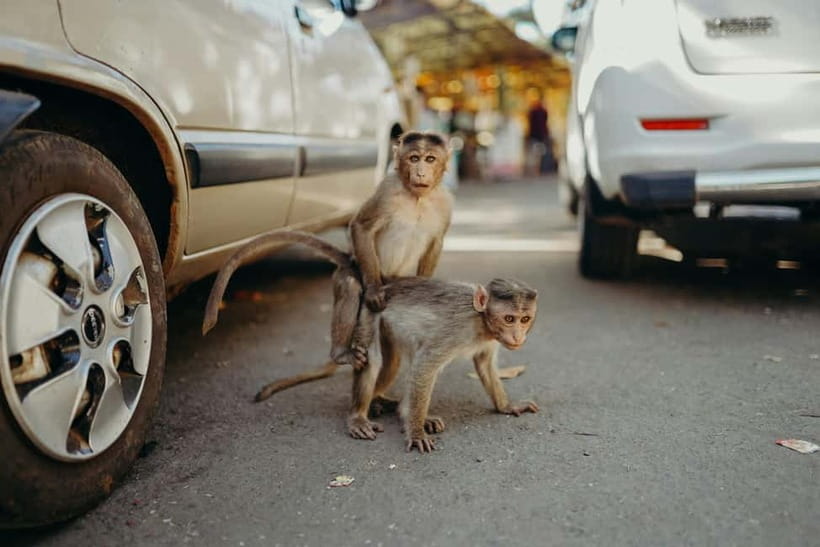
The heart of the Monkey Safari is the walking segment that leads you into the areas where monkeys are active. You’re not guaranteed a perfect snapshot moment every second, but the early timing gives you a higher chance of seeing real behavior rather than sleepy stillness.
You’ll be on the lookout for different species, including Rhesus Macaques and Langurs. The guide helps you separate what you’re seeing by behavior and setting, which is more useful than memorizing species names from a phone screen.
Here’s what you should expect to notice:
- monkeys foraging and moving through their social group
- play behaviors that look chaotic until you realize they’re part of communication
- moments of alertness when the whole group seems to react at once
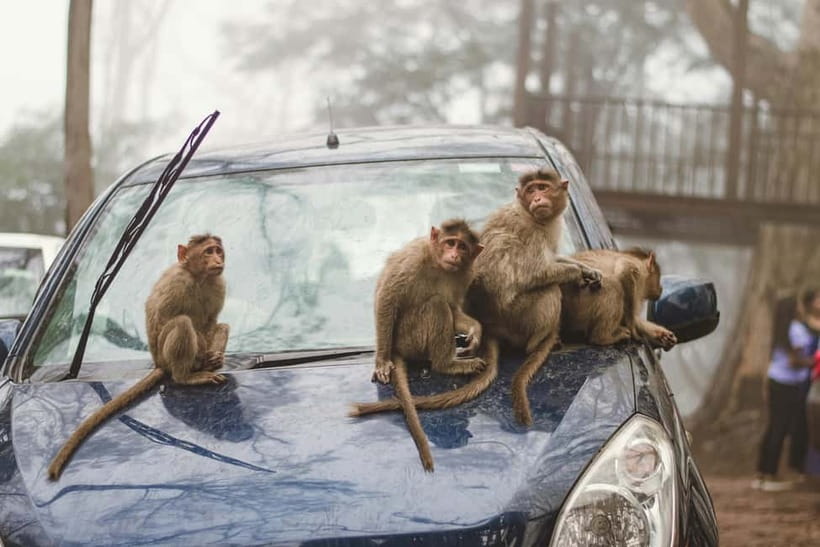
The tour also frames this as an urban-wildlife interface. It’s not wildlife far away. It’s wildlife inside Delhi life, and the guide talks about conservation efforts and why coexistence matters.
Feeding bananas and getting close without going off-script
One of the most praised parts is the feeling of getting close—seriously close—while still respecting the animals and the space. Some temple and monkey-area moments include feeding, with bananas and also complimentary sweets.
Important: that closeness still comes with boundaries. You’ll follow the guide’s lead, and you won’t improvise around monkeys like you’re in a movie. If you’ve got photos in mind, this is the time to plan for quick moments, because monkey behavior doesn’t hold still for your camera.
The best way to enjoy this part is to focus on behavior, not just the face of the monkey. When you watch how individuals interact, you start seeing the social structure: who moves first, who watches, who calls, and who responds.
Also, keep your expectations realistic. These are wild animals in a busy city environment. Sometimes you’ll get excellent visibility, and sometimes you’ll get a lesson in patience.
Photo-friendly walking: how to shoot urban wildlife without losing the moment
This tour is built for photos, especially for the urban-wildlife interface. You’ll have photo stops and scenic views en route, and then you’ll have time in monkey areas where the action is the main subject.
My practical advice: keep your phone ready, but don’t freeze. If you’re constantly filming, you miss the little behavior shifts that make the best images. Instead, take short bursts and then look with your eyes for 10 seconds. You’ll spot what the guide is pointing out, and your photos will look more intentional.
If you’re traveling with kids or non-photographers, this is a good balance tour. There’s enough structure to keep everyone engaged, but the monkeys still create spontaneous moments. The guide’s explanations help you know what you’re seeing, so you’re not just chasing movement.
And because you’re there early, lighting is usually kinder. Sunrise timing can make a huge difference, especially when you’re mixing temple color, people, and wildlife in one frame.
Chai and street-life breaks between temples and monkeys
A lot of the charm here comes from how the tour flows after the wildlife time. You’ll have time for chai, and you may even try masala tea prepared street-side depending on the route that morning.
This isn’t a random restaurant stop. It’s the local rhythm: temple, monkey area, then a warm break. In the experiences shared, people specifically enjoyed chai served in clay cups and the street vibe around well-known chai vendors.
If you want the full Delhi morning feel, this is the part that makes the tour feel like a memory rather than a checklist. You get to sit for a few minutes, reset your energy, and then re-join the walking portion with a clearer head.
Price and value for a 2.5-hour guided experience at $27
At about $27 per person for roughly 2.5 hours, this Monkey Safari is priced for a guided, structured morning—not a self-guided roam. You’re paying for three main things: expert guidance, a small group, and local transportation.
The included basics matter. You get a water bottle, transportation, and a local wildlife guide. There’s also mention of skipping ticket lines, which can be a big deal when temples are involved and you’re trying to keep the tour moving on schedule.
Where this becomes good value is in the combination. You’re not only seeing monkeys. You’re also getting cultural context and walking direction in a place where wandering without help could mean missing the best viewing moments.
If you like wildlife but also care about culture and explanations, the price makes sense. If you only want monkeys for photos and you’re confident navigating on your own, you might find cheaper options. But you’ll likely miss the story thread that makes this one satisfying.
What to bring, what not to do, and who this tour fits best
Bring comfortable shoes with a closed toe. The tour is walking-focused, and monkeys are not a reason to break in sandals. You’ll also want to dress for early morning temps and plan for being outside most of the time.
Not allowed includes alcohol and drugs, and alcoholic drinks are not permitted in the vehicle. Also, bare feet are not allowed. These rules keep things safer and more respectful around religious spaces and wildlife areas.
Fitness and age guidance is clear. This is not suitable for children under 2 years, and there are additional restrictions through ages under 5. It also isn’t suitable for people with low fitness, and it’s not recommended for people over 95.
This tour is a strong match for:
- adults and older kids who can handle a walking morning
- travelers who enjoy wildlife behavior explanations
- anyone who wants photos with context, not just wildlife sightings
Should you book the Delhi Monkey Safari walking tour?
If you’re the type who enjoys learning while you walk, you should book this. The combo of temple context, early monkey activity, and a guide like Santan who explains what you’re seeing is exactly why people rate it so highly.
I’d especially consider it if you’re short on time in Delhi but want more than a generic city circuit. In 2.5 hours, you get a focused slice of Delhi life: worship, street scenes, and urban wildlife all in one morning.
Skip it if your priority is a long, slow hike or if your mobility is limited. Also skip if you’re traveling with very young children who don’t meet the age suitability limits.
FAQ
How long is the Delhi Monkey Safari walking tour?
The tour lasts about 2.5 hours.
Where do I meet the guide for the tour?
Meet your guide outside gate no 2 at R K Ashram metro station. If you arrive by Delhi metro, you’ll see an Axis Bank ATM on your right.
Is the tour guide available in English?
Yes, the live tour guide speaks English.
What is the group size?
The group is small, limited to 3 participants.
What should I bring with me?
Wear comfortable closed-toe shoes. The tour includes a water bottle.
Can I feed the monkeys?
Some parts of the experience involve feeding monkeys, such as offering bananas and sweets, following the guide’s instructions.
Is alcohol allowed on the tour?
No. Alcohol and drugs are not allowed, and alcoholic drinks are not allowed in the vehicle.