REVIEW · JAISALMER
Colorful Markets of Jaisalmer (3 Hour Guided Tour)
Book on GetYourGuide →Operated by Jaisalmer tours · Bookable on GetYourGuide
Shopping in Jaisalmer feels like a treasure hunt. This 3-hour guided market stroll has you moving from the fort area into the Jaisalmer Bazaar maze, where you can shop for authentic Rajasthani crafts and learn how the city’s trade really works.
I especially liked two things: the guide (Sameer) is friendly and easy to talk to, and he’s the kind of person who knows the small side lanes that most people miss. I also liked the practical focus on Rajasthani Art shopping—paintings, carpets, crafts, jewelry, and footwear—without making the whole trip feel like one long sales pitch.
One thing to consider: this experience is built around shopping stops, and you’ll be walking through narrow lanes, so bring comfortable shoes and keep your expectations realistic if you’re not in a shopping mood. Also, you’ll want cash on hand since shopping is part of the fun.
In This Review
- Key highlights you’ll actually feel
- Meeting at the fort entrance and getting oriented fast
- Sadar Bazaar: where leather goods meet everything else
- Manak Chowk and the older style of artisan shopping
- Rajasthani art shopping: mojris, metalwork, carpets, and jewelry
- The guide experience: Sameer’s style and the value of stories
- Price and value: what $10 buys in 3 hours
- Who should book this market tour, and who might not
- Should you book the Colorful Markets of Jaisalmer tour?
- FAQ
- How long is the Colorful Markets of Jaisalmer tour?
- How much does the tour cost?
- Where does the tour start?
- Do I need to arrange my own transport to the meeting point?
- What languages are available for the live guide?
- Is the tour private or shared?
- What should I bring for shopping?
- What should I bring for comfort during the walk?
- Is the tour wheelchair accessible?
- Is there a cancellation option?
Key highlights you’ll actually feel
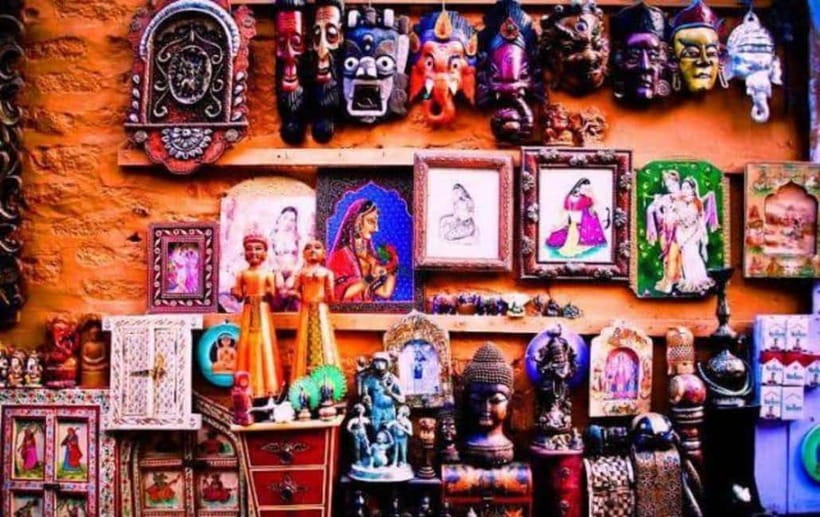
- A guide who keeps you moving intelligently through tight lanes and busy market streets
- Sadar Bazaar for leather goods and a wide mix of items like rugs, handicrafts, jewelry, footwear, and sarees
- Manak Chowk for older-style artisan shopping with ethnic jewelry, textiles, and handicrafts
- A real scan of Rajasthan categories: metalwork, vintage coins, spices/produce, textiles, crafts, and more
- Photo-friendly stops where you’ll catch the color of Jaisalmer and its residences while you shop
- Private group pacing so you’re not rushed by a bigger group dynamic
Meeting at the fort entrance and getting oriented fast
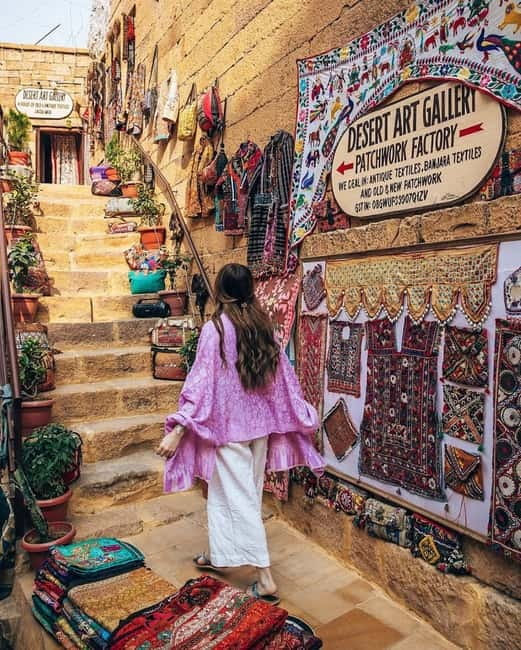
Your tour starts at the first entrance gate of the fort, a smart choice because it places you right at the “edge” of where the old city energy begins. If you’ve ever wandered into a maze of lanes and then lost your sense of direction, you’ll appreciate having a guide taking you by the hand at the start.
You’ll also have a separate entrance to skip the line, which helps you begin the walk without the usual slow start. The tour is described as a guided walk with shopping, and that blend matters: you’re not just moving from shop to shop—you’re getting context for what you’re seeing while you’re still fresh and curious.
Expect a 3-hour window that’s long enough to feel like a real neighborhood experience, but short enough that you won’t burn your whole day doing market laps. You’ll want to plan to meet on your own since there’s no hotel pickup or drop-off. In other words, treat it like a local errand that turns into a mini adventure.
Practical tip: wear shoes you can stand in for a while. Market lanes can be uneven and busy, and you’ll be walking with purpose.
You can also read our reviews of more tours and experiences in Jaisalmer.



Sadar Bazaar: where leather goods meet everything else
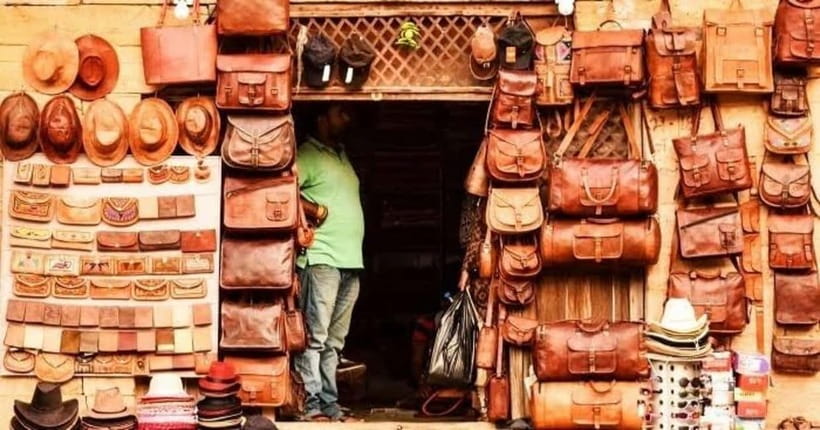
One of the tour’s anchors is Sadar Bazaar, known for its leather products. This is where you’ll see why the area earned a reputation for practical buys and wearable items—think leather goods you can actually use back home, not just decorative souvenirs.
What I like about building the tour around Sadar Bazaar is that it’s not a one-track shopping street. Yes, leather is the theme, but the stops are described as covering many categories you’ll care about in Rajasthan, including:
- rugs and other handicrafts
- jewelry and accessories
- footwear (including showy traditional styles)
- sarees
This gives you options depending on your travel priorities. If you came for souvenirs, you’ll find plenty. If you came for better understanding of Jaisalmer’s craft culture, you can still follow along and learn what different materials are used for and where they fit into local life.
There’s also an everyday side to it. The tour description includes stops where you can encounter normal market goods too, like spices, fruits, vegetables, and textiles. That matters because it stops the experience from feeling like a curated “only-for-tourists” showroom. It’s more like seeing how people actually stock daily needs while also browsing artisan work.
A small caution: because Sadar Bazaar is focused on goods, it can feel more energetic than quiet sightseeing. If you’re sensitive to crowd noise, take your time between storefronts and keep your camera handy for quick snapshots rather than long stops.
Manak Chowk and the older style of artisan shopping
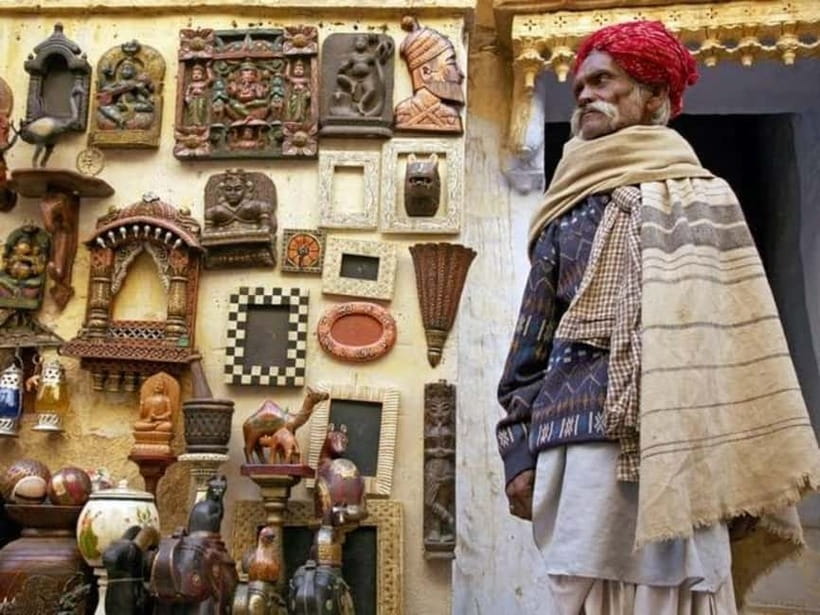
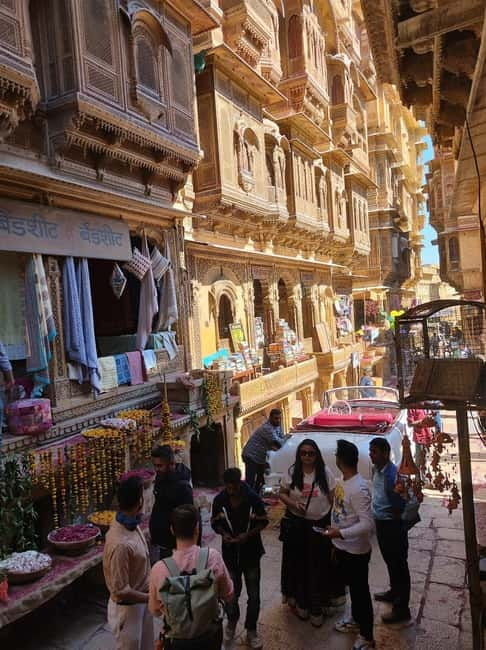
Another highlight is Manak Chowk, described as one of the oldest marketplaces in the area, once prominent in medieval times. That’s not just trivia. It shapes the feel of shopping here. Places with long commercial roots usually keep their “street logic”—how shops cluster, what sells nearby, and how artisans present their work.
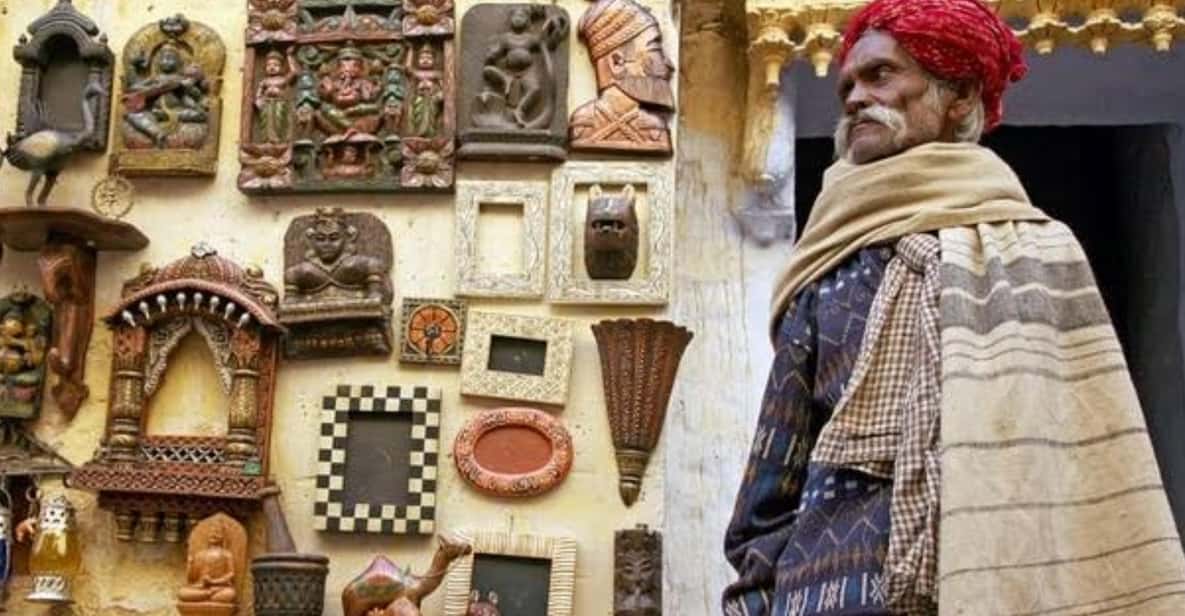
Here, you can expect shopping with an artisan lens: handicrafts, ethnic jewelry, and textiles are the focus. The tour emphasizes local artisanship, and that’s what you’re looking for when you visit a market like this. Instead of bouncing randomly from shop to shop, the guide helps connect what you see to the craft traditions that made Jaisalmer famous.
What you’ll likely notice is that these older market spots tend to feel more layered. You may see a mix of items—some made for tourists, some made for local use—but the strongest benefit is learning what styles belong where. If you’re trying to buy one meaningful piece rather than ten random things, Manak Chowk is the kind of stop that can sharpen your choices.
If you’re into photographing markets, Manak Chowk also fits nicely into a “walk and look” rhythm. You get views of the Golden City feel through narrow lanes and surrounding residences as you move along.
Rajasthani art shopping: mojris, metalwork, carpets, and jewelry
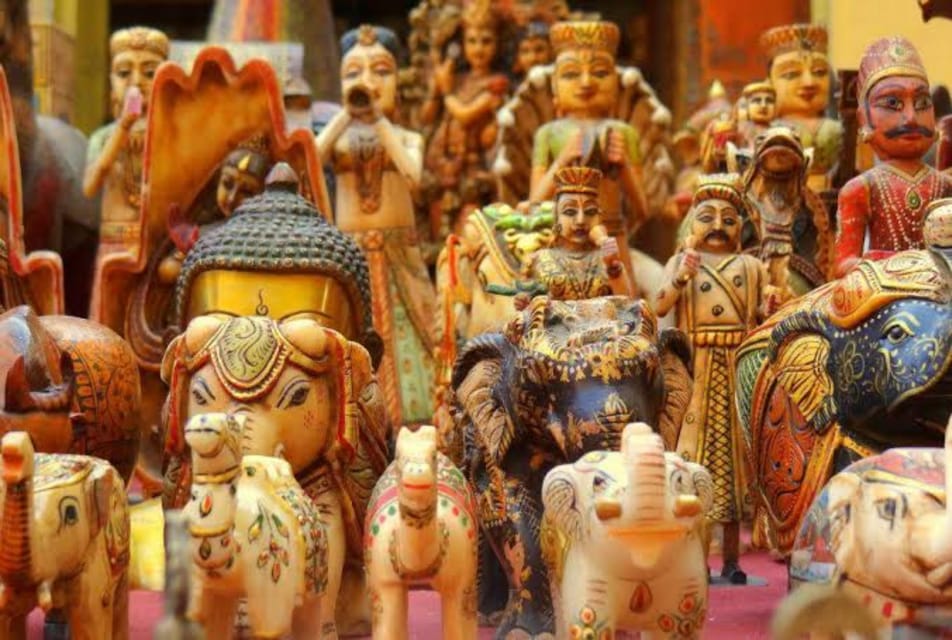
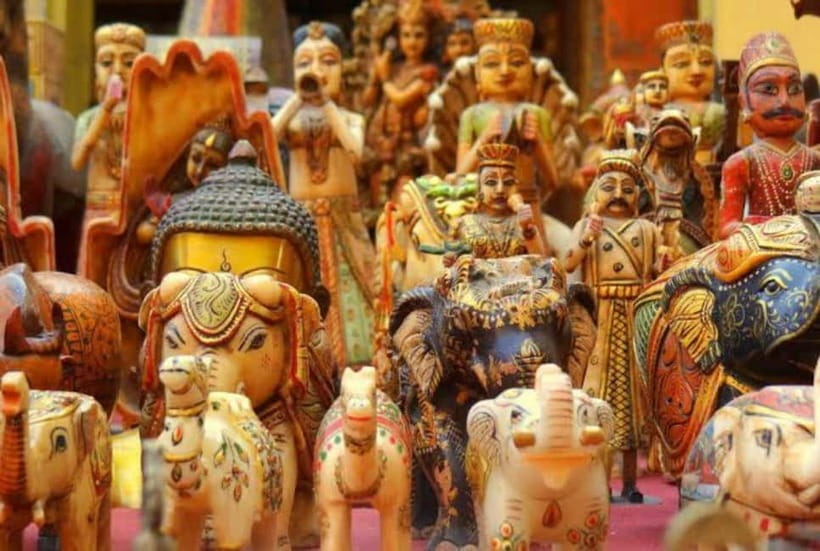
This tour is very clear about what it’s “about”: a shopping expedition through categories of Rajasthani Art. That includes the big recognizable categories—paintings, carpets, crafts, jewelry, and sarees—but also some detail-minded items that make the shopping feel specific to Rajasthan.
Here are the product themes you can expect to encounter during your walk:
- Mojris (traditional footwear), including decorated styles you can pair with a full outfit
- Metal crafts and metalwork, including described examples like intricate pieces and valuable work
- Vintage coins, which can be interesting if you like historical souvenirs rather than mass-market trinkets
- Carpets and textiles, where you can compare materials and patterns
- Jewelry, including options that range from wearable accessories to statement pieces
And beyond the “nice to have” souvenirs, the tour description also includes everyday basics like spices, produce, and textiles. That’s one of the reasons this experience feels authentic. You see the craft economy alongside daily market life.
How to shop smarter here: go in with a short list. If you want one item—like a pair of mojris, one metalwork piece, or a small art print—tell the guide your target before you start browsing. A good guide can steer you toward places where that category is shown well, rather than wasting time hopping around.
Also, remember the tour specifically notes bringing cash for shopping. Even if you plan to pay for nothing, having some cash helps keep you flexible if you see something you love in the moment.
The guide experience: Sameer’s style and the value of stories
You don’t just get a pass through shops. You get a person who can explain what you’re looking at and help you navigate the pace. In the reviews, the standout name is Sameer, praised for strong English, friendliness, and a calm, professional vibe.
That matters because market shopping is mostly about trust. When you’re learning a craft and comparing prices and quality, you want someone who can slow you down and help you understand. The tour includes great conversations and interesting stories, plus “local tips and recommendations” meant to help you save money and explore the best of the city.
I like that this is described as giving access to hidden lanes and places. Even if you’re the type who thinks you’ll “just explore on your own,” the reality is that old city lanes can be confusing fast. Having that shortcut through the maze can turn the experience from stressful to fun.
The tour also mentions learning “untold narratives and anecdotes.” You won’t leave with a classroom lecture, but you’ll walk out with a better sense of how Jaisalmer’s trade culture fits together—what the markets are for, why certain goods cluster in certain areas, and how local artisans present their work.
There’s also a mention of nightlife elements you might otherwise miss when exploring independently. In practice, that usually means you’ll catch the city’s rhythm in a way that feels more local and less like a checklist.
Price and value: what $10 buys in 3 hours
At about $10 per person for a 3-hour guided tour, the best value here is not the shopping itself—it’s the guidance. You’re paying for:
- a trained, friendly English-speaking guide
- access to hidden lanes and places
- local tips to help you shop smarter and explore more efficiently
- a structured walk through key market zones like Sadar Bazaar and Manak Chowk
If you were to do it solo, you could save the guide fee. But you’d likely lose the time advantage and the interpretive help—especially in a place where crafts and categories overlap. The guide helps you see what matters and where to spend your energy.
Two practical notes about value:
- No hotel pickup means you should plan your start time so you arrive relaxed, not sprinting.
- Cash for shopping keeps the experience friction-free once you decide you want something.
For me, this pricing works best when you’re genuinely interested in buying or learning about craft categories. If you’re only there for quick sightseeing photos, it might feel like too much focus on stores.
Who should book this market tour, and who might not
This tour fits best if you:
- like shopping for Rajasthani crafts (jewelry, carpets, metalwork, footwear, paintings)
- want help navigating the Sadar Bazaar and Manak Chowk shopping world without wasting time
- appreciate a guide who explains and suggests options instead of just escorting you
It’s also a good fit for travelers who want an organized way to see more of the city’s feel in a short timeframe. The walk includes photography-friendly moments—especially for capturing the color of Jaisalmer and its residences.
It may not be ideal if you:
- dislike marketplaces and prefer quiet museums
- want long, sit-down sightseeing breaks
- need a lot of rest during walking (the tour is a walk through lanes)
The tour is also noted as not suitable for people over 95 years, which you should take seriously.
And for anyone with mobility needs: it is described as wheelchair accessible, which is a useful detail if you plan around comfort and lane surfaces.
Should you book the Colorful Markets of Jaisalmer tour?
If you want a short, focused way to understand Jaisalmer’s craft culture and shop with confidence, I think this is a strong pick. The biggest reasons are the guide quality (Sameer’s English and friendly pace), the structure around meaningful market zones like Sadar Bazaar and Manak Chowk, and the practical shopping categories that match what Rajasthan is known for—mojris, metalwork, carpets, jewelry, textiles, and leather goods.
Book it if you’re ready to walk, browse, and maybe bring home one or two pieces you’ll actually use. Skip it if your idea of a perfect day is quiet viewpoints and minimal shopping.
If you do book, go in with comfortable shoes and some cash. That way, when you spot something that fits your taste—whether it’s leather, a textile, or a decorated pair of mojris—you can enjoy the moment instead of calculating logistics.
FAQ
How long is the Colorful Markets of Jaisalmer tour?
The tour is 3 hours long.
How much does the tour cost?
The price is $10 per person.
Where does the tour start?
The meeting point is the first entrance gate of the fort. The starting location is listed as akhey prol.
Do I need to arrange my own transport to the meeting point?
Yes. Hotel pick up and drop off are not included.
What languages are available for the live guide?
The guide is listed as available in English, Spanish, French, Italian, Hindi.
Is the tour private or shared?
It’s described as a private group.
What should I bring for shopping?
Bring cash with you for shopping.
What should I bring for comfort during the walk?
Bring comfortable shoes.
Is the tour wheelchair accessible?
Yes, it is listed as wheelchair accessible.
Is there a cancellation option?
Free cancellation is offered up to 24 hours in advance for a full refund.