REVIEW · AHMEDABAD
Ahmedabad: Private tour of city for cultural immersion
Book on GetYourGuide →Operated by 5 Senses Tours · Bookable on GetYourGuide
Ahmedabad has a way of grabbing you fast. In one packed day, you’ll move through the walled city landmarks and end with a clearer sense of why places like Sabarmati Ashram and the Tree of Life motif matter. It’s cultural sightseeing with real context, not just a checklist.
What I liked most is that the guide’s explanations are detailed enough for actual questions. I also loved the mix of faith and craft, from a Jain temple with 52 shrines to a final stop at a painting or handcraft atelier that gives you a different angle on local life.
One thing to consider: the day has multiple religious sites, so the dress code (shoulders and knees covered) can feel strict. Also, lunch is included but beverages aren’t, so plan ahead if you want something beyond water.
In This Review
- Key highlights worth planning around
- A 7-Hour Private City Walk Through Ahmedabad’s Walled Core
- Sabarmati Ashram and Gandhi’s Salt March Lessons on Non-Violence
- Adalaj Step Well: Five Stories Down Into Engineering and Tragedy
- Hutheesing Jain Temple and Its 52 Shrines Built in Hard Times
- Siddhi Sayeed Mosque and the Tree of Life That Became Ahmedabad’s Signature
- Lunch and Getting Between Stops Without Losing Your Whole Day
- The Handcraft and Painting Atelier Stop: A Friendly Bonus Beyond Monuments
- Price and Value: Why $134 Feels Fair for This Mix of Stops
- Who Should Book This Tour (and Who Might Want a Different Style)
- Booking Check: Should You Book This Ahmedabad Private Cultural Tour
- FAQ
- How long is the Ahmedabad private tour?
- Is the tour guide available in English?
- How many people are in the small group?
- What sites are included on the tour?
- What is the dress code?
- What’s included in the price, and what isn’t?
Key highlights worth planning around
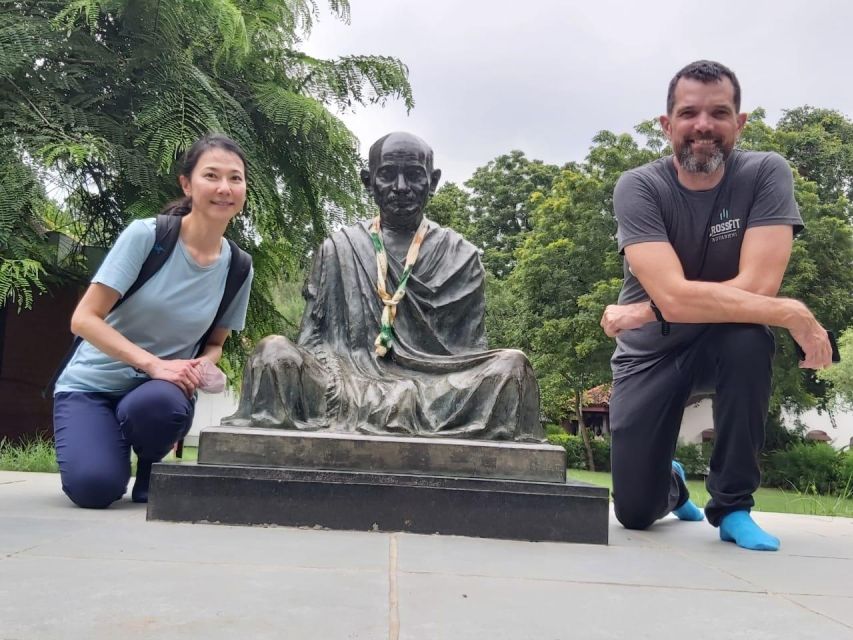
- Sabarmati Ashram: Gandhi’s 1917 home on the Sabarmati River, where he led the 1930 Salt March
- Adalaj Step Well (1555): a five-storey engineering marvel built under the Queen of Rana Veer Singh, with a tragic story attached
- Hutheesing Jain Temple: 52 shrines dedicated to Tirthankaras, built during a severe famine to employ artisans
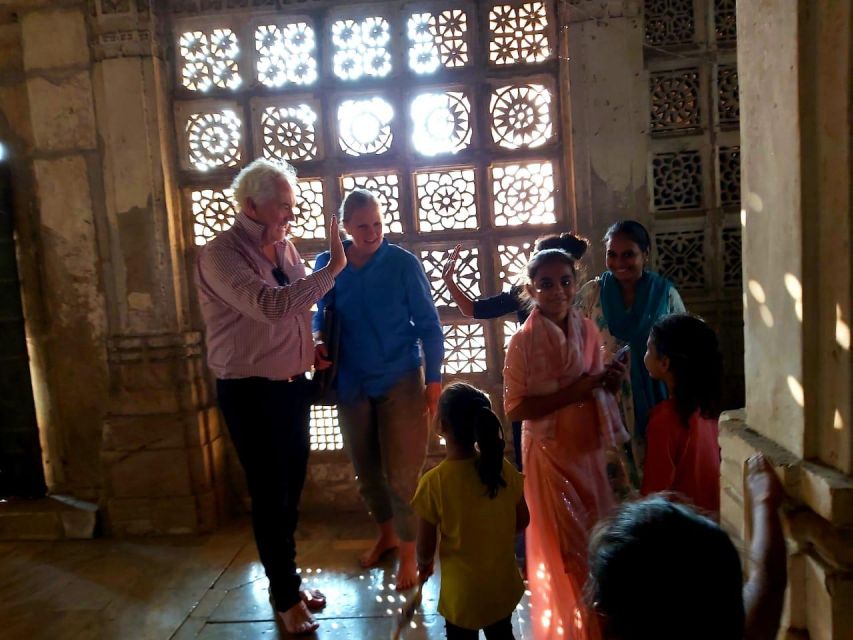
- Siddhi Sayeed Mosque Tree of Life: latticework on semicircular arch-window motifs, tied to Ahmedabad’s identity
- Small-group pace: limited to 10, with an English-speaking guide and a sedan ride between stops
A 7-Hour Private City Walk Through Ahmedabad’s Walled Core

This is the kind of tour that works because it has structure. In about 7 hours, you get a guided route through key landmarks that explain how Ahmedabad’s past still shows up in everyday symbols—water structures, temple design, mosque ornament, and the freedom-movement story at Sabarmati Ashram.
You’ll go with a guide and a sedan, which is a big practical win if you don’t want to spend your day figuring out transport. The group stays small (up to 10), so you can ask questions and actually get answers without feeling like you’re shouting into a crowd.
The best fit here is for you if you want more than photo stops. You’re there to understand why a specific architecture feature shows up, why a temple was built when times were hard, and how the freedom movement philosophy links to everyday choices.
You can also read our reviews of more city tours in Ahmedabad

Sabarmati Ashram and Gandhi’s Salt March Lessons on Non-Violence
Sabarmati Ashram is the emotional anchor of the day. You’ll visit Gandhi’s home, built in 1917 along the Sabarmati River, where he lived for 12 years. The guide connects it directly to the legendary Salt March of 1930, so you’re not just reading about history—you’re walking through the spaces tied to it.
What makes this stop especially valuable is how it changes the feel of the story. You’ll move through corridors and living quarters where household artifacts and the setting itself help you connect the philosophy of non-violence to the freedom movement. It’s one thing to know the name Gandhi; it’s another to understand how the place shaped the work.
A small-but-important planning note: asharm culture asks for a respectful tone. If you’ve got the required clothing (covering knees and shoulders), you’ll feel less stressed the moment you arrive. Go in with a calm pace. Even if the rest of the day is active, this is where you’ll want to slow down.
If you’re lucky and your guide is the same one referenced in a recent tour experience—Umang—you’ll probably notice how much room he makes for questions. That Q-and-A time can turn a “nice visit” into a “now I get it” visit.
Adalaj Step Well: Five Stories Down Into Engineering and Tragedy

Then you shift from freedom-movement symbolism to engineering genius at Adalaj Step Well. This is the standout for people who love historical problem-solving—how humans built cooling, access, and water management long before modern tech.
Adalaj was built in 1555, and it’s not small: it’s described as a five-storey step well. The tour also gives you the human layer behind the stones. It was constructed by the Queen of Rana Veer Singh, after her husband was defeated in battle by Sultan of Gujarat Mohammad Begda. The story adds a darker note to what might otherwise feel like a simple structure for water.
Why you’ll care about the engineering here is simple: step wells aren’t just monuments. They’re practical answers to climate and community needs—made to work day after day. Walking through the idea of a vertical descent and the design that helps manage water flow makes the architecture feel alive rather than frozen in time.
Practical tip: this is a place where you’ll be physically present. Wear supportive shoes and expect some walking and stairs. If your legs are sensitive, pace yourself and take breaks when needed. You’ll get more from the visit when you’re steady, not rushed.
Hutheesing Jain Temple and Its 52 Shrines Built in Hard Times
Next comes Hutheesing Jain Temple, and it’s a great example of how Ahmedabad’s religious architecture is tied to economic and social history. The temple was built during a severe famine, and the point wasn’t only spiritual. It also aimed to provide employment to hundreds of skilled artisans—so you get art, labor, and belief in the same frame.
You’ll hear about the temple’s layout and the way worship is organized. There are 52 shrines, each dedicated to the Tirthankaras. For me, that number matters because it signals repetition with purpose: the temple isn’t one focal spot—it’s a system. Once you understand that, details you might otherwise gloss over start to feel intentional.
This is also the kind of place where a guide earns their keep. Jain temple symbolism can be dense if you’re just looking around on your own. With explanation, you’re more likely to notice patterns rather than just thinking, beautiful carvings, next stop.
If you want the full effect, go into it with a little curiosity. Ask how the shrines relate to worship and what the guide thinks you should pay attention to. You’ll likely get a clearer answer than you expect—this tour is built for that kind of back-and-forth.
Siddhi Sayeed Mosque and the Tree of Life That Became Ahmedabad’s Signature
The day’s visual payoff arrives at Siddhi Sayeed Mosque, home to the famous Tree of Life motif. The “Tree of Life” here is described as latticework shaped across semicircular arch windows. It’s not a random decoration—it’s a signature design element tied to Ahmedabad’s identity.
The tour explains that the motif became the mosque’s unofficial symbol for the city. That matters because it tells you how architecture travels into collective memory. You see a pattern, and over centuries it becomes shorthand for place.
Historically, the mosque is also tied to a specific moment in power shifts. It was built in 1572 by the Gujarat Sultanate in their final years of rule before losing control to the Mughals. So when you stand in front of the latticework, you’re not only looking at “pretty geometry.” You’re seeing a last-flourish style from a changing era.
If you’re someone who likes design details—arches, lattice patterns, how shapes guide the eye—this stop delivers. Keep your attention on the window arches and how the motif repeats. Even if you don’t speak the language of architecture, the structure is doing the work.
You can also read our reviews of more private tours in Ahmedabad

Lunch and Getting Between Stops Without Losing Your Whole Day
Between sites, the sedan ride saves you from the “half your vacation is transport” problem. You’re not juggling buses or trying to interpret routes on the fly. Since the tour is guided and scheduled, you get a smoother flow across a city that can be busy.
Lunch is included and it’s vegetarian local lunch. That’s practical, and it’s also part of how you experience the region—simple and filling, designed to work for a group day out. The one caution: beverages are not included, and you’ll only get the included lunch as your food option. If you’re someone who wants a specific drink with meals, plan for it.
This also means the tour feels “contained” in a good way. You’re not wondering where the next meal will be or paying extra for basic sustenance. You can stay focused on the sites.
The Handcraft and Painting Atelier Stop: A Friendly Bonus Beyond Monuments

One of the nicest parts of this experience is that it doesn’t end only with monuments. A recent tour experience notes that by the end of the day there’s a stop at a painting handcraft atelier. That’s a smart add-on because it turns your day from architecture and politics into everyday creativity.
If you like souvenirs with meaning, this is the moment. You’ll see how craft connects to local life, and it’s often easier to ask questions here than in a museum setting. Even if you don’t buy anything, watching how artists work gives you a different lens on the city.
Keep expectations realistic: this is still a 7-hour day, so the atelier time may be focused rather than long. But it’s a meaningful way to close out the day with something human-scale after the bigger historical stops.
Price and Value: Why $134 Feels Fair for This Mix of Stops
At $134 per person for a 7-hour guided private tour, the question isn’t only cost. It’s what’s bundled together.
You’re getting:
- a live English guide
- sedan transport between stops
- entrance charges
- a vegetarian local lunch
For many people, the value is less about tickets and more about interpretation. Gandhi’s home, a Jain temple with 52 shrines, and a step well with a five-storey design each carry layers that are hard to decode quickly alone. Having a guide who can explain and then answer questions turns the day into something you remember, not just something you walked through.
The small-group limit (up to 10) also matters. A bigger bus group can compress discussion and slow down stops. Here, you keep enough attention from the guide to make the explanations stick.
If you’re traveling with a flexible schedule and you want one solid day where Ahmedabad’s key stories are connected for you, this pricing structure makes sense.
Who Should Book This Tour (and Who Might Want a Different Style)
This tour is a good match if:
- you want a coherent day that ties history, religion, and design together
- you’re comfortable moving through several major sites in one go
- you like asking questions and getting thoughtful answers
You might want a different plan if:
- you strongly prefer free time at each stop over guided pacing
- you don’t like religious sites and would rather focus only on architecture
- you’re likely to struggle with the dress requirement (shoulders and knees covered)
If you’re a first-time visitor, this is especially handy. It gives you landmarks that are iconic for a reason, and it explains those reasons.
Booking Check: Should You Book This Ahmedabad Private Cultural Tour
I’d book this if you want one guided day that makes Ahmedabad feel understandable. You’re getting Gandhi’s story at Sabarmati Ashram, engineering at Adalaj Step Well, faith and artisan work at Hutheesing Jain Temple, and Ahmedabad’s signature Tree of Life motif at Siddhi Sayeed Mosque—all tied together in English with time for questions.
I wouldn’t book it if you’re only looking for a quick taste and don’t want the dress-code expectations or the packed rhythm of multiple sites. Also, if you’re counting on drinks and snacks beyond lunch, remember beverages aren’t included.
If you like thoughtful explanations and a small-group pace, this tour is built for you.
FAQ
How long is the Ahmedabad private tour?
The tour lasts 7 hours.
Is the tour guide available in English?
Yes. The live tour guide speaks English.
How many people are in the small group?
The group is limited to 10 participants.
What sites are included on the tour?
You’ll visit Gandhi’s home at Sabarmati Ashram, Adalaj Step Well, Hutheesing Jain Temple, and Siddhi Sayeed Mosque (with the Tree of Life motif).
What is the dress code?
Sleeveless shirts and shorts are not allowed. You’ll need to cover your knees and shoulders.
What’s included in the price, and what isn’t?
Included are the guide, travel by sedan, entrance charges, and a vegetarian local lunch. Beverages and any food other than the vegetarian local lunch are not included.