REVIEW · VARANASI
All Inclusive : Private Guided Tour of Varanasi and Sarnath
Book on GetYourGuide →Operated by Limra Holiday · Bookable on GetYourGuide
The Ganges looks different at sunrise. This private 7-hour loop pairs a hand-rowed boat on the river with time at the most important ghats and temples—so you see the spiritual rhythm, not just the sightseeing. I love the way the day moves from early river calm to crowded devotion, and how the guide connects what you’re seeing to the stories people live by.
I also like the private live guide approach. You get real explanations as you go—Shiva at Shri Kashi Vishwanath Temple, the meaning of Sarnath after the Buddha’s enlightenment, and why the dusk Aarti at Dashashwamedh Ghat matters. One possible drawback: the boat ride can be noisy, so it may be harder to hear your guide clearly over the engine.
Still, for the price and the tight route, this is one of the easier ways to handle Varanasi’s complexity. You’ll spend less time figuring things out and more time looking with understanding—just keep your expectations realistic for an early start and a loud boat.
In This Review
- Key Things You’ll Notice on This Varanasi + Sarnath Day
- Why This 7-Hour Varanasi and Sarnath Schedule Actually Works
- Sunrise on the Ganges: Hand-Rowed Boat, Ghats, and What to Be Ready For
- Manikarnika Ghat and Assi Ghat: Short Stops That Still Matter
- Shri Kashi Vishwanath Temple: Shiva, Jyotirlinga Status, and How to Look Around
- Banaras Hindu University and Bharat Kala Bhavan: Learning Without Killing the Day
- Bharat Mata Mandir: The Marble Map of Undivided India
- Sarnath: Dhamekh Stupa, First Sermon Context, and the Museum
- Dashashwamedh Ghat Ganga Aarti: Dusk, Fire, and the Meaning of the Ritual
- Price and Value: What You Pay for in This Private Format
- Who This Tour Suits Best (And Who Should Skip It)
- Should You Book This Varanasi + Sarnath Private Tour?
- FAQ
- What locations can the pickup include?
- What are the drop-off options at the end of the tour?
- How long is the tour?
- What time does the morning pickup happen?
- Is the Ganges boat ride included?
- Is lunch included?
- Are monument entry fees included?
- Where does the evening part take place?
- Is the Archaeological Museum in Sarnath always open?
- What kind of shoes should I bring?
- What languages are available for the guide?
Key Things You’ll Notice on This Varanasi + Sarnath Day
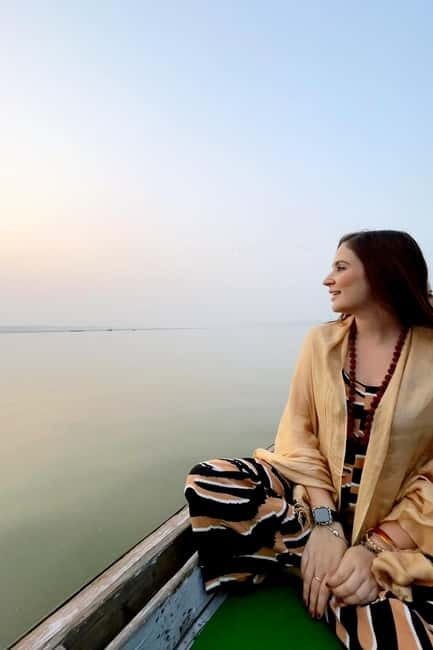
- Hand-rowed morning boat on the Ganges for a sunrise view of bathing ghats and cremation areas from the water
- Kashi Vishwanath Temple: guided context for this major Shiva temple on the west bank of the Ganga
- Banaras Hindu University and Bharat Kala Bhavan: campus + museum time that adds a learning layer
- Bharat Mata Mandir with the marble map of undivided India
- Sarnath’s Dhamekh Stupa and monastery-era structures tied to the Buddha’s first discourse
- Dashashwamedh Ghat Ganga Aarti at dusk with fire offered to Maa Ganga
Why This 7-Hour Varanasi and Sarnath Schedule Actually Works
Varanasi can feel overwhelming fast. The city runs on ritual and motion, and if you show up without a plan, you can end up mostly watching crowds. This tour helps by locking in the timing: an early morning start, then temples and learning, then Sarnath, then the evening Ganga Aarti.
What I like about the flow is the balance between river life and meaning. You’re not only taking photos at stops like Manikarnika Ghat, Assi Ghat, and the main temple complex—you get guided context for why these places matter to Hindu and Buddhist traditions.
It’s also a practical day. You use an AC vehicle for transfers, so you’re not stuck baking between distant points. Plus, there’s pickup and drop-off from options including Varanasi, Sarnath, or Varanasi cantonment, and even airport or railway station if you prefer.
One more thing: you’re staying mostly within two geographic zones—Varanasi in the first half and Sarnath in the second. That cuts down on wasted time and makes the day feel focused rather than frantic.
You can also read our reviews of more tours and experiences in Varanasi.
Sunrise on the Ganges: Hand-Rowed Boat, Ghats, and What to Be Ready For
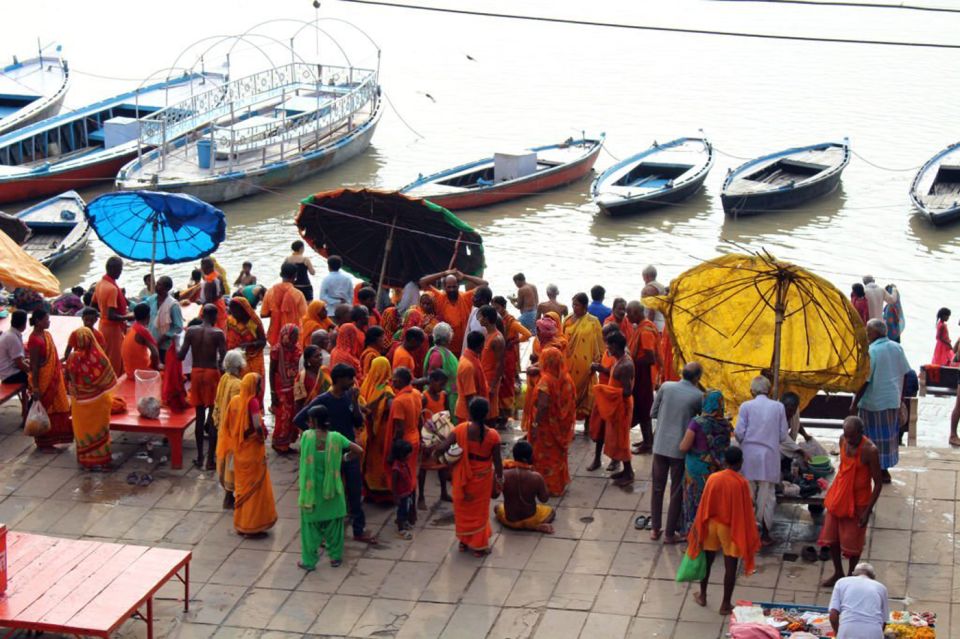
The morning starts early, with pickup around 5:30 am. Then you head out for a hand-rowed boat ride on the Ganges, weather permitting. This is one of those moments where the river becomes the main character—because being on the water changes the scale and the perspective of the ghats.
From the boat, you’ll see bathing ghats and the cremation site along the riverfront. That might sound heavy, and it is. But the value is exactly that you see the reality of the river: daily life happening alongside death rituals, all within the same sacred geography.
Practical note: you may find it hard to hear your guide at certain points because boat movement and the engine noise can drown out conversation. If you’re the type who likes every spoken detail, it helps to keep your expectations flexible and use your eyes as well as your ears. Your guide still gives explanations, but you might need to look up and catch the key points when you can.
What to do mentally:
- Don’t treat this as a checklist. Let the river’s variety land first.
- Be ready for close-up views of ritual steps and changing activity along the banks.
- Wear comfortable shoes and dress for early morning chill, since mornings on the river can feel cooler than you expect.
This boat segment lasts about 2 hours in the plan, and it functions like a reset button. After that, Varanasi’s temples and streets make more sense because you already understand the Ganga as the backbone.
Manikarnika Ghat and Assi Ghat: Short Stops That Still Matter
After the boat ride, the itinerary keeps you moving with quick photo stops at Manikarnika Ghat and Assi ghat. These aren’t long wandering moments, but even brief stops can be worthwhile in a city like Varanasi—where lingering too long can blur into crowd navigation.
- At Manikarnika Ghat, you’ll be near one of the best-known cremation areas on the Ganges. Even if you only get a brief guided look, your guide’s explanations help you understand the spiritual framing, not just the visuals.
- At Assi ghat, you get another famous riverfront point that represents everyday Varanasi energy and devotion.
These stops work well because they’re short enough that you don’t miss the bigger planned highlights, yet you still get the emotional geography of the city.
If you prefer quieter time, you might wish the stops were longer. But in a 7-hour route, the trade-off is that you can still get to temples, a university campus, Sarnath, and the evening Aarti.
Shri Kashi Vishwanath Temple: Shiva, Jyotirlinga Status, and How to Look Around
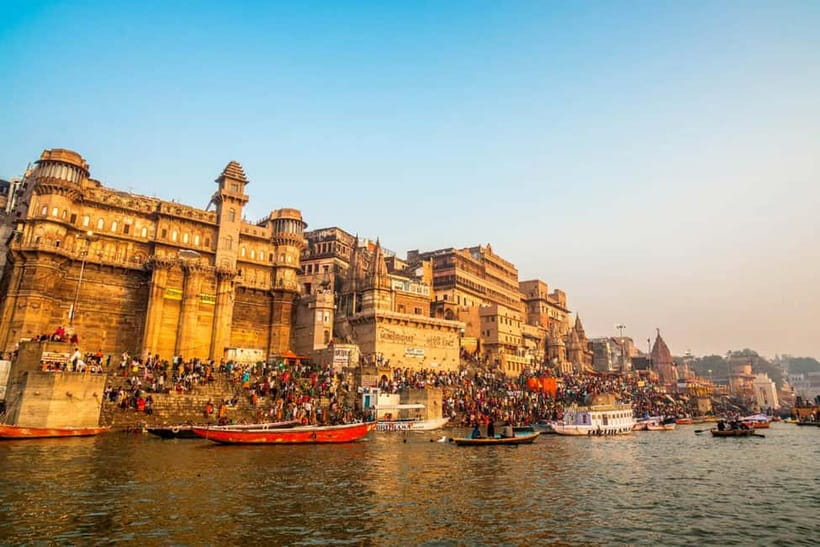
Next comes Shri Kashi Vishwanath Temple, one of India’s most important Shiva temples. You’ll get about 30 minutes here, with photo stop time and a guided tour.
Your guide will connect it to the temple’s presiding deity, Vishveswara (Shiva), and its status as one of the twelve Jyotirlingas—major pilgrimage sites tied to Shiva worship. That context matters because the temple complex can feel visually intense. With a guide, you’re not just staring at carvings and crowds; you’re learning what the key elements are and why devotees come.
You’ll also see how the temple sits on the western bank of the Ganga, tying the river back to worship. In Varanasi, religion and geography are inseparable. This stop makes that link obvious.
Timing note: 30 minutes isn’t a lot, especially when there are lines and dense movement. The benefit is that you also get skip-the-ticket-line, so you can spend more of your time actually inside and less time waiting at entry points.
Banaras Hindu University and Bharat Kala Bhavan: Learning Without Killing the Day
After temple time, the tour includes Banaras Hindu University (BHU), established in 1916. The day doesn’t just swing from river to religion—it also includes a campus that’s big enough to matter. BHU is described as the largest university campus in Asia, and even a short visit helps you understand why Varanasi isn’t only about pilgrimage.
You’ll get guided time at the campus, including Bharat Kala Bhavan museum and the new Vishwanath Temple (Birla Temple), described as an exact replica of the original Vishwanath Temple. Even if you’re not a museum person, this is a nice way to see Varanasi through another lens: education, collecting art, and how institutions interpret major religious themes.
Expect the museum stop to be more of a highlight visit than a full deep museum experience, since the schedule is built around multiple major stops.
Then there’s a silk weaving traditions segment. That’s a smart inclusion because Varanasi’s craft culture is part of the city’s identity. It also gives you something grounded and practical to think about while the rest of the day stays spiritual.
Lunch is own expense, so plan for that gap. Having a meal option nearby is helpful because the day continues with Sarnath and then evening Aarti.
Bharat Mata Mandir: The Marble Map of Undivided India
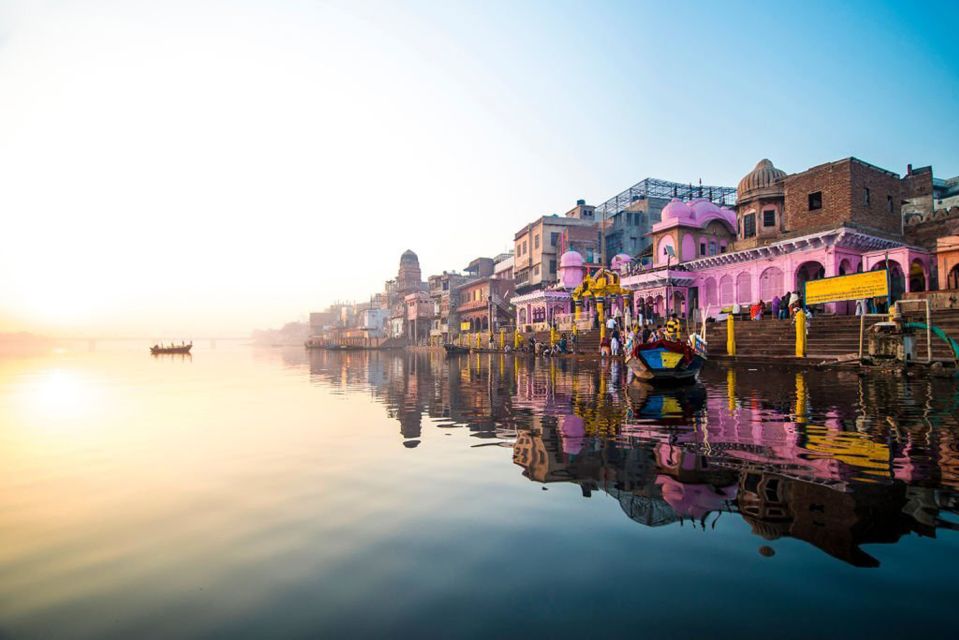
One of my favorite stops in the itinerary is Bharat Mata Mandir, dedicated to the goddess who represents all Indian goddesses in cultural symbolism—essentially personifying India as a mother goddess.
Instead of typical statues, the temple features a huge marble map of undivided India carved in marble. That detail makes the space unusual. You’re not only seeing religious devotion; you’re seeing how the ideas of nation, identity, and spirituality are expressed in stone and symbolism.
The stop is brief (around 15 minutes), but because the visual centerpiece is so strong, even a short visit can feel memorable. If you’re the kind of traveler who likes context for what you’re looking at, your guide’s explanation here is likely to land well.
Sarnath: Dhamekh Stupa, First Sermon Context, and the Museum
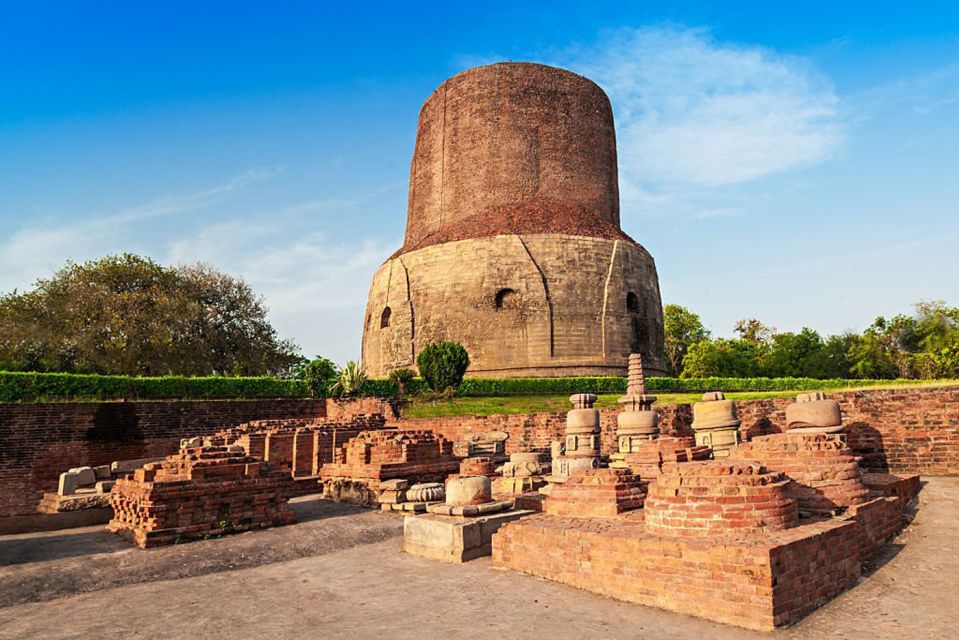
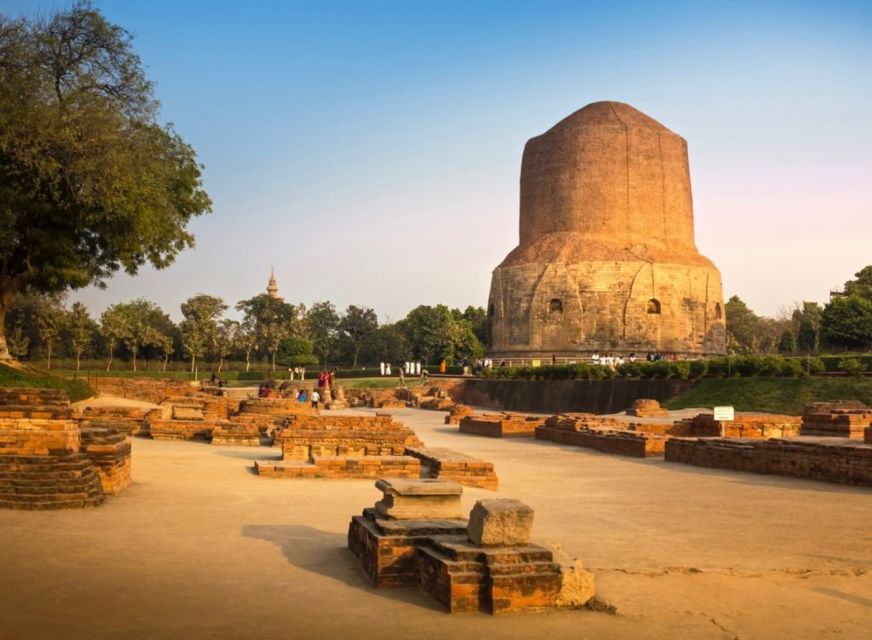
Now for the big shift: Sarnath. This is a revered Buddhist pilgrimage center tied directly to the Buddha after enlightenment at Bodh Gaya. The site is associated with where he preached his first discourse, commonly referred to as Maha Dharm Chakra Pravartan.
You’ll visit Dhamekh Stupa plus several other structures. The tour also includes the Archaeological Museum, with treasures dating to around the 3rd century BC. One scheduling detail to keep in mind: the museum is closed Fridays.
If you’re visiting on a Friday, you’ll likely still enjoy Sarnath’s outdoor sites, but you might lose the museum component. Because of that, it’s smart to treat the outdoor structures as the main plan and treat the museum as a bonus if it’s open.
The guided time in Sarnath is about 1.5 hours. That’s enough to understand the storyline of the place without rushing every detail. And because the day started on the Ganges—so deeply tied to pilgrimage—Sarnath feels like a natural continuation rather than a random detour.
Dashashwamedh Ghat Ganga Aarti: Dusk, Fire, and the Meaning of the Ritual
To close the day, you return to Dashashwamedh Ghat to watch the evening Ganga Aarti. This is a devotional Hindu ritual performed at dusk on the banks of the Ganges, using fire as an offering to Maa Ganga, the goddess of the holy river.
This is the tour’s emotional payoff. Earlier, you watched river life from the water and saw key temple sites in daylight. Now the Ganga becomes stage lighting. Even if you’re not religious, it’s hard to ignore the intensity and the repetition of devotion—thousands of years of people showing up to offer, sing, and witness.
The tour gives about 1 hour here. That’s a balanced amount of time: long enough to see the ritual clearly, short enough that you’re not stuck in a long crowd loop with no new information.
Practical tip: keep your senses open but don’t expect everything to feel perfectly comfortable. Ghat areas can be crowded, and dusk can change lighting quickly. If you bring a phone or camera, expect you’ll need to adjust quickly for low light.
At the end, you’ll be returned to your hotel or another desired location in Varanasi.
Price and Value: What You Pay for in This Private Format
At $31 per person for a 7-hour day, the value is mostly about structure. You’re paying for:
- Private live guide (so explanations are tailored rather than broadcast)
- AC transport across multiple destinations
- Entry fees for monuments if you choose that option
- Hand-rowed boat ride if you choose that option, weather permitting
- Skip the ticket line
- Pickup and drop-off at a wide set of locations
- Complimentary mineral water
Food is not included, so you’ll need to budget for lunch and any snacks. In Varanasi, that can be a flexible expense depending on what you choose and where you prefer to eat.
The most important value point is the guide’s context. Without that, you’d still see impressive places, but you might miss how they connect: Shiva worship, the river’s sacred role, and the Buddha’s teachings in Sarnath. With the guide, the route starts feeling like a single story told in two traditions.
Who This Tour Suits Best (And Who Should Skip It)
This is a strong fit if you want the essentials of Varanasi and Sarnath in one organized day, without wrestling with logistics. It’s also a good match if you appreciate religion and symbolism and want someone to translate what you’re seeing into meaning.
It’s a less ideal choice if you’re sensitive to noise or crowd conditions, since the boat and the ghats can be loud and busy. The boat engine noise can make conversation tougher, and the ghat areas can be packed during major rituals.
Also, it’s listed as not suitable for pregnant women. If that applies to you, I’d choose a different format with gentler walking and fewer early-morning and boat conditions.
Language-wise, the private guide can work in English, Spanish, German, French, Russian, Japanese, or Italian, which makes this much easier for international visitors who want clear explanations.
Should You Book This Varanasi + Sarnath Private Tour?
If you want a single-day plan that covers the big spiritual hits—Ganga river boat at sunrise, Kashi Vishwanath, BHU, Bharat Mata Mandir, Sarnath, and Ganga Aarti—this is the kind of tour that saves you time and adds understanding.
I’d book it if:
- You like guided explanations more than free wandering
- You want a mix of Hindu and Buddhist sacred sites
- You’re okay starting early and dealing with boat noise and crowd energy
I’d think twice if:
- You need quiet, low-stimulation experiences
- You’re visiting on a Friday and strongly want the Sarnath museum, since it’s closed that day
- You prefer a slower pace with more independent time for meals and walking
Overall, the private guide + tight route + evening Aarti combo makes this a practical value buy—especially when your goal is to leave Varanasi with the city’s meaning in your head, not just photos on your phone.
FAQ
What locations can the pickup include?
Pickup can include your hotel, the airport, the railway station, or any other desired location, with options also listed as Varanasi, Sarnath, or Varanasi cantonment.
What are the drop-off options at the end of the tour?
Drop-off options include Varanasi cantonment, Sarnath, or Varanasi.
How long is the tour?
The tour duration is 7 hours.
What time does the morning pickup happen?
The plan specifies an early morning pickup around 5:30 am from your hotel or other chosen pickup spot in Varanasi.
Is the Ganges boat ride included?
The boat ride is included only if you select the option for it. It also depends on weather, as it’s described as weather permitting.
Is lunch included?
No. Lunch is not included, so you’ll take a break for lunch at your own expense.
Are monument entry fees included?
Monument entry fees are included only if you select the option for them.
Where does the evening part take place?
The tour returns to Dashashwamedh Ghat to watch the Ganga Aarti ceremony.
Is the Archaeological Museum in Sarnath always open?
No. The Archaeological Museum is closed on Fridays.
What kind of shoes should I bring?
Bring comfortable shoes, since you’ll be walking and standing during multiple stops.
What languages are available for the guide?
The live guide is available in English, Spanish, German, French, Russian, Japanese, or Italian.